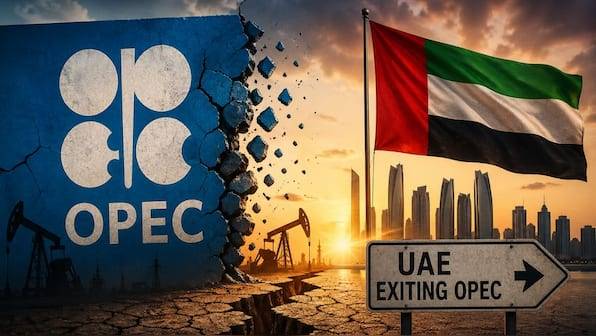

The sudden decision of the Organization of the Petroleum Exporting Countries to lose one of its most influential members—the United Arab Emirates—has sent shockwaves through global energy markets. Announced in April 2026 amid escalating tensions in the Strait of Hormuz and a broader regional conflict involving Iran, the UAE’s withdrawal marks a historic turning point not only for OPEC but for the entire architecture of global oil governance. This is not merely an economic decision; it is a geopolitical recalibration with deep strategic implications.
At the heart of this move lies the ongoing Hormuz crisis. The Strait of Hormuz, through which nearly one-fifth of global oil supply flows, has been severely disrupted due to conflict involving Iran. Shipping constraints, rising insurance costs, and direct security threats have altered the logic of oil production and distribution. In such an environment, collective production quotas imposed by OPEC began to appear increasingly impractical for a country like the UAE, which seeks flexibility rather than restraint.
The UAE’s decision, however, was not made overnight. This exit was “a long time coming,” reflecting years of disagreement with OPEC’s production policies. The UAE has invested heavily in expanding its oil capacity, targeting up to 5 million barrels per day by 2027. OPEC quotas, which capped its output below this level, were increasingly seen as a constraint on national economic ambitions.
Beyond production disputes, the UAE’s broader economic transformation is a key factor. Unlike many traditional oil-dependent states, the UAE has diversified into sectors such as finance, tourism, logistics, and artificial intelligence. Its economic model is less reliant on high oil prices and more on global economic integration. Therefore, maximizing production volume—even at lower prices—can be more beneficial than artificially restricting supply to maintain price levels.
To understand the magnitude of this decision, one must revisit the role and structure of OPEC itself. Founded in 1960, OPEC includes major oil producers such as Saudi Arabia, Iraq, Kuwait, Iran, Venezuela, Nigeria, and others. The organization’s primary objective has been to coordinate oil production policies to stabilize markets and influence global prices. For decades, OPEC functioned as a powerful cartel capable of shaping global energy dynamics by controlling supply.
Its significance lies in collective leverage. By coordinating production cuts or increases, OPEC has historically stabilized prices during crises and prevented market oversupply. However, its effectiveness depends heavily on discipline among members and the availability of spare production capacity—primarily concentrated in a few states like Saudi Arabia and the UAE.
As one of the few countries with substantial spare capacity, its departure weakens OPEC’s ability to respond to market shocks. Without the UAE, OPEC’s capacity to manage supply imbalances will be significantly reduced, potentially leading to more volatile oil prices in the future.
The move also places Saudi Arabia under considerable pressure. Riyadh has long been the de facto leader of OPEC, relying on alliances with key producers like the UAE to maintain control over global oil markets. The UAE’s exit exposes cracks in this alliance and shifts a greater burden onto Saudi Arabia to stabilize prices alone.
Moreover, tensions between the UAE and Saudi Arabia have been simmering for years. Disagreements over production quotas, differing approaches to regional conflicts such as Yemen, and competing economic visions have strained their relationship. The UAE’s increasingly independent foreign policy has further widened this gap, making continued alignment within OPEC increasingly untenable.
A critical question raised in many circles is whether Israel played any role in this development. There is no credible evidence to suggest direct Israeli involvement in the UAE’s decision to leave OPEC. While regional geopolitics—particularly the broader Iran-Israel tensions—form part of the backdrop, the UAE’s move appears driven primarily by economic self-interest, strategic autonomy, and intra-Gulf rivalries rather than external manipulation. Any attempt to attribute this decision to Israel over simplifies a complex matrix of factors.
The desire to maximize oil output and revenue in a time of high prices and constrained supply routes, freeing itself from collective constraints to pursue independent energy and foreign policies, distancing itself from alliances that no longer align with its national interests, particularly in the context of the Iran conflict and finally, there is a timing advantage—the UAE has chosen a moment when global oil markets are already disrupted, minimizing immediate backlash while positioning itself for future gains are main concern.
In terms of beneficiaries, the UAE itself stands to gain the most in the long run. By increasing production once the Hormuz crisis subsides, it can capture a larger share of global markets. Oil-importing countries such as China and India may also benefit from potentially lower prices if increased supply materializes. Meanwhile, consumers worldwide could see reduced fuel costs over time.
On the other hand, OPEC emerges as the principal loser. The organization’s cohesion, credibility, and market influence are all weakened by the departure of a major producer. If other countries follow suit, OPEC risks losing its relevance altogether. Saudi Arabia, as the central pillar of the group, may find itself increasingly isolated and burdened with maintaining market stability.
The UAE’s exit from OPEC is not just an institutional shift; it is a reflection of a changing global energy order. The traditional model of coordinated production is being challenged by national interests, geopolitical tensions, and evolving economic strategies. The Hormuz crisis acted as a catalyst, but the underlying causes run much deeper. This move signals the gradual fragmentation of collective oil governance and the rise of a more competitive, less predictable energy landscape. Whether this leads to greater efficiency or heightened volatility remains to be seen, but one thing is clear: the era of unquestioned OPEC dominance is steadily coming to an end.