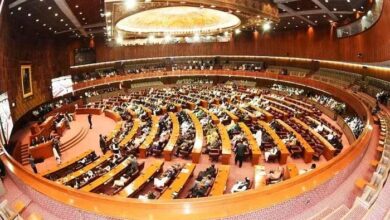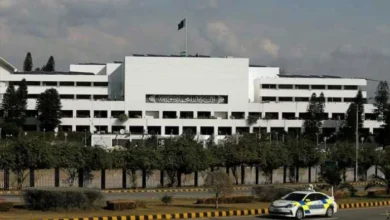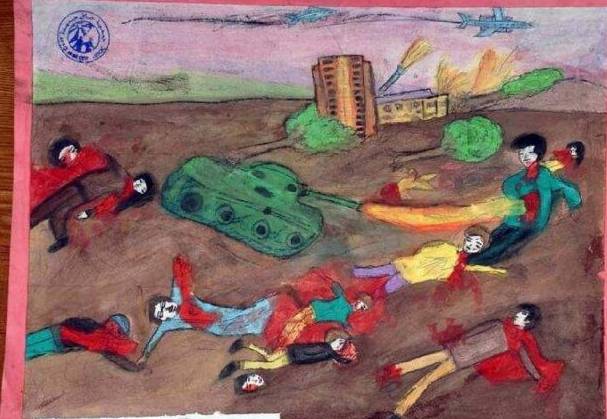

Islamabad Talks following a two-week ceasefire agreement brokered by Pakistan comes at a point when it became dire to prevent an impending apocalypse as President Trump had earlier threatened Iran with annihilation of its entire civilization in his explicit warning to Iran. The second round of talks is in the process of materializing. This moment comes at a cost of many human lives lost to the maddening war, with Iran bearing a painful burden of losing innocent human lives in the US-Israel missile strikes. Of 2,076 lives lost so far, 212 were children, including the little souls who were killed in a direct hit on their school that was in session in Minab; this was further authenticated by the Independent fact-finding report published on 4th March, 2026. It must be noted that the airstrike on a school or hospital places the US and Israel under one of the six grave violations against children in times of war. These grave violations are identified and condemned by the UN Security Council, which has devised its framework reporting mechanism to monitor report and respond to such violations. In the recent war, Israeli strikes on Lebanon have also resulted in deaths of 130 children, out of 2,496 innocent lives lost there. The Israeli aggression continues. The Iranian retaliation to Israel and the US bases in the Gulf countries, including their important economic, commercial, energy, and water desalination centers resulted in 28 civilian deaths across the Gulf under its target, whereas 26 casualties were reported in Israel.
In fairness to the victims belonging to any side, one cannot also absolve the Iranian regime that adopted brutal measures against its own political dissenters who protested against the regime and were met with public executions.
But the terms of peace being discussed are not about the human casualties or the irreparable losses. If there were any terms on reparations placed on the part of Iran, they held little value against the demand for Iran to denuclearize and degrade its enriched uranium–not about accountability, not about reiterating safeguards, and apart from placing political positioning by sharing heartbreaking pictures of martyred children on social media by the delegates, human rights were nowhere mentioned here. As the terms of peace are being discussed, an MOU hopefully signed, the bigger question will remain of the unaddressed war crimes.
The conflict is indeed becoming a pattern with US and Israel strikes against Iran. In 2024, Israel, made confident by unstopped genocidal actions in Gaza and strikes against Lebanon targeting Hezbollah, further exerted aggression to directly target Iran’s defensive missile system, which is significant because this direct strike is considered a first in decades. In June 2025, Israel again struck Iran to target its supposed nuclear sites, but with its own defence system not holding up, persuaded for US military intervention, which it responded to by striking on Iran’s nuclear facilities at Fordow, Natanz, and Isfahan. Trump claimed to have completely “obliterated” nuclear capacities, but there were serious doubts as to the extent of damage caused, regardless of how highly risky it was.
To the US attacking these facilities, IAEA Director General Rafael Mariano Grossi expressed deep concerns over the actions.
“This development is deeply concerning. I have repeatedly stated that nuclear facilities must never be attacked, regardless of the context or circumstances, as it could harm both people and the environment. Such attacks have serious implications for nuclear safety, security and safeguards, as well as regional and international peace and security”
He further reiterated important principles laid down in its resolutions by the General Conference of the International Atomic Energy Agency (IAEA), which state that
“Any armed attack on and threat against nuclear facilities devoted to peaceful purposes constitutes a violation of the principles of the United Nations Charter, international law and the Statute of the Agency”.
There are serious concerns as the radiation caused by such attacks can affect populations and can go beyond borders.
Iran reported partial impact on Nantaz facility, whereas no radiation levels rose in the other two facilities.
IAEA also works to ensure compliance, and reports to its Board of Governors. In 2025, the IAEA in its 2025 report stressed on Iran for compliance of Article 7.C of the Statute of the Agency, and Article 19 of Iran’s Comprehensive Safeguards Agreement, which require disclosure of information related to nuclear facilities or any related activities, and verifications. In its report, the IAEA called on Iran to provide necessary designs as is mandated under the Non-Proliferation Treaty, of which Iran is a signatory.

Iran had earlier reached a deal with the US and other nations involving China, France, Germany, Russia and the United Kingdom, who signed the deal in 2015, known as the Joint Comprehensive Plan of Action, or the JCPOA. Despite all earlier attempts and ensuring scrutiny of Iran’s nuclear program and uranium enrichment, there remains a vital question on the degree of fairness in applying the same pressure on Iran’s biggest adversary in the Middle East, Israel. The fact that some nations have chosen to not be members of the Non-Proliferation Treaty, without facing any real repercussions, only makes the narrative of nuclear weapons as a “deterrence” stronger. This is the dangerous predicament that the world faces.
Previous Negotiations and a Lingering Sense of Betrayal
Iran retaliated to US strikes on its nuclear facilities by attacking their airbase in Qatar. To avoid further escalation in the Middle East, the US was quickly moved to reach a peace deal between Iran and Israel, but it only took four hours for Israel to break away from it. The betrayal is not something that can be forgotten during peace negotiations. Even in that 12-day conflict, a toll of 1,062 innocent Iranian lives were lost, whereas Israel suffered 29 casualties.
It is also very important to consider the factors that led Trump to order strikes on 28th February. There was no legal or moral backing because these strikes on Iran came in the midst of ongoing negotiations led by Oman that began in January. In the talks, Steve Witkoff played a key role in what led to Trump quickly firing the trigger. Some media and think tanks suggest Witkoff apparently had no technical insights into Iran’s complex uranium and nuclear enrichment programs. Yet in the discussion, as claimed by the Omani Foreign Minister, Iran had agreed to not having stockpiles, something the media had missed. In a TV interview, this is what he had to say:
“It really makes the enrichment argument less relevant, because now we are talking about zero stockpiling. And that is very, very important, because if you cannot stockpile material that is enriched then there is no way you can actually create a bomb, whether you enrich or don’t enrich. And I think this is really something that has been missed a lot by the media, and I want to clarify that from the standpoint of a mediator.”
But a lost opportunity here remains that Iran had also agreed to talks and cooperation with GCC countries and to improve ties with them.
“We have agreed, in general, to discuss economic and security cooperation between Iran and its neighbours, and set up a process of dialogue that will really start the elements of building confidence, building a rapport, building a process that can really lead us to reach an understanding on all these various areas of concern, areas of concern on the Iranian side, and areas of concern on the GCC side.”
On 26th February, Iran had agreed to meet with the head of the IAEA for allowing inspections during the upcoming technical negotiations that were scheduled in Geneva for 2nd March. The zero stockpiling, no enrichment program, removing all capacities for developing a nuclear bomb, agreeing on ways for allowing IAEA inspectors, and further fostering cooperation with GCC countries as part of the almost-reached peace deal was brutally cut short and sabotaged when the US along with Israel struck Tehran on 28th February. “Regime change” is what they came up with, but in reality, the military objectives remained unclear, which is exactly what makes the war more dangerous than any met in the Middle East.
The earlier betrayal was remembered by Iran when in Oman for the talks. The repeated breach of trust was again expressed during the recent inconclusive talks in Islamabad during its first round.
This time again, Iran’s Foreign Minister Araghchi claimed they were just “inches away from an MOU” in Islamabad.
What Memory speaks of US-Iran Relations
It speaks of recklessness when it comes to Iran. There are two very prominent US interventions that are crucial to mention in order to understand what shapes Iran and its relations with the world today.
Operation TPAJAX of 1953 perhaps became the reason for the start of the 1979 Islamic Revolution. In 2013, after decades of legal battles by the National Security Archives, after leaks in the New York Times in 2000, the CIA officially published memoirs of its direct involvement in the coup to overthrow Mossadegh’s democratically elected parliament in 1953, and bringing Iran under the direct monarchy of Reza Shah Pahlavi, because of the fear that Mossadegh’s policy for nationalisation of the oil companies would disrupt cheap global supply to the West. The coup brought the country to the brink of a civil war with infighting within the military ranks between Shah loyalists and those upholding Mossadegh’s legal government. Political as well as religious propaganda was used to incite sentiments against Mossadegh.

Pages from Dr. Donald N. Wilber’s memo on overthrowing Mossadeq’s Overthrow 1953, Curtsey: National Security Archive
The other is the scandalous arms sale to Iran in 1981. It was first disclosed by a Lebanese magazine and later revealed by Seymour M. Hersh in his comprehensive story for the New York Times published in 1991, for the latter’s double gaming by indirectly permitting US-made arms sales by Israel to Iran, at a time when the US hostages from Iran had just been recovered in 1981. This was a shocking revelation because it came during the time when the US had declared an embargo on Iran. Where sales were being made to Iran under cover, the US was also directly supporting Iraq during its invasion of Iran, where it did not shy away even from using chemical weapons. The long war again resulted in about 500,000 lives lost.
There were other instances that rendered the intentions and aims in the Middle East questionable, because such covert actions have come at the cost of leaving thousands dead to ensure control over oil resources in the region. Such actions ultimately became the experiments whose consequences had gone wrong, turning volatile and rogue
Leaving US Isolated in its war with Iran?
To say that EU nations are siding with the US or not is complex. There are dilemmas that become too obvious in their repressed diplomatic expressions over ongoing blatant human rights abuses. On the other hand, Europe is in the midst of dealing with public anger over their inaction and the angst towards the US for being a direct partner to it. His tweet threatening annihilation of an “entire civilization” was a political disaster even in his home base. On the other hand, Europe is at a risk of straining its most crucial partner for keeping the Global North influential. But this partnership is at a brink, with rising costs as a result of this war, and Trump shifting the burden on Europe for not siding in this campaign. Trump’s intentions over Greenland earlier had also caused great resentment, in particular among the Nordic states.
As for NATO, they had managed deployments in Cyprus when the UK air base was attacked by a drone, and intercepted missiles over Turkey, but could not commit to an active engagement with the US on the Strait of Hormuz. There was no legal basis for carrying out this venture that was not defensive.
The Gulf nations that have come under fire from Iran for hosting US bases and commercial centres hold their resentment, even if they had not retaliated. Things were on the verge of a retaliation when Pakistan finally spoke against Iran’s strikes on Saudi Arabia, reminding it that it would have to take a side, as Pakistan is bound to honour its Strategic Defence Pact with Saudi Arabia. It is also important to recall that on the day when peace talks were underway in Islamabad, Pakistan had already sent fighter jets to Saudi Arabia.
There is a need to understand where integrity lies, guided by a sense of balance in a volatile world that runs on uncontrolled ambitions of influence and unquestioned dominance of the region, which comprises the GCC nations, North Africa, and Central and South Asia. This is the region ferociously preyed upon not just by its direct foes but by the proxies and militants they run, some of which are in their control, others acting on the loose. The menace of proxies and non-state actors needs to be cleared for a meaningful and lasting peace to take place, because safeguarding human lives should not be a negotiable bait under any circumstances.
Can we expect Peace?
We can. It will be meaningful and long-lasting only if there is an acknowledgement that human rights and accountability have to be at the heart of these talks. But the pressure for holding them comes from the need to open the trade routes and keep markets in control. What is missing is that genocides and mass killings have gone unaccounted for, humanitarian aid important to save lives has been halted and ceased, and the credibility of the UN as a peacemaking agent has been lost. What are we really expecting to last if there remains no realisation and admission of the recklessness that has caused perpetual unrest and the loss of precious lives? Peace without acknowledgement of the great wrongs, and without accountability, will not be sustainable. The memory of brutality is not easily erased.