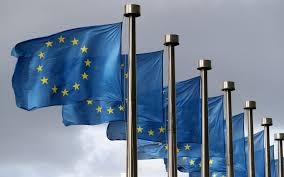

The International Monetary Fund (IMF) has asked European Union countries to think about new ways of managing money as they face growing spending needs. It says Europe may need to work more closely together and even share borrowing so that countries can handle rising costs in a better way.
Many European countries are under pressure because their expenses are increasing. These rising costs come from several problems happening at the same time. One major issue is an ageing population, which means more spending on healthcare and pensions. At the same time, governments are spending more on defence, climate change projects, and economic support programs.
The IMF warns that these challenges are making it harder for individual countries to manage their budgets alone. Some countries are strong financially, but others are weaker and struggle to keep up with rising expenses. Because of this gap, the IMF believes stronger teamwork is needed within the European Union.
One of the main ideas suggested is joint borrowing. This means EU countries would take loans together instead of each country borrowing separately. According to the IMF, this could make it easier and cheaper to raise money, especially for large projects that benefit the whole region.
The IMF says shared borrowing could help balance the differences between rich and less wealthy countries in the EU. Stronger economies could support weaker ones, which would help keep the entire region stable during difficult times.
The report also says the European Union needs to improve its financial system. Right now, each member country has its own budget rules and spending policies. This makes it harder for the EU to react quickly when economic problems happen in different parts of the region.
Experts believe better coordination between countries would help Europe respond faster to financial challenges. It would also allow governments to plan bigger projects together, such as building infrastructure, improving energy systems, and investing in clean and green technology.
However, the idea of shared debt is not new, and it is often debated. Some countries do not agree with it because they fear they might have to pay for the financial problems of other nations. This concern has made it difficult for the EU to fully accept joint borrowing in the past.
Even with these disagreements, the IMF says the situation is becoming more serious. It believes global challenges are increasing, and countries can no longer rely only on their own strength to solve them.
Europe is already dealing with several long-term issues. An ageing population is increasing social spending, while climate change is forcing governments to invest heavily in environmental protection. At the same time, economic growth in some areas is slow, adding more pressure on public finances.
The IMF says that working together financially is becoming more important than ever. It believes that shared responsibility and better cooperation can help Europe stay strong and stable in the future.
Economists say the IMF’s message has restarted an important debate in Europe. Some leaders support closer financial unity, while others want to keep full control of their own budgets.
Still, the IMF’s advice is clear: Europe may need to change how it manages money if it wants to handle future challenges successfully.