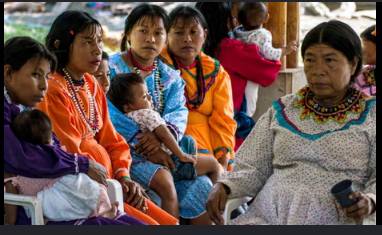

Colombia’s Senate approved a law Wednesday to ban female genital mutilation (FGM), a practice that persists in some of the country’s Indigenous communities, after two years of debate.
The World Health Organization says the full or partial removal of the clitoris causes serious health damage, poses a risk of death and violates the fundamental rights of girls.
If approved by leftist President Gustavo Petro, Colombia will become the first country in Latin America to pass such legislation.
The origins of the practice in Colombia are unknown, and NGO Equality Now believes it is the only country in Latin America where the practice continues. Between 2020 and 2025, 204 FGMs were reported, but the number is believed to be vastly underreported.
In April, AFP traveled through the western mountainous coffee-growing regions, the ancestral territories of Embera Chami and Katio peoples, where FGM affects hundreds of girls.
Alejandrina Guasorna, a 74-year-old farmer, found out as an adult that her clitoris had been removed shortly after birth.
But she grew up surrounded by the practice, and its deadly consequences.
“They were bringing in dead girls all the time,” she told AFP. “We thought it was normal.”
Embera Indigenous leader Juliana Domico spoke out against the practice on the Senate floor.
“This is not a cultural practice, absolutely not. It is a harmful practice that was imposed,” she said.