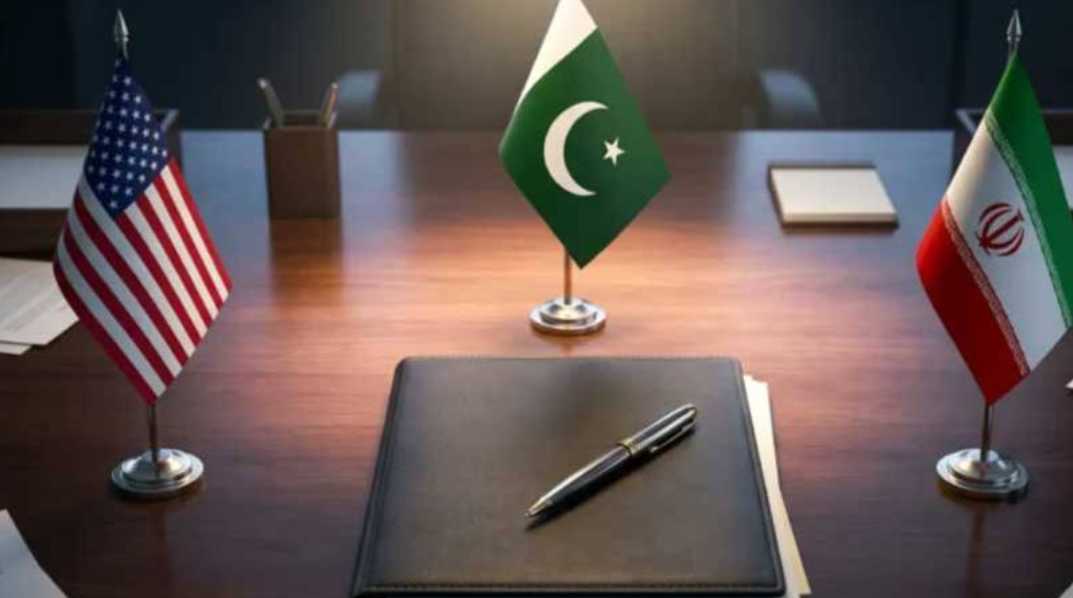

Pakistan has emerged as a master negotiator between the United States and Iran by leveraging uniquely balanced bilateral access, strategic geographic positioning, aggressive military-led backchannel diplomacy and a balanced foreign policy. When direct lines between Washington and Tehran collapsed following the military escalation in early 2026, Pakistan stepped into the vacuum. It used its deep institutional relationships with both adversaries to broker an April 2026 ceasefire and host historic high-level peace talks in Islamabad. Unlike traditional Gulf Arab mediators (like Oman or Qatar) whose channels were strained or directly targeted during the conflict, Pakistan maintained intact, high-level access to both leadership hubs. The June 2026 framework agreement between the United States and Iran is widely recognized as the most significant diplomatic success for Pakistan in its modern history.
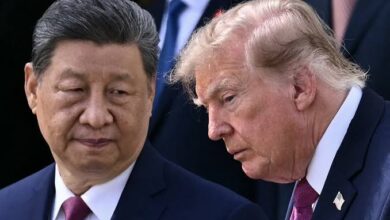
By actively orchestrating the Islamabad Memorandum of Understanding (MoU) signed remotely by Donald Trump and Masoud Pezeshkian on June 17, 2026, Pakistan elevated its global standing from a troubled regional player to an indispensable global diplomatic stakeholder.
By brokering the Islamabad Memorandum of Understanding (MoU) on June 17, 2026, Pakistan secured vital geopolitical, economic, and security rewards that transformed its domestic and international standing. Pakistan effectively moved from a transactional security partner to an indispensable global power broker for the Trump administration. Following Pakistan’s active diplomacy, major U.S. commercial deals accelerated—including a $500 million critical minerals mining agreement with U.S. Strategic Metals (USSM) and a pioneering digital architecture partnership with World Liberty Financial. Analysts note that Pakistan’s elevated strategic importance mirrors the post-9/11 era, giving the country significant diplomatic goodwill when dealing with global lenders and the IMF. De-escalating the conflict directly eliminated the risk of a chaotic regional war spilling over Pakistan’s unstable 900km western border. The lifting of the U.S. naval blockade and the easing of sanctions on Iran immediately revitalized transit trade along the Baluchistan border. With Iran-U.S. tensions entering a 60-day de-escalation period, the long-delayed Iran-Pakistan (IP) gas pipeline project has finally been put back on the viable economic agenda. Pakistan proved it could simultaneously navigate relationships with Washington and Tehran while cooperating directly with China, Saudi Arabia, Qatar, and Türkiye without being forced to choose sides. The success shifted global perception of Islamabad from an economically fragile state to a highly capable, mature global facilitator, paving the way for current technical talks in Switzerland.
Pakistan can turn its successful diplomatic mediation between the United States and Iran into a massive $20 billion economic windfall, transitioning its fragile economy away from repeated bailouts toward regional connectivity. By capitalizing on the June 2026 de-escalation framework and the newly issued U.S. sanctions waiver (General License X), Pakistan can extract direct financial benefits. The stabilization of the Strait of Hormuz, the vital corridor through which nearly all of Pakistan’s oil passes, removes the extreme risk premiums that drove Pakistani inflation to 11.7% in May 2026. Normalized global oil flows directly lower domestic fuel costs, alleviating the balance-of-payments crisis and shifting the national current account back toward a surplus. For over a decade, Pakistan faced multi-billion-dollar arbitration penalties from Tehran due to stalled construction under U.S. sanctions. The diplomatic breakthrough paves the way for a potential U.S. sanctions waiver, allowing Pakistan to legally resume construction and import cheap Iranian natural gas. During the 2026 maritime blockade, container throughput at Gwadar Port skyrocketed to 11,000 TEUs in a single month. A permanent peace deal allows Pakistan to market Gwadar as the ultimate, secure energy transshipment hub connecting the Middle East to China and Central Asia. For years, trade across the 900km Pakistan-Iran border was pushed into illicit shadow networks due to heavy sanctions. With the U.S. Department of the Treasury easing trade, Pakistan can formalize immense agricultural, livestock, and textile exports through official banking channels. The de-escalation embeds Pakistan into the wider economic fabric of the Gulf region, transitioning its relationship with Middle Eastern neighbors from one of transactional dependency into active defense, trade, and technology partnerships. Pakistan’s newly earned strategic capital with the Trump administration gives it immense leverage when negotiating loan extensions and structural adjustments with the International Monetary Fund (IMF) and Gulf bilateral lenders. By establishing political reliability, Pakistan’s Special Investment Facilitation Council (SIFC) can fast-track high-profile Western deals. This includes finalizing the $500 million critical minerals mining project with U.S. Strategic Metals (USSM) and cutting-edge digital infrastructure ventures. A full-scale Middle East war threatened the livelihoods of millions of Pakistani expats. This peace deal protects current remittance inflows and restores the robust demand for 700,000 to 800,000 Pakistani workers annually in Gulf development projects. As geopolitical tensions in traditional investment safe-havens like Dubai shift, a stable Pakistan becomes an attractive “Plan B” for the 10-million-strong Pakistani diaspora to pump billions of dollars directly into domestic property and local industrial markets.
Pakistan’s economy is fundamentally restricted by five systemic and structural crises: skyrocketing inflation, a massive external debt burden, severe energy circular debt, a critically low tax-to-GDP ratio, and stagnant industrial productivity. While recent IMF reforms and the June 2026 economic survey highlight a gradual stabilization and a 3.7% GDP growth rate for FY2025-26, the country continues to struggle with severe macroeconomic challenges.
Pakistan must immediately convert informal diplomatic goodwill into legally binding frameworks. We have to immediately resume physical construction on the Pakistani side of the gas pipeline to connect to Iran’s completed network, bringing cheap energy to Pakistan’s industrial hubs. We have to upgrade Gwadar’s container handling capacity to transition it from a transshipment experiment into a permanent regional energy and trade gateway connecting China, Central Asia, and the Gulf. We have to build specialized industrial zones along the 900km Iran-Pakistan border, focusing on legalizing the petrochemical, agricultural, and livestock trade.
External economic opportunities will fail if Pakistan does not repair its broken domestic economy. Pakistan will have to use the incoming cheap Iranian gas to lower national power generation costs. This will allow the government to reduce electricity tariffs, eliminate the circular debt, and stop sudden tariff hikes. We have to pass energy savings directly to the manufacturing and textile sectors. Lowering production costs will make Pakistani exports highly competitive in international markets. We have to use the formalization of cross-border trade to bring untaxed wealth into the documented economy. This will reduce the tax burden on the salaried class and shrinks the fiscal deficit.
Pakistan will have to use the diplomatic leverage gained from the U.S. and Iran to negotiate highly favorable terms, longer repayment windows, and lower interest rates during future reviews with the IMF and World Bank.
Moreover, Pakistan will have to deepen economic integration with China, Saudi Arabia, and Türkiye, shifting Pakistan’s foreign policy permanently from a geopolitical security state to a geo-economic trade state.
The writer is an author of more than dozens of books on the variety of topics. He is founder of Genius Forum (GF), a Pakistan -based intellectual platform.