
Pakistan has said that any positive progress involving China on Himalayan water resources is welcome, describing Beijing as an important stakeholder in the region’s shared river systems, it was reported on Thursday.
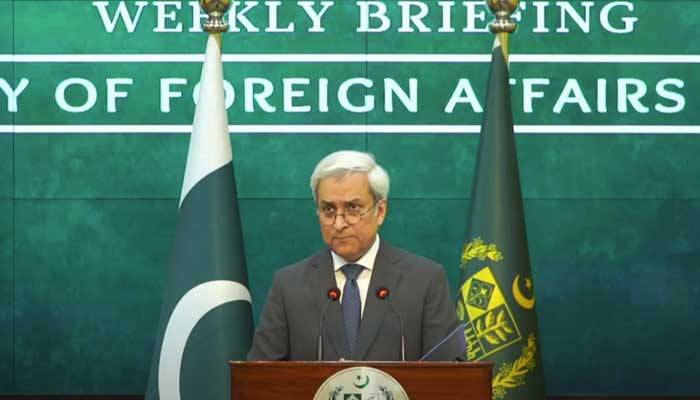
Speaking at the weekly media briefing on Thursday, Foreign Office spokesperson Tahir Andrabi said the Indus Waters issue remains among Pakistan’s highest national priorities and that Islamabad is closely monitoring India’s activities related to the river basin.
“We are keeping a close eye on India’s ground activities in this regard, and any progress from China is positive as China is also a partner in this matter,” he said.
Andrabi noted that the Himalayan Ice Cap is a shared natural heritage of the countries connected to the region’s river systems, including China.
He stressed that cooperation among all stakeholders is essential for the sustainable management of water resources originating from the Himalayas.
The spokesperson said Pakistan is carefully observing developments linked to the Indus Waters Treaty and retains the right to take all necessary measures if any actions threaten its legitimate water interests.
He further asserted that no country possesses the capacity to render Pakistan barren through unilateral actions, adding that any challenge to the Indus water system would only strengthen the resolve of stakeholders to safeguard shared resources.
Pakistan has consistently maintained that the Indus Waters Treaty provides a clear legal framework governing water distribution and remains committed to protecting its rights under the agreement.
Andrabi stressed that the Himalayan river system, stretching from the Indus to the Mekong, is a shared natural resource that sustains billions of people across several countries.
He noted that Himalayan glaciers serve as a crucial source of water for many nations, including China, and argued that regional cooperation on shared water resources is essential.
According to the spokesperson, climate change remains the greatest threat to the system, while certain actions by India have added further challenges. Andrabi said the Indus Waters Treaty has a clear legal framework that defines the roles of Pakistan, India and the World Bank.
He reiterated Pakistan’s commitment to full implementation of the treaty, warning that any disruption to the flow of Indus waters would affect every Pakistani citizen.
He emphasised that water security is an issue that unites the nation rather than divides it. Referring to recent developments, he said the last formal meeting under the World Bank-backed treaty framework took place in 2022.
The spokesperson accused India of using the Pahalgam incident as a justification for its actions, arguing that alleged treaty violations had begun long before the incident occurred. He described attempts to link water issues with terrorism as unfounded and unacceptable, claiming that India’s actions reflected a broader effort to control shared resources.
He said formal communication channels remain available between the Indus Water Commissioners of both countries and that Pakistan’s commissioner would continue engaging with the Indian side through mechanisms provided under the treaty. Maintaining these channels, he added, remains Pakistan’s responsibility, and all communications will continue within the treaty framework.
Responding to questions from journalists, Andrabi said he had no new information regarding Asif Merchant. He also confirmed that a recent Indus Waters seminar examined various aspects of alleged Indian violations of water-sharing arrangements.
Turning to maritime security, the spokesperson said that nationals of several countries, in addition to Pakistanis, were among those being held aboard the hijacked vessel MT Honour. He said Pakistan was pressing the ship’s owners to secure the early release and repatriation of the crew.
Pakistan has reaffirmed its commitment to supporting efforts aimed at resolving the Middle East crisis and said it will continue to play a mediating role in facilitating dialogue between the United States and Iran.
Foreign Office spokesperson Tahir Andrabi confirmed that important meetings had recently taken place in Doha and that the parties had agreed to continue indirect negotiations.
According to the 24NewsHD TV channel, he said Pakistan remained determined to continue its mediation efforts alongside Qatar and noted that both countries were maintaining regular contact with the United States and Iran to support the diplomatic process.
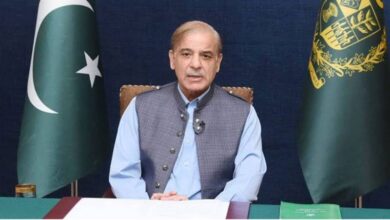
The spokesperson also announced that Prime Minister Shehbaz Sharif will undertake visits to Iran and Türkiye from 3 to 5 July. During his visit to Iran, the prime minister is expected to attend the funeral ceremonies of the late Iranian Supreme Leader.
He added that the prime minister will also participate in a business conference in Türkiye as part of efforts to strengthen economic and commercial cooperation. Deputy Prime Minister and Foreign Minister Ishaq Dar will accompany him during the visit.
On consular matters, Andrabi stated that Pakistan had provided India with a verified list of 753 Indian prisoners. He said the information had been compiled through official channels, family contacts and media reports. While Pakistan was unaware of the methodology used by India to prepare its list of Pakistani prisoners, he maintained that Pakistan’s records were accurate and verified.
The spokesperson also highlighted recent counterterrorism operations conducted after attacks in Karachi and other parts of the country. He said security forces had carried out targeted actions in border regions and intensified intelligence-based operations in Khyber Pakhtunkhwa, Balochistan, Karachi and other areas.
According to the Foreign Office, four militants were killed during an operation in Bajaur on 28 June. Among those killed was a senior commander of the banned Tehreek-e-Taliban Pakistan, identified as Khan Forosh Abdul Zabil. The spokesperson claimed that three other militants belonged to the militant group Jamaat-ul-Ahrar and reiterated that there would be no compromise on the protection of citizens and national security.
Andrabi further disclosed that Afghanistan’s chargé d’affaires was summoned to the Foreign Office on 29 June following the Karachi attack. A formal diplomatic protest was also lodged through Pakistan’s ambassador in Kabul. He said the démarche was issued after investigators found evidence of Afghan nationals’ involvement in the attack, including the arrest of one Afghan suspect. Pakistan, he added, had conveyed concerns that Afghan territory was being used for activities targeting Pakistan.
The spokesperson said the Ministry of Interior had subsequently directed authorities to take immediate action against foreign nationals residing illegally in the country.
Highlighting economic diplomacy, Andrabi welcomed Pakistan’s membership of the International Olive Council, describing it as an important development. He noted that Pakistan participated for the first time as a permanent member at the council’s 123rd meeting in Lisbon and said the government would focus on increasing olive production and developing the sector as an export industry through what he termed “olive diplomacy”.
The spokesperson also confirmed that Pakistan has so far facilitated the return of 70 Iranian nationals to their homeland as part of ongoing humanitarian assistance efforts.
Addressing security matters, the spokesperson said Pakistan’s security forces had recently carried out intelligence-based operations under Operation Ghazab-ul-Haq.
He stressed that the protection of Pakistani citizens remained the government’s highest priority and that no compromise would be made on national security.
Commenting on water-related disputes with India, Andrabi reiterated Pakistan’s position that India cannot unilaterally suspend the Indus Waters Treaty.
AFP reported Pakistan’s Prime Minister Shehbaz Sharif will attend the funeral of the late Iranian supreme leader Ali Khamenei this week, the South Asian nation’s foreign ministry said on Thursday.
“The Prime Minister, Muhammad Shehbaz Sharif, will go to Iran and Turkey from 3-5 July… he will go to Iran first for (the) supreme leader’s funeral,” ministry spokesman Tahir Andrabi told reporters.
Pakistan has been mediating between the United States and Iran to end the regional war which began in February with US-Israeli strikes that killed the 86-year-old Iranian supreme leader in Tehran.
Andrabi reiterated earlier statements from Pakistan and fellow mediator Qatar that US-Iranian indirect talks in Doha this week had made progress and another meeting could take place after Khamenei’s funeral.
The public funeral will begin on Saturday, with his body lying in state at the colossal complex in central Tehran that hosts major Friday prayers, official ceremonies and religious gatherings.
Pakistan shares deep historic ties with Iran. The two share a 900-kilometre (560-mile) border and cultural links, with Sunni-majority Pakistan home to the world’s second-largest Shia population after Iran.
Sharif’s trip to Turkey would involve meetings with Turkish leadership and businesspeople, Andrabi said.