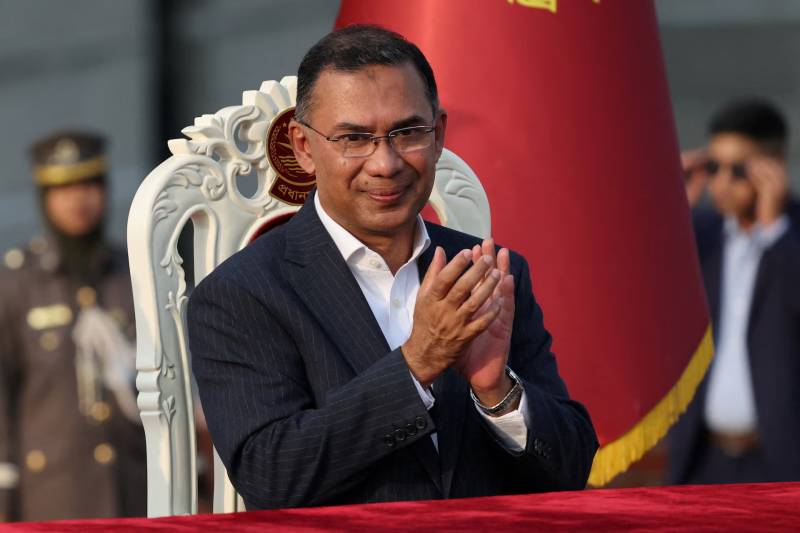

The first foreign visits of Bangladesh’s Prime Minister Tarique Rahman to Malaysia and China represent far more than routine diplomatic engagements. They symbolize the foreign policy priorities of a new political leadership seeking to redefine Bangladesh’s place in an increasingly competitive Indo-Pacific region. Every newly elected leader uses initial overseas visits to communicate strategic intentions, and Tarique Rahman’s choice of Kuala Lumpur and Beijing sends a carefully crafted message about Dhaka’s economic ambitions, diplomatic balancing, and geopolitical calculations.
Bangladesh enters this new political phase at a time when South Asia is witnessing profound strategic transformations. The rivalry between China and the United States continues to shape regional diplomacy, while India seeks to preserve its traditional influence over neighboring countries. Meanwhile, emerging middle powers such as Malaysia have become increasingly attractive partners for trade, investment, technology transfer, labor cooperation, and Islamic finance. Against this backdrop, Tarique Rahman’s first diplomatic engagements reflect a pragmatic rather than ideological foreign policy.
Malaysia was a logical first destination. For decades, Malaysia has remained one of the largest employers of Bangladeshi migrant workers, whose remittances contribute significantly to Bangladesh’s foreign exchange reserves. Beyond labor cooperation, both countries have substantial opportunities in halal industries, Islamic banking, higher education, digital technologies, healthcare, tourism, renewable energy, and manufacturing. Bangladesh also seeks to attract greater Malaysian investment into its expanding special economic zones while encouraging industrial relocation from higher-cost economies.
Another important dimension of the Malaysia visit lies in regional diplomacy. As an influential member of the Association of Southeast Asian Nations (ASEAN), Malaysia provides Bangladesh with valuable access to Southeast Asian markets and institutions. Dhaka has long aspired to strengthen its engagement with ASEAN economies, recognizing that future growth depends on diversification beyond traditional export destinations in Europe and North America. Enhanced cooperation with Malaysia can facilitate Bangladesh’s integration into broader Asian supply chains and reduce excessive dependence on any single economic partner.
China, however, remains the centerpiece of Bangladesh’s long-term development strategy. Beijing has become one of Bangladesh’s largest trading partners and an important source of infrastructure financing. Chinese participation in highways, bridges, power generation, ports, industrial parks, telecommunications, and manufacturing has transformed Bangladesh’s development landscape over the past decade. Tarique Rahman’s visit therefore reflects continuity in economic cooperation even as political leadership changes.
During discussions in Beijing, Bangladesh is expected to prioritize infrastructure modernization, export diversification, digital connectivity, green energy, artificial intelligence, industrial relocation, agricultural technology, and high-value manufacturing. As Bangladesh prepares for graduation from the Least Developed Country category, enhancing industrial competitiveness has become an urgent national priority. Chinese investment in electronics, automobiles, renewable energy equipment, pharmaceuticals, and advanced manufacturing could help Bangladesh transition toward a more diversified and technology-driven economy.
Equally significant is Bangladesh’s desire to maintain strategic balance. While deepening relations with China, Dhaka is unlikely to abandon constructive ties with India, Japan, the United States, or European partners. Instead, the new government appears inclined to pursue a multi-vector foreign policy that maximizes economic opportunities while minimizing strategic dependence on any single power. This balancing strategy has become increasingly common among middle-income Asian countries navigating great-power competition.
Speculation has naturally emerged regarding a possible future visit by Prime Minister Tarique Rahman to Pakistan. Although no official confirmation exists, improved bilateral engagement would not be surprising given the changing political environment in both countries. Relations between Bangladesh and Pakistan have often been constrained by historical grievances dating back to 1971. However, more than five decades later, younger generations increasingly prioritize economic development over historical disputes.
Should such a visit occur, both governments are likely to emphasize practical cooperation rather than contentious historical narratives. Potential areas of collaboration include bilateral trade, textile manufacturing, pharmaceuticals, agricultural research, food security, information technology, digital entrepreneurship, higher education, climate resilience, disaster management, healthcare, tourism, defense dialogue, sports exchanges, and people-to-people contacts. Pakistan’s pharmaceutical and information technology sectors, combined with Bangladesh’s globally competitive garment industry and growing manufacturing base, present opportunities for mutually beneficial partnerships.
The geopolitical significance of a Bangladesh-Pakistan rapprochement would extend beyond bilateral relations. Improved ties could contribute to a more balanced diplomatic architecture in South Asia by reducing regional polarization. Greater economic connectivity between South Asian economies could complement broader regional integration initiatives while creating new trade corridors linking South Asia with Southeast Asia, Central Asia, and western China.
From a geostrategic perspective, closer Bangladesh-Pakistan engagement would inevitably attract attention from major regional powers. India would carefully observe any substantial improvement in bilateral relations, while China could welcome broader regional connectivity that complements its economic initiatives. Nevertheless, it would be inaccurate to portray improved Bangladesh-Pakistan relations as directed against any third country. Bangladesh’s foreign policy tradition has generally emphasized strategic autonomy, peaceful coexistence, and economic pragmatism rather than alliance politics.
Geoeconomically, enhanced Bangladesh-Pakistan cooperation could unlock considerable untapped potential. Bilateral trade remains far below its possible capacity despite large consumer markets and complementary industrial sectors. Improved shipping routes, banking arrangements, direct flights, business visas, and private-sector investment could substantially increase commercial interaction. Both countries also possess significant opportunities for collaboration in digital commerce, renewable energy, agricultural innovation, and climate adaptation.
One of the most closely watched domestic political questions concerns the future of former Prime Minister Sheikh Hasina Wajid. Her political fate will largely depend on Bangladesh’s evolving legal and constitutional processes rather than international diplomacy. If investigations or judicial proceedings continue, their credibility will depend upon transparency, due process, judicial independence, and adherence to democratic norms. Conversely, any perception of politically motivated accountability could generate domestic polarization and attract international scrutiny.
For Prime Minister Tarique Rahman, managing the Sheikh Hasina legacy represents one of his greatest political tests. Democratic transitions ultimately gain legitimacy not through revenge but through institutional strengthening, impartial justice, and national reconciliation. Bangladesh’s long-term political stability will depend upon ensuring that accountability mechanisms remain independent of partisan politics while protecting constitutional rights and democratic institutions.
Ultimately, Tarique Rahman’s first overseas visits reveal a government placing economic diplomacy at the center of foreign policy. Malaysia offers labor cooperation, ASEAN connectivity, and investment opportunities. China provides capital, infrastructure, industrial modernization, and technological partnerships. Together, these visits indicate that Bangladesh seeks accelerated economic transformation while maintaining strategic flexibility in an increasingly contested Indo-Pacific environment.
If a future visit to Pakistan materializes, it could mark another significant chapter in Bangladesh’s evolving regional diplomacy. Success, however, will depend on whether both countries prioritize shared economic interests over historical divisions. In an era defined by supply chains, digital economies, climate challenges, and regional connectivity, pragmatic cooperation offers greater dividends than ideological confrontation.
Bangladesh now stands at an important diplomatic crossroads. The choices made during Tarique Rahman’s early months in office will shape not only the country’s foreign relations but also its economic trajectory and regional influence for years to come. If Dhaka successfully balances relations with China, Southeast Asia, South Asia, Western partners, and the broader Indo-Pacific while preserving its strategic autonomy, Bangladesh could emerge as one of Asia’s most influential middle powers. The first foreign visits, therefore, should be viewed not as isolated diplomatic events but as the opening moves of a broader strategy aimed at securing prosperity, stability, and greater international relevance in a rapidly changing world.