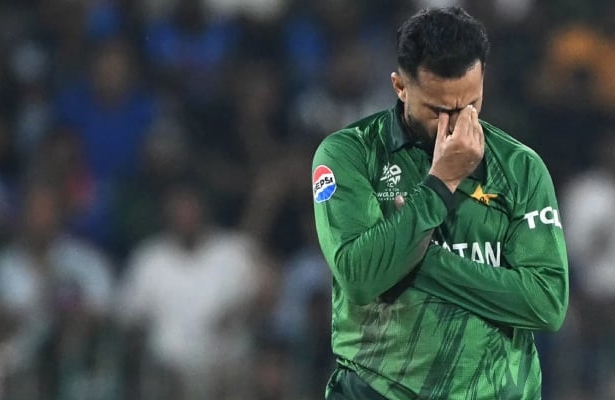

Pakistan all-rounder Mohammad Nawaz has been handed a suspension by the International Cricket Council (ICC) after admitting to a violation of the ICC Anti-Doping Code. The experienced cricketer has accepted a three-month period of ineligibility, although the ban could be significantly reduced if he completes an approved rehabilitation programme.
According to the ICC, Nawaz tested positive for Carboxy-THC, a substance classified as a “Substance of Abuse” under the Anti-Doping Code. The sample was collected following Pakistan’s ICC Men’s T20 World Cup match against the Netherlands in Colombo on February 7, 2026.
The ICC stated that its investigation found no evidence that the prohibited substance had been used to improve sporting performance. Instead, the governing body concluded that the substance had been used outside competition and was unrelated to cricket or any attempt to gain a competitive advantage.
Nawaz accepted responsibility for the violation and agreed to the disciplinary action imposed under the ICC Anti-Doping Code. As a result, he received a three-month suspension, which has been backdated to May 1, 2026, the date on which he voluntarily began serving a provisional suspension.
The ICC said the period of ineligibility will be reduced from three months to one month if Nawaz successfully completes a substance-of-abuse rehabilitation programme approved by the governing body. Since he has already spent more than two months under provisional suspension, completing the programme would make him eligible to return to competitive cricket immediately after fulfilling the rehabilitation requirement.
However, if the rehabilitation programme is not completed, Nawaz will remain suspended until August 1, 2026, under the original three-month sanction.
The disciplinary action also affects Nawaz’s playing record. The ICC confirmed that his performances in Pakistan’s T20 World Cup match against the Netherlands, along with his results in subsequent matches before the provisional suspension began, have been officially disqualified in accordance with anti-doping regulations.
The case highlights the ICC’s strict anti-doping framework, which distinguishes between substances used for performance enhancement and substances classified as drugs of abuse. While the governing body acknowledged that Nawaz’s case did not involve an attempt to gain a sporting advantage, it maintained that all players are required to comply fully with anti-doping rules.