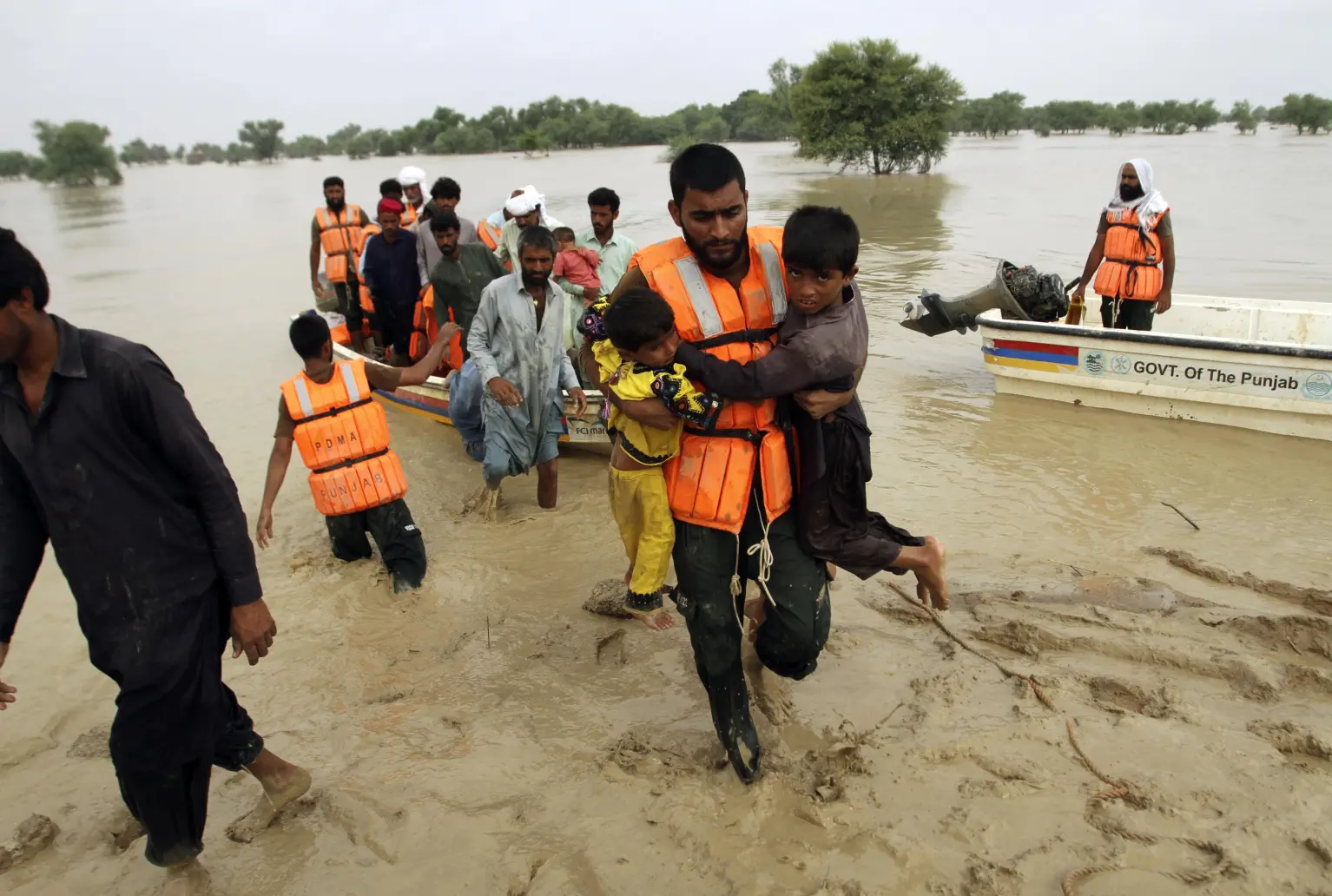

One day in July 2022, a woman residing in a relief camp in rural Sindh told the National Database and Registration Authority (Nadra) that she didn’t have an identity card to present to them, because the Indus had swallowed a third of Pakistan. Her home was gone. There were no papers left, but hers. Without this laminated card, she was not officially someone that the state could help as its citizen, and without this card, she did not exist. We remember this anecdote from the day we met her and keep going back to that camp, for it encapsulates a truth too unpalatable for Pakistan to face: the country doesn’t know, with any precision, who the victims of the recurring floods are, where they went, or if they ever came back. Four years later, we write this from Karachi where kacchi abadis (informal settlements) still swell against the storm drains and heat records are still broken every summer.
It is not a tale of the lack of disaster response. Pakistan mobilises, every time its rains come down, with veritable urgency. It is a tale of a lack of system when it comes to remembering victims after the emergency press conferences are over.
Consider the numbers. Research collated for the Othering and Belonging Institute estimates that between 2008 and 2022, an estimated 23.6 million people were displaced by floods in 107 discrete disaster events in Pakistan. During the 2022 floods, approximately 8 million individuals were displaced in one flood season. But Pakistan has yet to have a dedicated national register specifically developed to identify, count and follow up on flood-affected people. What it is now, is a repurposed poverty database.
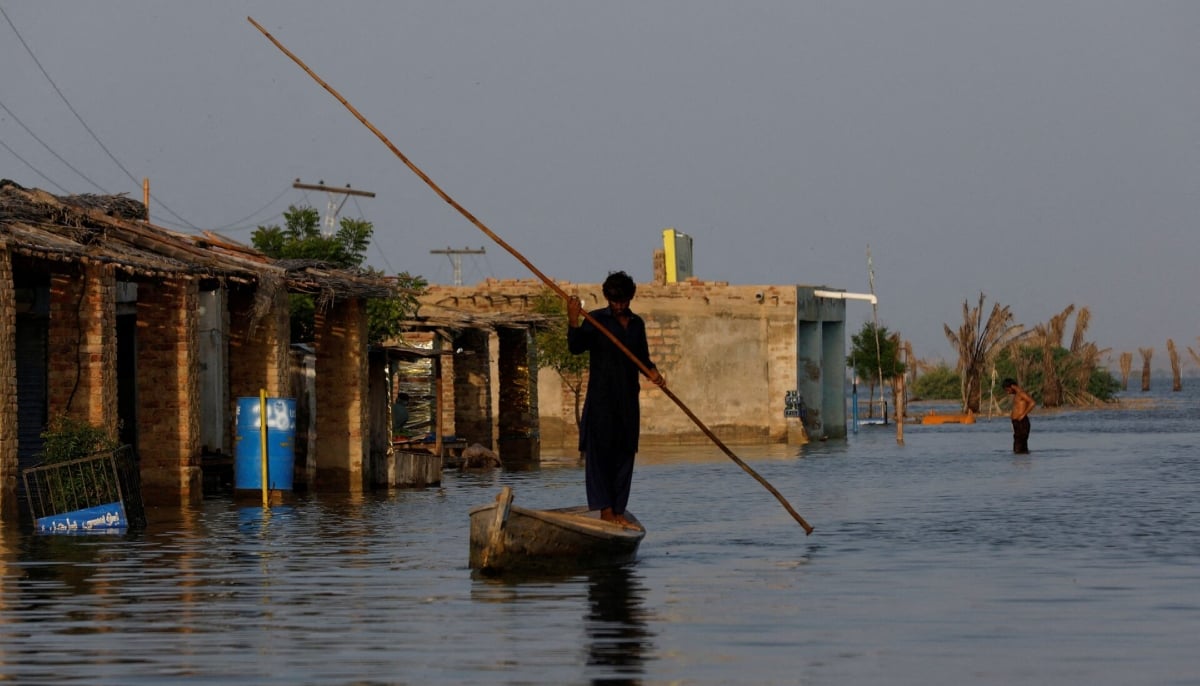
It is the National Socio-Economic Registry (NSER) maintained by the Benazir Income Support Programme (BISP), which is based on the idea of chronic poverty, not disaster-induced displacement and it shows through. The BISP provided emergency cash to poor households which were at the bottom 40% of the NSER’s poverty scores, and who also resided in a government-designated calamity-affected district in 2022. A house, which drowned in flood water, could still be denied relief if it failed to meet the poverty criteria or if it was situated outside an officially designated disaster area. During the reporting period, the BISP was able to pay to 2.76 million of the total number of 8 million of existing family beneficiaries in the flood-affected areas and no reliable data was available on the millions of families newly affected by the water itself.
In the country’s disaster bureaucracy, whether an area is officially “notified” is a crucial factor in determining the eligibility for relief. Certain areas are declared “calamity-hit” by the National Disaster Management Authority (NDMA) and the district level as well as the provincial level, and the residents of only these areas are eligible for relief. According to the United Nations Development Programme (UNDP), of the 160 districts reporting damage in 2022, 85 were designated as such. However, people residing in villages that officials did not reach or record were excluded from receiving relief. Within notified districts, verification generally ended at the union council level; the assessments themselves admitted, village-by-village verification was not being carried out.
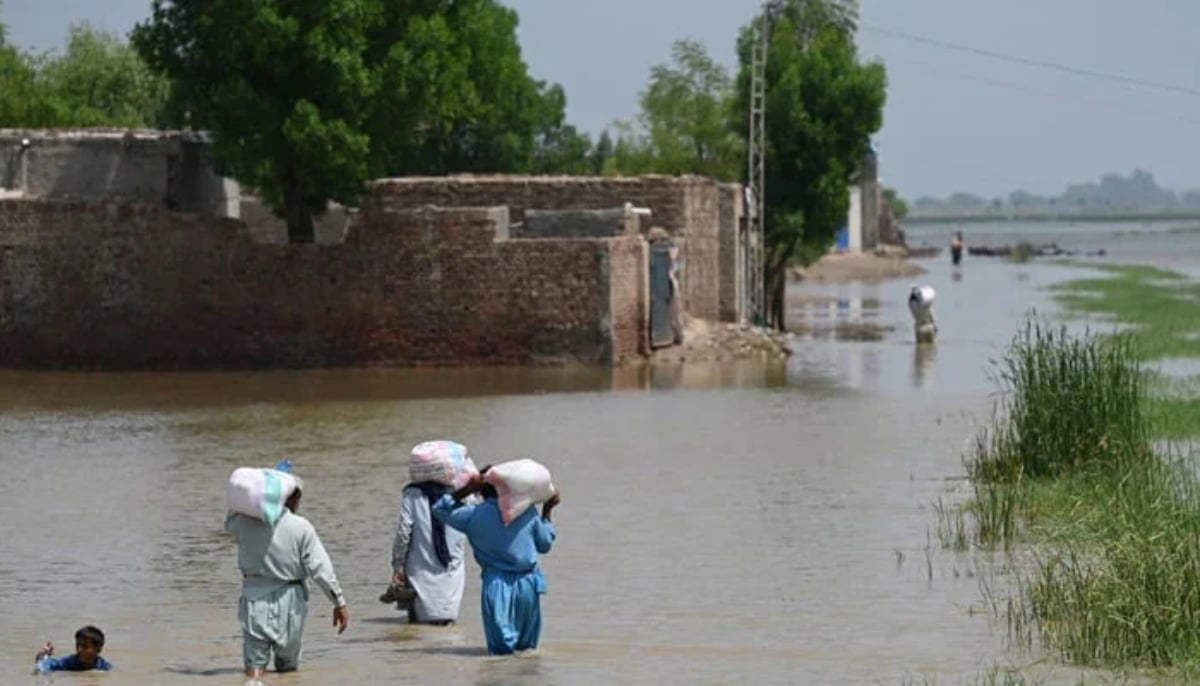
This jumble is not a bureaucratic fluke, but a structural explanation. The 18th Constitutional Amendment in 2010 vested the responsibility of disaster management to the provinces. It was a democratic accomplishment in many ways. However, it also meant that the federal government not only lost any constitutional jurisdiction to force the provinces of Punjab, Sindh, Khyber Pakhtunkhwa and Balochistan to register flood-affected people in the same manner, but also lost its legal standing to compel these provinces to conduct their registration as mandated by the federal government. The NDMA may only provide guidelines, but has no power to enforce them. As researchers studying the humanitarian response to the floods have pointed out, it has created a disjointed national picture composed of data that are incomparable and in combined. Four provinces, four methodologies, no universal record of who was affected.
All of this is worsened by the loss of the national identity card, which is the key to unlock almost all the services in Pakistan including banking, healthcare, voting, welfare, and even get a mobile SIM. During 2022, many thousands of Sindh households have lost their cards to floodwater, along with everything else. Nadra’s response included setting an extension for the expiration dates of cards soon to expire, as well as sending mobile registration units to disaster areas. It did not provide an emergency procedure for those whose cards had been physically destroyed. A flood survivor is unable to establish land ownership, cannot open a bank account, cannot vote, and in the wake of 2022, an estimated 10% to 15% of those impacted in some areas were unable to cast their votes in subsequent elections for just this reason.
There is, of course, the people of the state that it hardly knows — the people living in katcchi abadis, whose presence is hardly visible in the formal records of housing, land titles, or disaster planning maps. Some of the over 400 kacchi abadis remain unregularised.
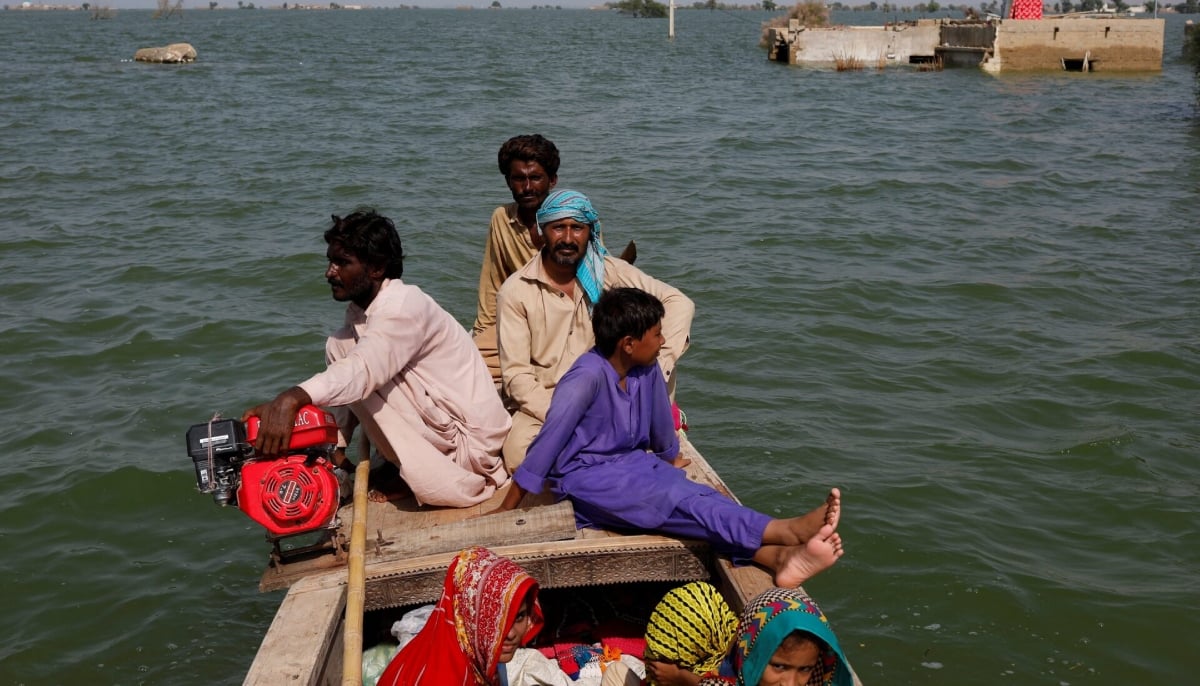
“If you’re not in the data, you’re not in the plan.” This thought that should fret any planner, is one that Pakistan’s disaster architecture has yet to take into account. It is also noteworthy that some of the worst flooding in Karachi comes after the city’s own encroachments on stormwater drains, such as parking lots, offices, legislator hostels, that the area’s informal residents are now accused of blocking up.
Because after the “emergency” phase, tracking effectively ends. The number of internally displaced people in Sindh is not 350,000, but 240,000, according to the International Organisation for Migration’s Displacement Tracking Matrix, which monitors donor timelines, not Pakistani institutions with a mandate to continue keeping a watch. The NDMA’s historical reporting has been on rebuilding roads and buildings, and not on where people went or if they reach home and if it’s liveable. When recovery money does come in, it does not really concern itself with spatial planning whatsoever: following the 2010 floods, the government’s plans for limiting rebuilding in flood-prone riverbanks were never implemented, and in 2022, the same areas flooded again.
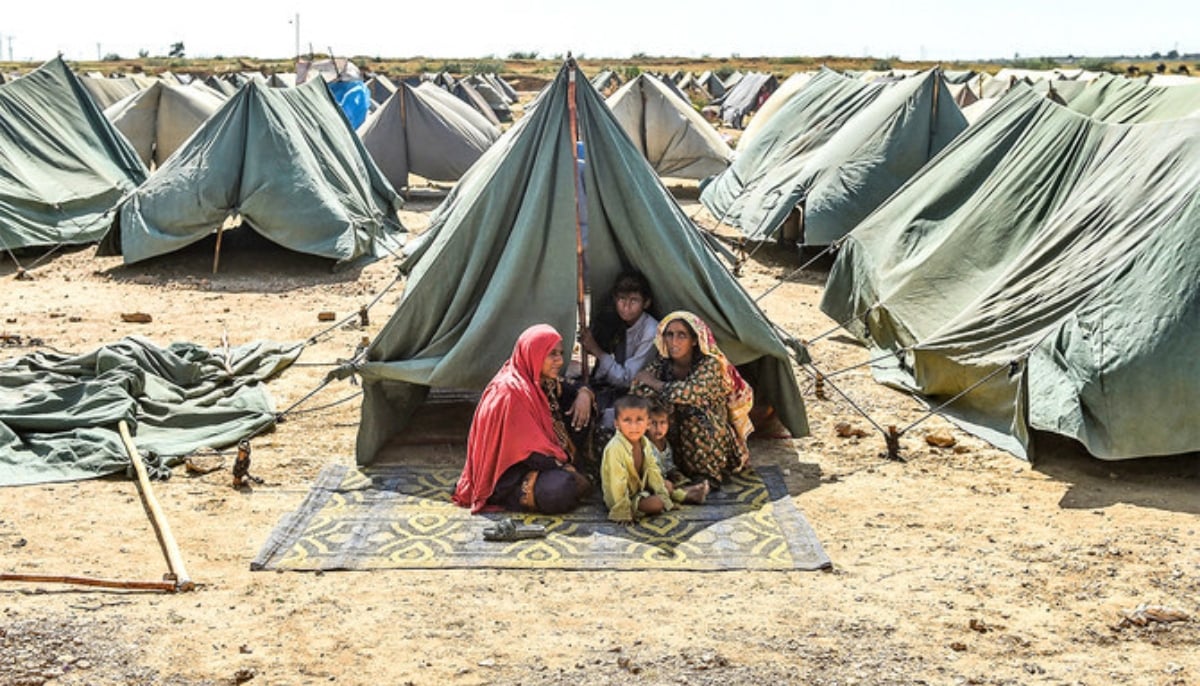
Digital reform has been attempted and it has failed to be sufficient. Despite a new, transparency-focused Digital Flood Dashboard launched after 2022, the Auditor General found that 102 people had received 42,000 tents in Sanghar and Dadu districts. It is a familiar scenario that flood-induced aid fraud strikes after the floods and earthquake-induced aid fraud strikes after the earthquake. The dashboard approach is not a substitute for an independent body with actual authority to monitor the distribution in real time.
At the end of the day, Pakistan is missing compassion and capacity at the right moment, which has been evident time and again. What it lacks is memory — a permanent, pre-positioned system that can identify whom it is affecting, based on some other criterion than pre-existing poverty, verify them down to the village level, withstand changes in government, and continuously monitor them after the cameras and the dashboards have left. Until then, we’re sure we will see the same picture as we did every flood season in that relief camp in Sindh — families displaced and endlessly striving to survive.