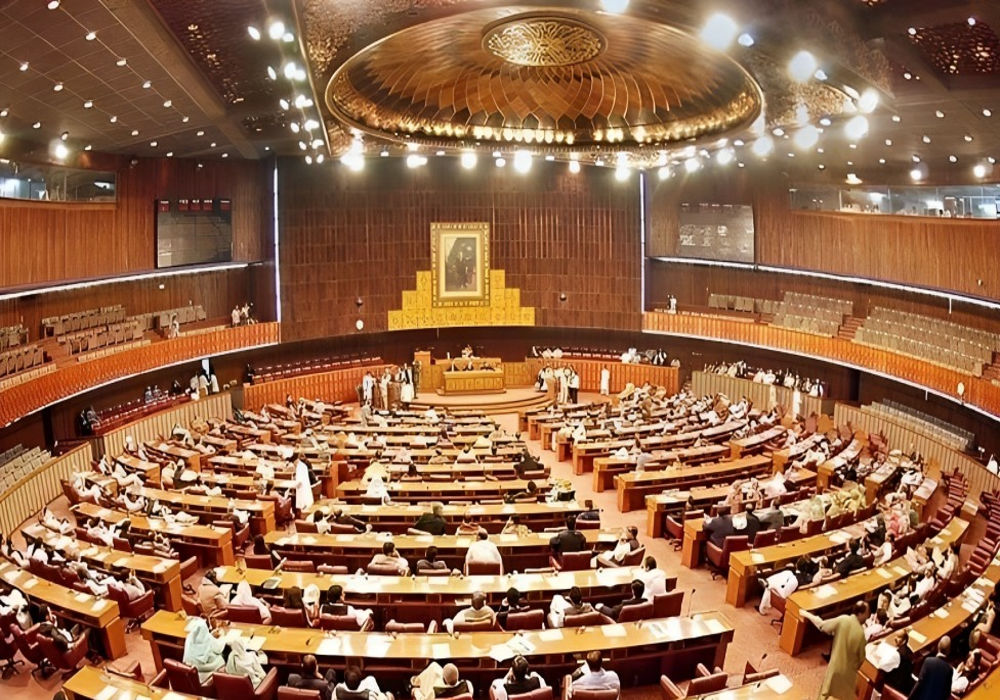

The Senate Standing Committee on Economic Affairs raised serious concerns over inequities in the allocation of foreign funded development projects across Khyber Pakhtunkhwa, revealing that flood affected districts have been largely bypassed while relatively unaffected areas received more infrastructure funding.
The meeting, chaired by Senator Saifullah Abro, highlighted discrepancies in road and irrigation project implementation, questioned external pressures from international lenders, and warned that mismanagement could exacerbate Pakistan’s mounting national debt, which has soared from Rs40 trillion in 2022 to approximately Rs90 trillion today.
During the session, committee members expressed alarm that districts most devastated by floods, including Upper Dir, Lower Dir, and Chitral, received fewer road reconstruction projects compared to Mardan, which saw 16 roads built despite experiencing minimal flood damage. In Dir, only 12 kilometres of road were reconstructed despite extensive damage.
Similarly, nine roads were completed in Peshawar, a city that did not face flood related destruction. Senator Rubina Khalid termed this “inequitable allocation” and warned that such disparities hinder balanced regional development, while Senator Waqar Mehdi questioned whether donor agencies were being misled about project priorities.
The committee also scrutinized the financial management of foreign funded schemes. Officials reported that 770 kilometres of roads were constructed at a total cost of Rs69 billion, with an additional Rs43 billion spent on bridges and related infrastructure. Each kilometre of road cost approximately Rs70 million.
The Asian Development Bank supported KP Road Rehabilitation and Upgradation Project, covering 249.5 kilometres, was completed ahead of schedule at a cost of $146.2 million. Similarly, $387 million in ADB funded water projects and $295 million from the World Bank are being implemented in irrigation and flood protection schemes across Khyber Pakhtunkhwa.
While project completion rates were impressive, reaching 100 percent for most schemes, the committee raised concerns about undue interference by external entities. Chairman Saifullah Abro questioned the role of the World Bank’s local representative in the Sindh Water and Agriculture Transmission Project, noting that the lender should only finance and recover loans, not dictate project execution. He estimated that resisting unnecessary external pressures could save Sindh around Rs14 billion and cited previous instances where committee intervention prevented $890 million in unwarranted costs on the Peshawar Torkham project.
The committee underscored the need for transparency, calling for a clear distinction between grants and loans and insisting that provincial authorities ensure funds are spent only for their approved purposes. Senator Hidayatullah stressed that provinces receiving loans must allocate them to the intended projects to benefit local populations, while Senator Kamil Ali Agha urged planning for infrastructure that accounts for emerging climatic challenges, including improved stormwater drainage systems.
Senator Abro also criticized the concentration of contracts among a few large construction firms in Khyber Pakhtunkhwa, directing officials to provide detailed information on the Notice Inviting Tender process to ensure competitive bidding. While district road projects were reportedly nearing completion across Swat, Peshawar, Mardan, and Nowshera, the committee emphasized that project selection criteria and equitable distribution remained critical issues.
The meeting concluded with a clear warning that Pakistan’s growing reliance on foreign loans, coupled with misallocated resources, could have serious economic repercussions. Senator Abro noted that while international assistance is vital, the country must maintain ownership and control over project execution to ensure accountability, prevent cost escalation, and deliver tangible benefits to the communities most in need.