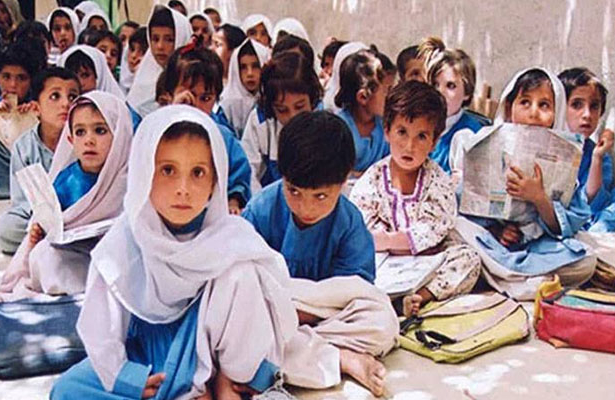

The Khyber Pakhtunkhwa government has launched a major initiative to bring millions of out-of-school children into the education system.
The provincial government has started work on a comprehensive plan. The initiative will identify children who are not attending school and provide them with suitable educational opportunities.
Officials from the education, local government, health and social welfare departments have signed a memorandum of understanding for the programme. Khyber Pakhtunkhwa Chief Minister Muhammad Sohail Afridi was also present at the signing ceremony.
Officials gave a detailed briefing on the initiative. They said a province-wide survey would be conducted to identify out-of-school children.
The government will also develop a “One Map” system. The system will identify the number of children who are out of school. It will also show their locations. This data will help the authorities plan enrolment drives in areas where the need is greatest.
According to figures presented during the briefing, around 4.9 million children in KP were out of school according to the 2023 census. The provincial education department has estimated the number at around 2.6 million.
The government has set an initial target of bringing 60% of out-of-school children into the education system during the first phase.
Officials said children under the age of five would also be included in the data collection process. Their information will help the government prepare future education plans and estimate upcoming enrolment needs.
The programme will use different forms of education. Government schools will be used where possible. Community schools will also play a role. Double-shift schools will be introduced or expanded in areas facing limited capacity.
Digital platforms will also be used to reach children who cannot easily access conventional schools.
Poverty has been identified as one of the major reasons children leave school. The government plans to provide financial support to vulnerable families.
Scholarships, Zakat funds and other assistance will be used to encourage children to remain in education. Scholarship payments will be linked to attendance.
Officials said students would need to maintain at least 75% attendance to qualify for the scholarship payments.
The programme will also focus on skills development. Children will receive technical and vocational training under the United Nations’ Generation Unlimited programme.
The initiative is aimed not only at increasing school enrolment but also at improving the future employment prospects of young people.
The government has also planned independent verification of the survey data. An independent organisation will verify 5% of the collected data to improve transparency and ensure that the figures accurately reflect the situation on the ground.
Authorities said the survey would provide a clearer picture of the out-of-school population in the province. The data will then be used to design targeted education programmes.