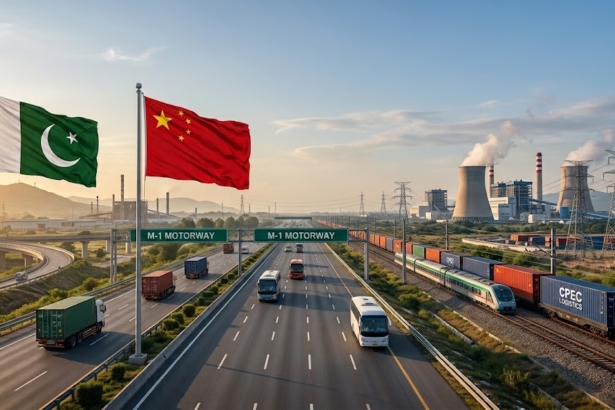

As many as 45 projects under the China-Pakistan Economic Corridor (CPEC) have been completed with a combined investment of $25.61 billion.
The completed projects span key areas of Pakistan’s economy, including power generation, transport infrastructure, and economic and social development. Of the total, 17 projects belong to the energy sector, 15 are infrastructure-related, while 13 focus on economic and social development.
Major energy projects completed
Among the prominent schemes are the Sahiwal and Port Qasim coal-fired power plants, which were completed at a combined cost of around $1.91 billion.
Another major addition to the country’s power infrastructure is the 884-megawatt Suki Kinari Hydropower Project in Kaghan. The hydropower scheme was completed with an estimated investment of $1.99 billion, adding renewable electricity generation capacity to the national grid.
Major infrastructure developments
CPEC has also delivered several major transport projects aimed at improving connectivity between different parts of the country.
The 392-kilometer Multan-Sukkur Motorway (M-5) was completed at a cost of approximately $2.8 billion. The motorway forms an important part of Pakistan’s north-south road network and is expected to facilitate the movement of passengers and freight.
In Lahore, the 27-kilometer Orange Line Metro Train project was completed at a cost of around $1.6 billion, providing a mass-transit link for commuters in the provincial capital.
Key CPEC projects remain delayed
Despite progress on dozens of schemes, a number of major CPEC projects continue to face delays because of financing constraints, regulatory approvals, procedural hurdles and implementation-related challenges.
The 1,733-kilometer Main Line-1 (ML-1) railway project remains stalled as authorities continue to address issues related to financial arrangements and required approvals. The project is considered strategically important for upgrading Pakistan’s railway infrastructure and improving freight and passenger connectivity.
The 43-kilometer Karachi Circular Railway (KCR) has also experienced delays after being moved to the Public-Private Partnership (PPP) model. Government documents indicate that lengthy consultations and procedural requirements have affected progress on the project.
Gwadar projects affected by delays
Several development initiatives in Gwadar have also experienced slow implementation. Projects including the Gwadar Hospital and Vocational Institute were affected by restrictions and disruptions linked to the COVID-19 pandemic, which slowed construction and execution activities.
Meanwhile, work on the 210-kilometer Dera Ismail Khan-Zhob Highway was halted following a decision concerning the financing mechanism for the project.
Mixed progress under CPEC
The completion of 45 projects reflects significant progress in CPEC’s energy, transportation and development portfolios. However, the continued delays in several high-profile schemes highlight the financial and administrative challenges involved in executing large infrastructure projects.
With major projects such as ML-1 and the Karachi Circular Railway still awaiting progress, their future timelines will depend on resolving financing arrangements, securing approvals and addressing implementation bottlenecks.