
If Pakistan’s problem were a shortage of plans, Islamabad’s creaking cupboards would have rescued us long ago. We have had five-year plans, visions, emergency packages and recurring saviours: a strong ruler, a friendly power, a corridor, a technology boom and now a mineral jackpot. Each promises to bypass the slow, painful work of building a state bound by rules and answerable to citizens.
There is no ‘bypass’. In an earlier article in these pages, ‘The unfinished bargain’ (August 15, 2026), I argued that Pakistan achieved sovereignty before agreeing an enforceable social contract. External threats strengthened institutions inherited from the Raj; successive elites converted strategic location, protection, public credit, land and discretion into rents. Growth came in spurts, but human capability accumulated too slowly, if at all. After 2010, money and authority often stopped at the provinces instead of reaching elected local government.
The recovery path must therefore be constitutional, fiscal, productive and intergenerational at the same time. It cannot be another government’s five-year manifesto or charter of ‘this and that’. Pakistan needs a 15- to 20-year bargain with measurable commitments that survive changes of party and office.
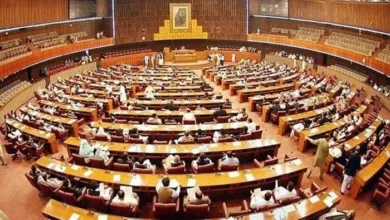
First, we need constitutional peace. This does not mean silencing disagreement or manufacturing a grand coalition. It means agreeing on the rules by which disagreement is organised: open civilised debates, credible elections; peaceful transitions; no extra-constitutional removal of governments; a military confined to constitutionally assigned roles; independent courts; rule-bound accountability; and political competitors who are not administratively erased.
Democracy is not a decorative preference. It is the mechanism through which a federation renegotiates consent without violence. The refusal to transfer power after the 1970 election was not merely an electoral error; it was the collapse of the original federation’s operating principle. We should have learned that managed stability can be the most unstable arrangement of all.
Second, Pakistan must complete, not reverse, devolution. The 18th Amendment and Seventh NFC were necessary corrections to an over-centralised state. Weak local government is not an argument for taking education and health back to Islamabad. It is an argument for carrying constitutional government one tier further down.
Article 140A should acquire enforceable content. Provincial laws may differ, but each should guarantee periodic elections, protected council terms, assigned functions and an automatic Provincial Finance Commission cycle. Actual transfers, not announced shares, should be published monthly. A rule-based local fiscal floor should reflect provincial revenues, need and population, while protecting poor and sparsely populated districts.
Local government cannot live on transfers alone. Districts and cities need visible own-source revenues from property and land-value taxation, user charges and service fees, designed with safeguards for poorer households. This is not merely about collecting more. A tax paid to a visible council for a visible service creates a citizen-state bargain. It also begins to replace the ‘MPA or MNA development scheme’ with accountable local budgeting.
There is an obvious danger: decentralising corruption. That is why power must travel with disclosure, independent audits, open procurement and public service standards. Local councils should not become miniature provincial governments. Nor should every province be forced into one template. A Karachi neighbourhood, a district in southern Punjab and a dispersed council in Balochistan require different structures. The guarantee should be democratic continuity and fiscal rules, not administrative uniformity.
Third, human capability must become national infrastructure. Pakistan’s roads and power plants are visible; a child’s cognitive loss from malnutrition is not. Yet the first 1,000 days of life, foundational learning, girls’ secondary completion, reproductive health and primary care determine whether any demographic dividend is possible.
Financing should follow children and need. Each district should publish a simple scorecard: grade-three reading and numeracy, stunting, maternal care, girls completing secondary school, unmet need for family planning and young people outside education, employment or training. Federal and provincial grants should reward improvement without punishing districts starting from the deepest deprivation. Independent measurement is essential; otherwise, outcome financing becomes another exercise in manufacturing numbers.
Female economic agency connects human development, population and productivity. Safe transport, childcare, workplace protection, digital access, reproductive choice and girls staying in school are not separate ‘women’s projects’. Together they shape fertility, household bargaining power and growth. A country cannot become an Asian tiger while keeping half its talent outside the productive economy.
Fourth, Pakistan must change the terms on which it supports business. The East Asian lesson was never ‘government good’ or ‘market good’. It was reciprocity. Firms receiving credit, tariffs, energy concessions, land or tax benefits were expected to export, invest, train workers and acquire technology. Support could be withdrawn when performance failed.
Pakistan should publish the full cost and beneficiary of every major tax expenditure, subsidy, guarantee, protected tariff, state-land allocation and public credit exposure. Industrial incentives should carry time limits and measurable export, productivity and skills conditions. At the same time, taxation must move towards under-taxed property, high agricultural income, privileged retail and legal rents rather than repeatedly squeezing salaried workers and already-formal firms.
This is how rent can be made productive. The objective is not a state that allocates nothing. It is a state that demands a public return for every private privilege.
Fifth, the generational mismatch must be addressed through entry, not slogans. Young voters already form roughly 44 per cent of the electorate, but youth wings and social-media campaigns are not transfers of power. Parties should disclose their candidate-selection rules. Public boards, senior recruitment and policy commissions should report the participation of qualified people under 40. Transparent competition matters more than arbitrary age quotas.
Elected local government can become Pakistan’s political university: a place where younger people, women, workers and professionals learn to govern before inheriting national office. Without legitimate entry routes, a connected young population will choose between withdrawal, migration and disruptive politics. With them, it can renew institutions that have stopped listening.
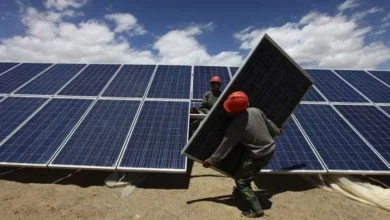
Sixth, minerals require rules before excitement. Geological data should be independently verified and made accessible. Licences should be competitively awarded. Contracts and beneficial owners should be disclosed. Provincial and affected-community shares should be agreed before extraction, with environmental bonds, water safeguards, grievance mechanisms and audited payments.
The objective should be domestic capability rather than the hurried export of rocks: skills, supplier industries, processing where economically and environmentally sound, infrastructure with shared use and technology transfer. An intergenerational mineral fund may eventually be useful, but only after revenue collection and public audit are credible. Otherwise, it would simply create another discretionary pool.
The sequencing is practical. In two years, establish the political rules, local election calendar, fiscal disclosure, updated PFCs and protection of nutrition, primary care and girls’ education. In years three to seven, build district capability, local revenues, female employment and export-linked support. Over the following decade, universalise learning, deepen competitive production, manage cities and water and invest verified mineral income under transparent intergenerational rules.
GDP will remain important, but it cannot remain the scoreboard. The country should track learning, nutrition, maternal health, girls’ completion, female employment, reproductive choice, youth entry, export productivity, local transfer execution, district inequality, electoral integrity and disclosed rents alongside growth.
Pakistan does not have to choose between a strong federation, strong provinces and strong local governments. Properly designed, each strengthens the other. A centre is secure when provinces consent; a province is legitimate when its districts have voice; and a state becomes real when a citizen can see where authority sits, where money went and who can be removed for failure.
The case for Pakistan will not be won by repeatedly arguing 1947. It will be won by making sovereignty tangible in 2027 and beyond, to the child in Chagai, Thar, Dera Ismail Khan, Rajanpur and every locality between them. Our minerals may lie beneath the ground, but Pakistan’s decisive wealth is above it.