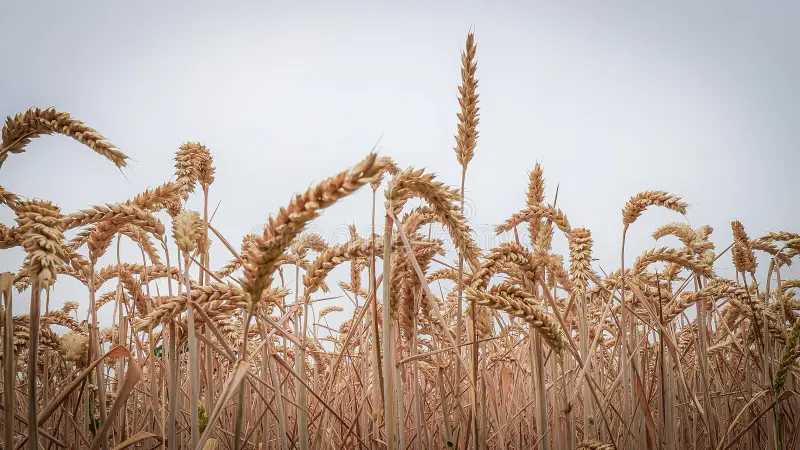

In early April, along the roadsides of Haroonabad, Sahiwal, and Bahawalnagar, the wheat was ready.
Grain bags were stacked high, waiting for the buyer the state had promised would be there. The farmer had done his part. He had planted in November, irrigated through the frost, and harvested under a sun that broke 44 degrees. The crop was in the bag. The system was supposed to do the rest.
The system did not come.
Three months later, the state finally opened its wallet. But not for the Pakistani farmer. The same government that had refused to buy at Rs 3,500 in April is now planning to go to the international market and purchase wheat from foreign suppliers. The buyer has not changed. The source is about to. The Pakistani state is choosing to pay in scarce dollars what it had refused to pay in domestic rupees. It is choosing Odessa over Sahiwal.
This is not a story of a failed harvest. This is a story of a failed state.
Let us begin with the arithmetic, because the arithmetic is the indictment.
Pakistan produced nearly 30 million metric tons of wheat this year against a monthly consumption of 2.5 million. With 1.7 million metric tons held by PASSCO and 2 million in carry forward stocks, analysts calculated a surplus of 1.2 million metric tons on paper. And yet the Economic Coordination Committee approved the import of one million metric tons through the Trading Corporation of Pakistan. Provinces collectively demanded 2.2 million tonnes. Punjab requested one million. Sindh requested 500,000. Khyber Pakhtunkhwa’s public sector request stood at 200,000. Balochistan requested 57,500. The wheat existed. It was in the silos and fields of the very provinces now begging for imports. What did not exist was the institutional will to buy it, store it, and release it. This was not a supply failure. This was a management failure dressed in the language of scarcity.
In April, small farmers, forced by debt and the biological clock of the harvest, sold their crop in distress sales for as low as Rs 2,800 to Rs 3,200 per 40 kilogram bag. The state had declared its own benchmark of Rs 3,500 unaffordable. Operating within IMF conditions, the bureaucracy decided the exchequer could not bear the cost of purchasing its own grain.
Today, the state is preparing to spend $340 million to import one million tonnes of wheat at a landed cost of Rs 3,400 to Rs 3,800 per bag. Add port handling, loading, and up-country transport, and the true cost climbs higher. But the one million tonne import plus the 1.2 million tonnes the government plans to release from PASSCO stocks still leaves a gap against a national shortfall estimated at 2.55 million tonnes. Analysts warn that further imports may be unavoidable. The state that called Rs 3,500 unaffordable in April is now writing cheques in dollars, and the chequebook is not closed.
The full chain tells the story. The farmer received Rs 2,800 to Rs 3,200 per bag. The state’s own benchmark was Rs 3,500. The landed import cost is Rs 3,400 to Rs 3,800 per bag, before handling and transport. And the consumer in Karachi pays Rs 145 to Rs 150 per kilogram for flour. The farmer got the least. The foreigner got more. The consumer paid the most. And the state called Rs 3,500 unaffordable.
This is not strategic management. This is denial followed by panic.
And what of the urban consumer, the very person this policy was supposedly designed to protect?
The politician’s calculus is simple. The urban consumer is concentrated, vocal, and politically immediate. The farmer is dispersed and structurally weak. So the state designs policy around keeping flour prices low in the cities. But the very mechanism chosen to protect the consumer is the mechanism that destroyed him.
Because the state refused to act as a market anchor in April, the farmer sold low. The middleman captured the spread. The open market price climbed. The state then panicked and authorized imports at a higher cost. The profit went to no one except the intermediary with the ability to wait. The farmer lost. The consumer lost.
According to the Pakistan Bureau of Statistics, wheat flour prices in rural areas rose by over 61 percent compared to the previous year. In urban centres, the increase was sharper still. By August 10, wheat had surged from Rs 3,300 to Rs 4,700 per 40 kilograms.
The government will tell you that headline inflation eased to 9.2 percent in July. But food inflation specifically surged to 10.64 percent. In the first week of August 2026, the weekly Sensitive Price Indicator rose again, with the Bureau explicitly naming wheat and flour as primary drivers.
The state was weak when the farmer needed a floor price in April. It became violently assertive only when consumer prices spiked. It raided godowns. It imposed price caps. It restricted interprovincial movement. Deregulation by notification. Re-regulation by raid.
The state fails the farmer in April. It fails the consumer by July. This is not two failures. This is one failure, experienced twice.
PASSCO held 1.7 million metric tons in its warehouses while the government moved to import more. The grain was there. The mechanism to release it was not.
Two years ago, the state accepted IMF conditionality to withdraw from the wheat market and abolish the support price mechanism. No phase out plan was drafted. No transition architecture was built. No certified warehouses. No bankable receipts. There was a notification. The harvest began. The farmer stood by the roadside. And the file sat on a desk in Islamabad.
Markets do not emerge by notification. They are built. The state withdrew the anchor before building the harbour, and then expressed surprise when the ship ran aground.
By choosing to import wheat we already grew, the state has not just spent its dollars. It has spent its credibility.
The farmer in Haroonabad does not read policy briefs or know the terms of the IMF programme. He knows that the grain was ready and the buyer was not. He knows that the state told him it could not afford him, and then afforded a foreigner. He knows that the state is preparing to pay more for imported wheat than it refused to pay for his.
In November, when the soil is ready, he will remember again. He will stand in his field and decide what to plant. And the state will not be in the room. It will not have earned the right to be there.
The wheat was ready. The buyer never came. And three months later, the state is planning to pay a stranger in dollars for what it refused to buy from its own son in rupees.