
By Rana Muhammad Imran
Melbourne, Australia
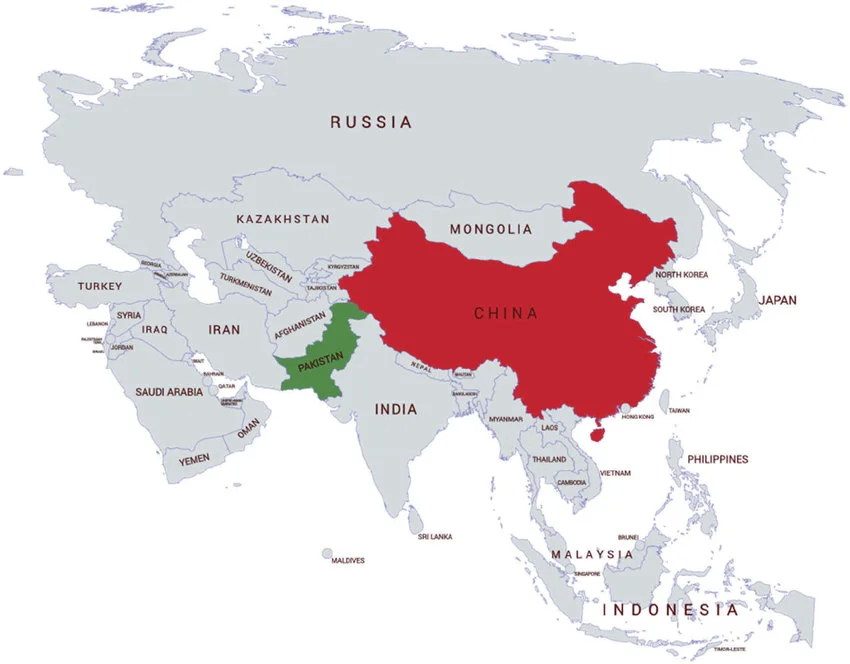
The continuing tensions between Pakistan and Afghanistan, alongside instability and security concerns in Balochistan and Azad Kashmir, have generated renewed debate about the broader regional strategy surrounding Pakistan. Some Pakistani analysts and commentators have questioned whether India could be seeking to increase pressure on Pakistan from multiple directions as part of a broader strategy sometimes described as “Operation Sindoor 2.”
However, claims that India is directly funding or directing Afghan actors, anti-state organisations inside Pakistan, or Houthi rebels in Yemen require credible independent evidence before they can be presented as established facts.
From a geopolitical perspective, the argument made by critics of New Delhi is that India may seek to keep Pakistan under sustained security and economic pressure by exploiting tensions along Pakistan’s western border while maintaining diplomatic pressure internationally. Supporters of this interpretation point to India’s longstanding disputes with Pakistan and Afghanistan’s complicated relationship with Islamabad.
Another important element is India’s international diplomatic campaign. Following the India-Pakistan military confrontation, New Delhi has sought to strengthen its international position and present its own interpretation of regional security issues. Pakistan, meanwhile, has attempted to challenge that narrative through diplomatic and political engagement.
The situation in the Middle East adds another dimension. India has developed increasingly important economic and strategic relationships with Gulf and other Middle Eastern countries, particularly because of energy supplies, trade and investment. At the same time, India has a large Muslim population, and New Delhi has periodically highlighted its Muslim representation in international diplomacy. Critics argue that this is also intended to reassure Muslim-majority countries about India’s relationship with the Islamic world.
India’s domestic policies toward its Muslim population, however, remain a subject of significant international debate. Human-rights organisations and critics of the Indian government have raised concerns about discrimination and religious polarisation, while the Indian government and its supporters reject many of these allegations and argue that India remains a pluralistic democracy.
The allegation that India is supporting Houthi rebels in Yemen in order to deliberately draw Pakistan into another war is particularly serious and should not be stated as fact without strong evidence from reliable sources. The same standard should apply to allegations concerning Indian support for organisations operating inside Pakistan or Afghan groups involved in tensions with Islamabad.
The broader strategic question nevertheless deserves attention: could increasing instability around Pakistan’s borders create a security environment in which Islamabad is forced to divide its resources between multiple fronts?
Pakistan already faces challenges involving militancy, border management, economic pressures and relations with Afghanistan, while its longstanding dispute with India remains unresolved. Any simultaneous escalation on several fronts would therefore have consequences extending beyond bilateral relations and could affect regional stability.
Rather than viewing every development as evidence of a single coordinated operation, policymakers and journalists should examine each allegation separately, identify the available evidence, and distinguish between confirmed activity, intelligence claims, political accusations and analytical speculation.
The central issue is not simply whether one country is attempting to isolate another. It is whether the continuing competition among Pakistan, India and Afghanistan is creating a wider regional security environment in which political disputes, militant activity, economic interests and international diplomacy increasingly overlap.
For Pakistan, the challenge is to respond through credible diplomacy, stronger internal institutions, improved border management and evidence-based international engagement while avoiding unnecessary escalation.
For the wider region, the priority should be preventing tensions from developing into another cycle of confrontation.