
Over the past two and a half years, this appears to be the first time that the federal government and the Islamabad administration have faced a level of political pressure that has significantly disrupted the normal functioning of government and the administrative order.
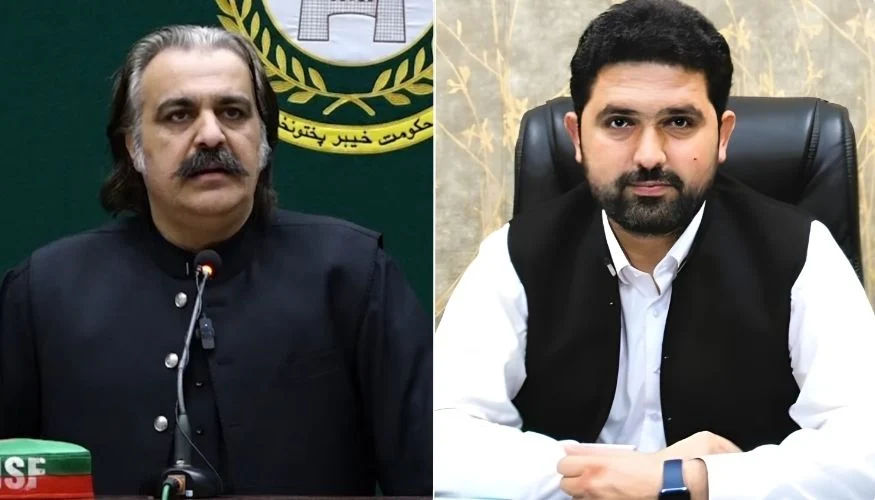
Previously, when Pakistan Tehreek-e-Insaf (PTI) caravans, led by former Chief Minister Ali Amin Gandapur, reached Islamabad, the federal government and state institutions generally managed to contain the protests with relative ease, using limited time and resources.
One political interpretation of this difference has been that Gandapur’s provincial government maintained a certain degree of discreet understanding, or at least practical coordination, with the establishment. According to this view, there was an undeclared arrangement concerning the intensity, duration and eventual conclusion of protest activity. As a result, situations were brought under control before they could develop into a major political or administrative crisis.
The current situation under the Afridi government, however, appears different in an important respect. The PTI leadership in Khyber Pakhtunkhwa seems to be pursuing a more assertive approach, with a clearly defined objective in its mobilisation towards Islamabad and in the political pressure it is exerting. For the first time, therefore, the PTI appears to have posed a substantial challenge not only to the federal government but also to the broader state administrative structure.
For the federal establishment, the issue this time is consequently not merely one of dispersing a limited protest. It has evolved into a broader test involving political tensions between the federal and provincial governments, the role of state institutions, and the PTI’s strategy of political resistance. This is why the unrest in Islamabad can no longer easily be viewed as an isolated political episode confined to the capital. The implications of the current mobilisation appear to extend to the wider national political landscape.
Within the PTI, as well as among its critics, there have long been differing interpretations of Ali Amin Gandapur’s political style. Some have linked his alleged behind-the-scenes accommodation with state institutions to the argument that, at a particularly vulnerable moment, the federal government formed through what critics described as the “Form 47” arrangement and the establishment were relatively weak; Imran Khan’s arrest was still a fresh wound; anger among PTI workers remained intense; and the narrative of alleged rigging in the 2024 elections had further inflamed public sentiment.
According to this interpretation, When the establishment and the Form 47 government were weak, Gandapur, rather than allowing that anger to escalate, staged protests that critics described as controlled or “fixed” exercises, ostensibly helping to cool the emotions of PTI supporters and wider public discontent. Critics argue that this approach gradually reduced the intensity of the workers’ anger and weakened their morale, ultimately contributing to a broader sense of political disillusionment.
From this perspective, Gandapur’s political approach helped a weak federal government consolidate itself, enabled the establishment to strengthen its grip, and thereby contributed indirectly to the loss of what some regarded as a rare opportunity to advance civilian supremacy. In a recent interview with Waseem Badami, Gandapur himself reportedly said that he had told Imran Khan that he would not be released from prison and that he should therefore be allowed to pursue politics according to his own approach.
In this context, Alima Khan’s claim is also noteworthy, she has argued that Gandapur’s political strategy indirectly contributed to keeping, within certain limits, the political controversy surrounding Imran Khan’s imprisonment, the PTI’s organisational mobilisation, and the dispute over the 2024 elections in a state of suspension.
The significance of the present crisis for both the PTI and the provincial government, however, lies precisely here: if political tensions between the provincial and federal governments continue to intensify and protest politics enters a new phase, the consequences may extend well beyond a single political party or the capital city. Other political forces, including the Pakistan Peoples Party, Pakistan Muslim League Nawaz, Jamiat Ulema e Islam, nationalist parties and lawyers’ organisations could also become part of the confrontation, potentially bringing the broader question of the establishment’s enduring political influence back to the centre of national debate.
In any event, even if the PTI’s current protest movement ultimately fails, its repercussions may still bring several fundamental questions back to the forefront of Pakistan’s political discourse: the relationship between the federal and provincial governments; conflicts between political parties and state institutions; the constitutional right to protest; and the difficult balance between political dissent and the maintenance of public order and effective governance.