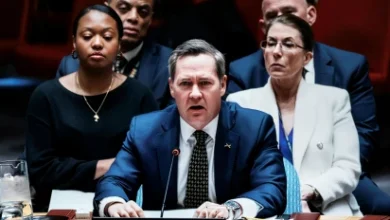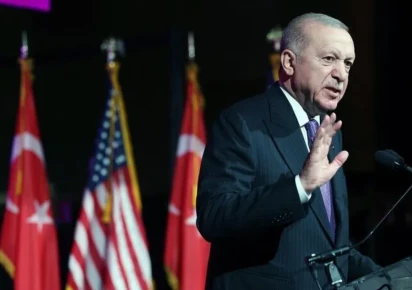

Turkish President Recep Tayyip Erdogan has called for major reforms to the United Nations Security Council, including the abolition of the veto power enjoyed by its five permanent members.
In an article published by Bloomberg, Erdogan argued that the current international system no longer reflects the realities of the modern world. He said recent crises, including pandemics, energy disruptions, supply chain problems and regional conflicts, had exposed the limitations of a system in which major global decisions can depend on a small number of countries.
Erdogan said the UN Security Council still largely reflects the balance of power created after World War II. He called for a system that provides broader representation and greater accountability in international decision-making.
He reiterated Türkiye’s long-standing position that “the world is bigger than five”, referring to the five permanent members of the Security Council — the United States, United Kingdom, France, Russia and China.
According to Erdogan, simply increasing the number of permanent members would not solve the problem. He said the concentration of decision-making authority would remain if some countries continued to hold permanent veto rights.
He proposed a Security Council without permanent members. Under his suggested model, council members would be elected by the UN General Assembly for fixed terms. Countries seeking another term would have to secure the support of a majority of General Assembly members.
Erdogan also called for a stronger role for the General Assembly. He said the Security Council should become more accountable to the wider UN membership and its elected members should have greater influence in decision-making.
The Turkish president said global institutions must adapt to the emergence of new centres of economic, political and technological power. He noted the growing importance of Asia and said African countries also deserved stronger representation in international affairs.
He said conflicts, climate change, irregular migration and economic vulnerabilities had highlighted the need for stronger international institutions. He also stressed the importance of secure trade routes, transportation networks, logistics and energy corridors.