
ISLAMABAD: Pakistan’s nuclear security framework has received a positive assessment from an International Atomic Energy Agency (IAEA) expert mission following a 12-day review of the country’s legal, regulatory and physical protection arrangements.
The agency’s International Physical Protection Advisory Service (IPPAS) conducted its first-ever mission to Pakistan to assess the systems used to protect nuclear materials and facilities. The team described the country’s nuclear security regime as robust and found that the framework was being appropriately implemented at the facility it visited.
The assessment also identified areas where Pakistan could further strengthen its nuclear security arrangements. The experts provided recommendations to improve existing regulations, procedures and operational practices. They also highlighted several good practices at both the regulatory and facility levels.
According to the IAEA, Pakistan regularly reviews its nuclear security arrangements to support continued improvement. The country also has an established training and capacity-building system that contributes to developing expertise in nuclear security at national, regional and international levels.
The seven-member expert mission was led by Khammar Mrabit, former director general of Morocco’s Agency for Nuclear and Radiological Safety and Security. The team included specialists from China, Romania, Russia and Slovakia, along with two IAEA officials.
The mission was hosted by the Pakistan Nuclear Regulatory Authority (PNRA) at the government’s request. Its purpose was to help strengthen the country’s national nuclear security framework and assess how international standards and guidance were being applied.
IAEA Deputy Director General and Head of the Department of Nuclear Safety and Security Karine Herviou said the successful completion of the first IPPAS mission marked an important step in Pakistan’s efforts to strengthen the regulatory and operational aspects of its nuclear security system.
She also praised Pakistan’s contribution to developing nuclear security expertise, noting that its capacity-building efforts had a wider impact beyond the country.
PNRA Chairman Zia Hussain Shah said the international assessment demonstrated Pakistan’s commitment to maintaining effective physical protection measures at nuclear facilities. He added that the experts’ recommendations would provide a useful basis for further improving the country’s legal, regulatory and operational arrangements.
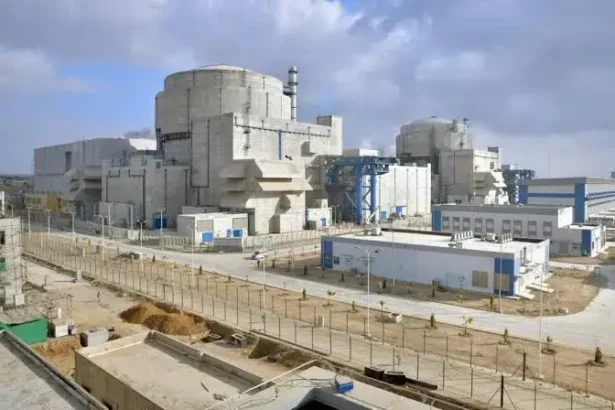
During the mission, experts held discussions with officials from the PNRA, the Pakistan Atomic Energy Commission and other relevant national institutions. They also visited the Kanupp Decommissioning Project at the Karachi Nuclear Power Generating Station, where Pakistan’s first nuclear power plant operated.
The Karachi facility used a Canadian Deuterium Uranium reactor that began operating in 1971 and was permanently shut down in 2021. The visit allowed the experts to examine ongoing decommissioning activities and arrangements for spent nuclear fuel storage.
IPPAS missions provide independent peer advice to countries on implementing international nuclear security instruments and IAEA guidance. Experts review physical protection systems, compare national practices with international standards and recommend improvements suited to national requirements and individual facilities.
Pakistan is a party to the Convention on the Physical Protection of Nuclear Material. It ratified the convention’s 2005 amendment in 2016. The amendment expanded international obligations concerning the protection of nuclear materials and peaceful nuclear facilities during domestic use, storage and transport.
PNRA and IAEA complete nuclear safety workshop
Separately, the Pakistan Nuclear Regulatory Authority and the IAEA have concluded a five-day national workshop focused on the use of commercially manufactured equipment in nuclear safety-related applications.
The workshop was organised by the National Institute of Safety and Security, an IAEA Collaboration Centre. It brought together regulatory officials, nuclear facility operators and supply-chain representatives to examine the process known as Commercial Grade Item Dedication.
The process helps establish whether commercially available components can meet the technical and safety requirements needed for use in nuclear installations. It is particularly important as technological changes, ageing equipment and shifts in global supply chains affect the availability of specialised nuclear-grade components.
PNRA Executive Member Shahid Rashid stressed the importance of ensuring that equipment used in nuclear installations meets the required standards of reliability and performance. He said commercial-grade item dedication could help establish confidence that such equipment was suitable for its intended purpose.
The regulator said the workshop would support Pakistan’s technical capacity in nuclear safety and supply-chain oversight. It also provided an opportunity for participants to exchange knowledge and discuss approaches consistent with applicable regulatory requirements and international good practices.