


ISLAMABAD: Sindh is looking to deepen economic ties with China’s Hubei province, with agriculture, technology, industrial automation and Karachi’s traffic management emerging as key areas for potential cooperation under the China-Pakistan Economic Corridor (CPEC).
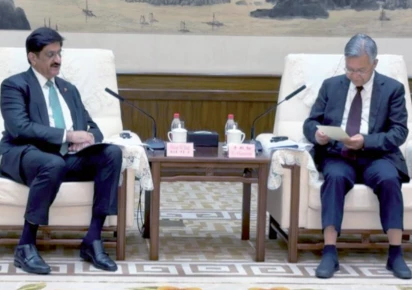
Sindh Chief Minister Syed Murad Ali Shah held talks with senior Chinese officials in Wuhan on Wednesday, exploring opportunities for joint ventures, investment and technology partnerships as Pakistan and China mark 75 years of diplomatic relations.
Leading a provincial delegation, Shah met Hubei Governor Li Dianxun and Communist Party Secretary Guan Zhi’ou to discuss ways to translate longstanding bilateral ties into practical development projects benefiting businesses, farmers and urban communities.
According to a spokesperson for the chief minister, the discussions focused on expanding cooperation in agriculture, industrial development, research, trade and skills training.
Shah invited Chinese companies to launch pilot projects in Sindh, highlighting investment opportunities in port logistics, industrial automation and urban traffic management. He also proposed linking Wuhan-based technology companies and investors with Sindh’s businesses, startups and technology centres.
One area of potential collaboration is Karachi, where the two sides discussed pilot projects to modernise industrial operations and improve traffic management. Joint incubation programmes for emerging businesses were also considered as a way to encourage innovation and strengthen links between entrepreneurs in the two regions.
Agriculture takes centre stage
Agriculture featured prominently in the discussions, with both sides exploring cooperation in hybrid rice, high-yield seeds, agricultural machinery and modern farming techniques.
Shah acknowledged China’s support in training 1,000 Pakistani agricultural graduates at Chinese universities, including Huazhong Agricultural University. He said Hubei’s experience in rice production and seed technology could help improve agricultural productivity and increase farmers’ incomes in Sindh.
The discussions also covered the proposed establishment of a joint laboratory for modern and digital agriculture. The initiative could support research, promote mechanised farming and help introduce technology-driven solutions to agricultural challenges.
Improving cold-chain infrastructure was another priority. Better storage, refrigeration and transportation facilities could reduce post-harvest losses and improve market access for Sindh’s fruits, vegetables, meat, dairy and fisheries products.
For a province with significant agricultural output and access to major ports, such improvements could create opportunities to strengthen supply chains and connect local producers with wider markets.
CPEC cooperation in focus
The meetings also examined opportunities for Hubei to participate in the next phase of CPEC, with Shah encouraging greater collaboration in agriculture, skills development and environmentally sustainable projects.
The proposed cooperation reflects a broader effort to expand Pakistan-China economic relations beyond traditional infrastructure projects towards technology transfer, industrial modernisation and agricultural innovation.
However, the potential benefits will depend on translating discussions into concrete agreements, investment commitments and projects that deliver measurable results.
For Sindh, closer engagement with Hubei could open new avenues for modernising farming, attracting technology investment and addressing urban infrastructure challenges while strengthening economic cooperation between Pakistan and China.