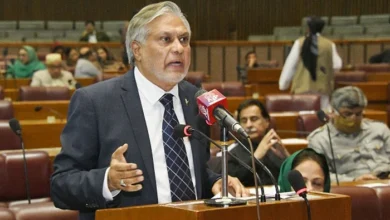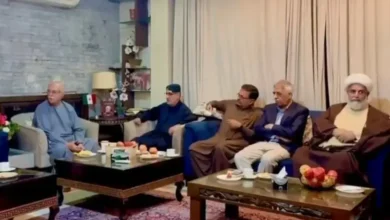


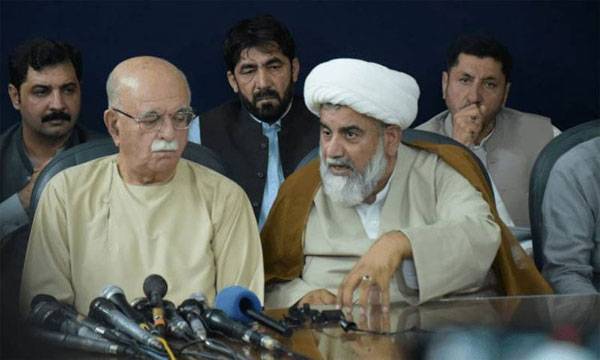

PESHAWAR: Opposition leaders have announced plans to coordinate their response to the imposition of emergency and governor’s rule in Khyber-Pakhtunkhwa (K-P) calling for constitutional protections, parliamentary authority and transparent elections. They have also left open the possibility of resigning from assemblies if their demands remain unresolved.
Mahmood Khan Achakzai, the opposition leader in the National Assembly, said he would consult political parties and organise an all-parties conference (APC) to develop a joint strategy. Speaking to reporters at the Peshawar High Court he said the opposition preferred peaceful political action and remained willing to negotiate with the government.
Achakzai criticised the removal of the elected provincial administration, arguing that the decision raised serious constitutional concerns. He also questioned the electoral process and referred to the disqualification of lawmakers saying political disputes should be resolved through democratic institutions.
The opposition leader said meaningful negotiations would require a commitment to constitutional rule the withdrawal of disputed amendments a stronger parliamentary role in national decision-making and the establishment of an independent body to oversee free and fair elections.
Achakzai also urged political leaders to respect institutional boundaries and said the opposition would pursue its objectives without resorting to violence. He emphasised that parliament should serve as the main forum for resolving national issues.
On provincial rights he maintained that K-P residents should have the primary claim to the province’s mineral resources. He also stressed that major decisions affecting the country including matters connected to the former Federally Administered Tribal Areas should follow constitutional and democratic procedures.
Balochistan National Party chief Akhtar Mengal also criticised the federal government’s decision. He argued that imposing governor’s rule risked treating the entire province as responsible for terrorism and questioned whether administrative measures alone could resolve longstanding security problems.
Mengal further challenged the legitimacy of the current political arrangement making allegations about electoral irregularities and the status of provincial leaders. His remarks reflected the opposition’s position on the crisis.
Allama Raja Nasir Abbas the opposition leader in the Senate accused the government of weakening democratic representation and restricting dissent. He also highlighted economic hardship and said political leaders should not remain silent about the country’s difficulties.
The opposition’s proposed conference could provide a forum for parties to discuss their demands and decide whether to pursue negotiations, protests or further parliamentary action.
For now, the opposition has emphasised a coordinated and constitutional response, while keeping assembly resignations as a possible option.