


LAHORE: Religious leaders call for dialogue between Muslim nations, condemn attacks across the region and urge Pakistan to pursue diplomatic solutions.
Pakistan has been urged to play an active mediating role in the dispute between Saudi Arabia and Yemen, with religious leaders warning against turning political and regional tensions into sectarian divisions.
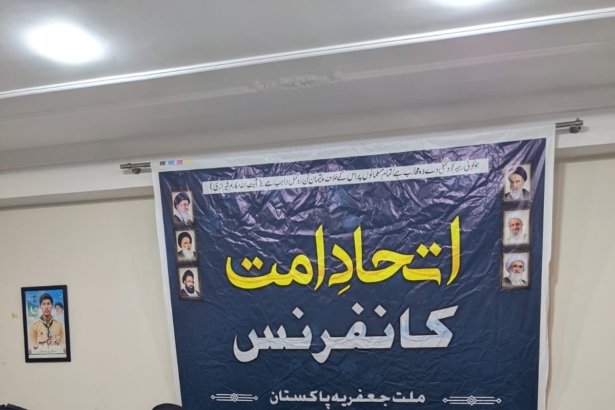
The call was made at the Ittehad-e-Ummat Conference organised under the Tehreek-e-Himayat-e-Mazloomeen-e-Jahan at the central secretariat of the Imamia Students Organisation Pakistan, Al-Mustafa House.
The gathering brought together leaders and representatives of various national, religious and community organisations associated with Pakistan’s Shia community to discuss challenges facing the Muslim world, including the situations in Iran, Yemen, Palestine, Lebanon and Kashmir.
Speakers stressed that Pakistan should avoid becoming a party to the Saudi-Yemen dispute and instead use its diplomatic influence to encourage dialogue and resolve differences between Muslim countries.

They argued that the conflict should be viewed as a dispute between Muslim nations rather than a religious or sectarian confrontation.
Leaders Warn Against Sectarian Polarisation
Majlis Wahdat-e-Muslimeen Pakistan Vice Chairman Allama Ahmed Iqbal Rizvi, Imamia Students Organisation President Syed Amin Shirazi, Qasim Ali Qasmi of the Shia Ulema Council and several other religious leaders addressed the conference.
Other speakers included Allama Muhammad Ali Jawah, Lal Mehdi Khan, Dr Ali Abbas Naqvi, Syed Rizwan Abidi, Allama Hussain Najafi, Allama Zia-ul-Hassan, Muhammad Taqi and Dr Danish Naqvi.


Participants expressed concern over attempts to give the Saudi-Yemen dispute a sectarian character and condemned rhetoric that delegitimises Yemeni Muslims on religious grounds.
They said the conflict, which has continued in various forms since 2015, should be addressed through negotiations, an end to restrictions affecting Yemenis and protection of their rights.
The speakers called on Pakistan to intensify diplomatic engagement with Muslim countries to prevent further divisions and promote regional stability.
Palestine Remains a Key Concern
The conference described Palestine as one of the most pressing issues confronting the Muslim world, urging Muslim countries to maintain support for Palestinians, Lebanese, Yemenis and Kashmiris.
Participants said Muslim nations must rise above internal differences and work collectively to protect vulnerable communities and address shared challenges.

They also expressed confidence in the leadership of Ayatollah Mojtaba Khamenei and paid tribute to the late Ayatollah Ali Khamenei for his efforts to promote unity among Muslims.
Joint Declaration Calls for International Action
In its concluding declaration, the conference condemned attacks by the United States and Israel against Iran, Palestine and Lebanon. It urged the United Nations to pursue investigations into alleged war crimes and called for relevant international institutions to examine allegations involving Israeli Prime Minister Benjamin Netanyahu and US President Donald Trump.
The declaration also described Makkah, Madinah and the shrines of the revered Imams as sacred places whose protection is a shared responsibility of Muslims. Participants condemned what they described as false reports about attacks on Makkah and Madinah intended to inflame sectarian tensions, urging the Pakistani government to take legal action against those responsible.
Pakistan Asked to Prioritise Diplomacy
Invoking Article 40 of Pakistan’s Constitution, which calls for strengthening relations among Muslim countries, the participants urged Islamabad to pursue closer cooperation across the Islamic world and mediate in the Saudi-Yemen dispute rather than take sides.
They also called for diplomatic efforts to halt attacks on Yemen, an end to American interference in Pakistan and continued efforts to reduce tensions between Iran and the United States.
The gathering expressed support for ongoing operations against Fitna al-Khawarij and Fitna al-Hind.
Concluding the conference, participants reaffirmed their commitment to supporting oppressed communities worldwide, particularly in Palestine, Lebanon, Yemen and Kashmir, and called for greater unity among Muslim nations through diplomacy, cooperation and collective action.