
BARRIO DE LA TORRE: Survivors of the worst natural disaster to hit Spain in this century awoke to scenes of devastation on Thursday, after villages were wiped out by monstrous flash floods that claimed at least 95 lives.
The death toll is expected to rise as search efforts continue with officials removing bodies from buildings and vehicles and an unknown number of people still missing.
“Unfortunately, there are dead people inside some vehicles,” said Spain’s Transport Minister Óscar Puente in reference to hundreds of cars and trucks stranded on roads stained brown with mud.
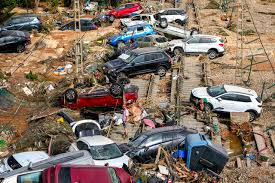
The aftermath looked like the damage left by a strong hurricane or tsunami.
Cars piled on one another like broken toys, uprooted trees, downed power lines and household items all mired in a layer of mud covered the streets of Barrio de la Torre, a suburb of Valencia, just one of dozens of localities in the hard-hit region of Valencia, where 92 people died between late Tuesday and Wednesday morning.
Walls of rushing water turned narrow streets into death traps and spawned rivers that ripped into the ground floors of homes and swept away cars, people and anything else in its path. The floods knocked down bridges and left roads unrecognizable.
Regional authorities said late Wednesday it seemed no one was left stranded on rooftops or in cars in need of rescue after helicopters had saved some 70 people. But ground crews and citizens continued to inspect vehicles and homes that were damaged by the onslaught of water.
“Our priority is to find the victims and the missing so we can help end the suffering of their families,” Spanish Prime Minister Pedro Sánchez said after meeting with regional officials and emergency services in Valencia on Thursday, the first of three days of official mourning in the European country.
Spain’s Mediterranean coast is used to autumn storms that can cause flooding. But this was the most powerful flash flood event in recent memory. Scientists link it to climate change, which is also behind increasingly high temperatures and droughts in Spain and the heating up of the Mediterranean Sea.
While the greatest suffering was inflicted on municipalities near the city of Valencia, the storms unleashed their fury over huge swaths of the south and eastern coast of the Iberian Peninsula. Two fatalities were reported in the neighboring Castilla La Mancha region. Southern Andalusia reported one death.
Homes were left without water as far southwest as Malaga in Andalusia, where a high-speed train derailed on Tuesday night although none of the nearly 300 passengers were hurt.
Greenhouses and farms across southern Spain, known as Europe’s garden for its exported produce, were also ruined by heavy rains and flooding. The storms spawned a freak tornado in Valencia and a hail storm that punched holes in cars in Andalusia.