
Chinese drone experts have flown to Russia to conduct technical development work on military drones at a state-owned weapons manufacturer that is under Western sanctions, according to two European security officials and documents seen by Reuters.
The Chinese experts have visited arms maker IEMZ Kupol on more than half a dozen occasions since the second quarter of last year. During that time, Kupol also received shipments of Chinese-made attack and surveillance drones via a Russian intermediary, according to the documents and two officials.
In September last year, Reuters documented that Kupol had developed a new drone, the Garpiya-3, in China with the help of local specialists. Now the news agency is the first to report specific details of the extensive involvement of Chinese experts in tests and technological work on military-use drones inside Russia.
The officials, who asked that neither they nor their organisation be identified due to the sensitivity of the information, said the collaboration suggested a deepening relationship between Kupol and Chinese companies in developing drones – which have proven to be critically important to Russia’s war in Ukraine.
China’s foreign ministry said it was unaware of the collaboration.
“China has always maintained an objective and fair position on the question of the Ukraine crisis, never providing lethal weapons to any party in the conflict and strictly controlling dual-use items, including drone exports,” the ministry said in a statement.
The Kremlin, the Russian defence ministry, and IEMZ Kupol did not respond to requests for comment.
The documents, including business invoices and bank statements, showed that Kupol received more than a dozen one-way attack drones last year produced by Sichuan AEE, a Chinese drone maker.
The drones were supplied by Russian defence procurement company TSK Vektor, which is under US and EU sanctions, according to the officials and documents. TSK Vektor and Sichuan AEE did not respond to requests for comment.
The US and European governments have repeatedly expressed concern at Chinese companies supplying Russian arms makers, and have imposed sanctions on some of them.
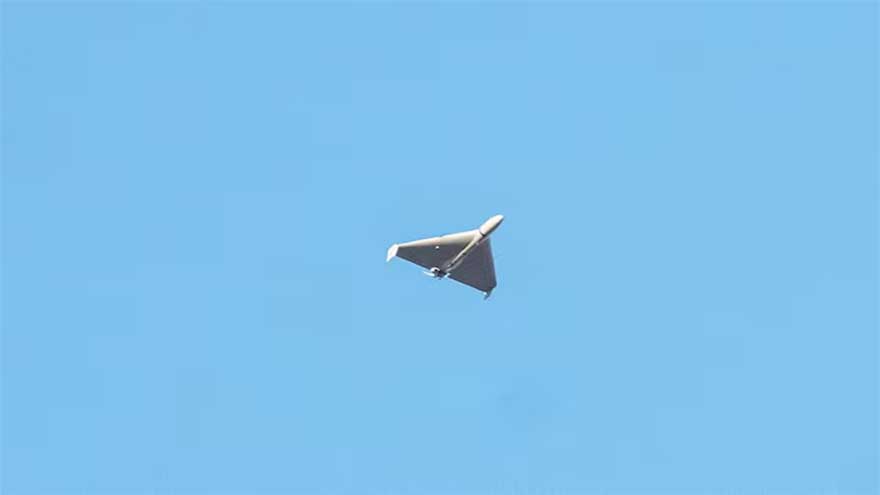
Reuters reported in July that Kupol was producing thousands of Garpiya one-way attack drones using Chinese parts, including engines. Garpiyas – which are modelled on Iran’s Shahed drone – can fly hundreds of miles to pre-programmed targets before diving out of the sky and exploding on impact. Kyiv has said around 500 are being used each month in Ukraine.
The two European officials said the shipments of small numbers of Chinese attack drones and the presence of Chinese experts could indicate Kupol’s interest in expanding production to new drone models.
Reuters was unable to confirm independently the reason behind the drone shipments, nor the exact nature of the work carried out by the Chinese experts.
Samuel Bendett, an adjunct senior fellow at the Center for a New American Security, a Washington-based think tank, said China had become a vital part of Russia’s military supply chain.
“There is just such an enormous role and influence and impact of Chinese components in Russian military systems…especially in aerial drones,” Bendett said.
DELIVERIES OF CHINESE ATTACK DRONES
A letter from TSK Vektor to Kupol reviewed by Reuters showed that in the second quarter of 2024 the procurement company billed the weapons manufacturer for more than half a dozen drones produced by AEE. The European sources requested that specifics of the letter, as well as the other documents shown to Reuters, be withheld, including their dates.
An AEE corporate document detailing shipments to TSK Vektor, seen by Reuters, confirmed the delivery of the A140 and A900 one-way attack drones. It also listed more than half a dozen other drones – the A60, A100 and A200 – due for delivery.
Kupol reports seen by Reuters describe flight tests of the A60, A100 and A200 drones at the Chebarkul military test site in Russia’s Chelyabinsk region in the last quarter of 2024.
A group of Chinese experts visited Kupol’s facilities in the city of Izhevsk to assemble the drones and train Kupol staff to use them, a Kupol document said. The experts then visited Chebarkul, it added. Airline bookings seen by Reuters showed the Chinese experts were due to fly out of Chelyabinsk the day after the tests.
The letter and flight reports described the Chinese experts as employees of TSK Vektor, the Russian procurement company. However, the European officials said they assessed that the individuals were AEE staff.