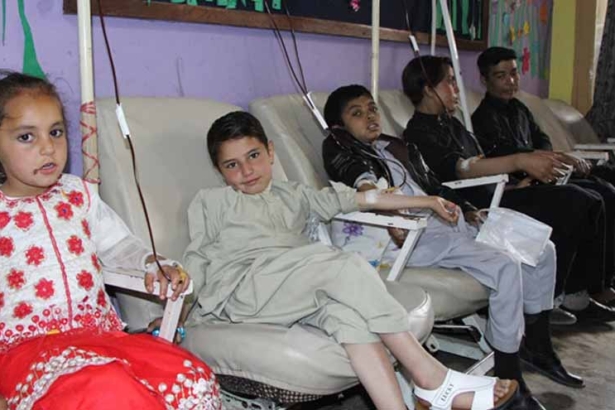

Speaking at the launch ceremony, Federal Health Minister Mustafa Kamal described the growing number of thalassemia patients in Pakistan as “alarming,” attributing the trend to negligence on the part of both the government and the general public. He emphasized the critical importance of mandatory premarital testing, particularly for men, explaining that when two carriers of thalassemia minor marry, there is a significant risk of having a child with thalassemia major, the severe form of the disease. “This is widely known, yet very few couples undergo screening before marriage,” the minister noted.
Highlighting treatment challenges, Mustafa Kamal stressed that regular blood transfusions and bone marrow transplants remain the primary approaches to managing thalassemia. He pointed out that finding a compatible bone marrow donor is extremely difficult, with only one in 50,000 patients able to secure a match. To facilitate timely care, the minister announced that the government has streamlined pre-transplant approval processes, making it easier for patients to receive critical treatment without unnecessary delays.
The minister also urged provincial and local authorities to enforce thalassemia screening as part of mandatory premarital health checks, with the objective of preventing the birth of children affected by the severe form of the disorder.
Addressing broader public health concerns, Mustafa Kamal referred to ongoing challenges in vaccination campaigns, including polio, where misinformation and conspiracy theories have sometimes hampered efforts. He stressed that safeguarding the health of children, particularly those living with conditions such as thalassemia, ultimately depends on parental awareness and proactive engagement.