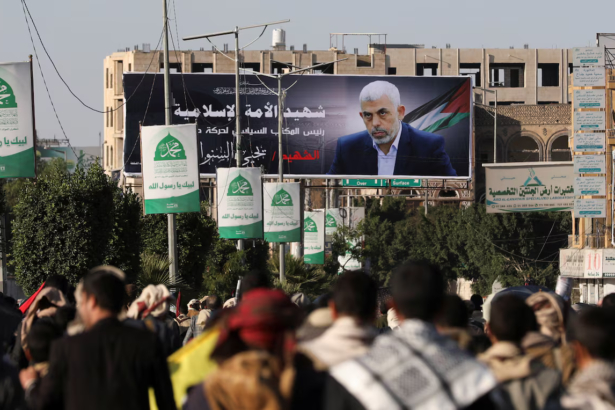

GAZA CITY: Hamas has initiated internal procedures for choosing its new leader, sources within the organization said. For the first time since the death of Yahya Sinwar on October 16, 2024, this would formalize a leadership selection beyond a wholly consultative model.
According to Arab media, since the assassination of Sinwar, Hamas has been working in a collective, consultative framework where the power of decision-making was held by a collective of senior leaders. Voting is expected to conclude by the end of the month, after which clear leadership might be seen.
Exactly how it will work: Hamas says the ballot will involve 50 members of the Shura Council and will be conducted in secret. The result is widely seen as setting the direction for the group’s political and military strategy in the years ahead.

Two names are often spoken about as his potential replacement: Khalil al-Hayya and Khaled Meshaal. No official statement has been released yet, but onlookers say either one of them could secure Hamas’s future direction.
An international news agency confirms Hamas publicly admitted to launching the electoral process, and it intends to complete the vote for leadership positions within the month.
Analysts note that leadership transitions in Hamas attract attention beyond Gaza, from regional players to global stakeholders, due to the group’s clout in Gaza and influence on broader Israeli-Palestinian dynamics. The selected leader may mold internal governance and Hamas’s stance on negotiations, conflict, and diplomacy.
The move to a structured procedure, with secret ballots and senior consultation, appears designed to preserve unity and continuity in the event of Sinwar’s death. Previously, a collective system had allowed decision-making without a single dominant figure, but experts argue formal leadership is needed for long-term coordination.
Observers will be closely watching, knowing full well that the outcome may have far-reaching effects on Hamas’s ties with regional allies, including Egypt and Qatar, and may result in changes to its approach in the never-ending standoff with Israel.
With the vote due to conclude by the end of the month, it now appears that Hamas is poised to formalize its leadership and, by extension, its grip on Gaza’s political and security trajectory for the foreseeable future.