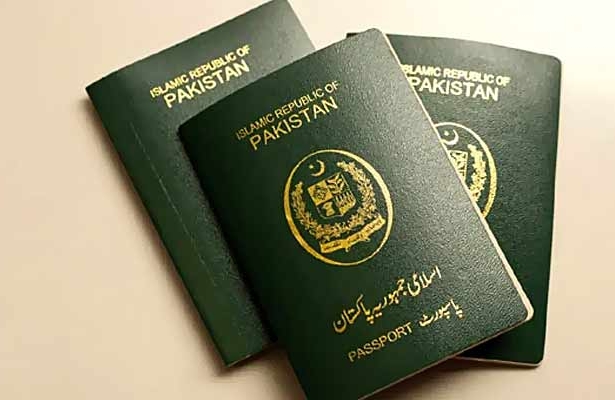

KARACHI: The Government of Pakistan has rolled out major reforms in passport policy, granting married women the right to retain their father’s name on official travel documents, reinforcing women’s independent legal identity.
The changes were announced by the Directorate General of Immigration and Passports (DGIP), which confirmed that married women will now have the option to list either their father’s or husband’s name on their passports, according to their personal preference.
Court-Directed Reform
The policy shift follows directives issued by the Lahore High Court in a constitutional petition (W.P No. 65154/2023) filed by Miss Mehr Bano Langaryalal and others against the Federation of Pakistan. The judgment, authored by Justice Asim Hafeez, emphasized that women must be given the freedom to maintain their father’s name on their National Identity Cards (NICs) and passports after marriage.
The ruling also applies to a related petition (W.P No. 58842/2023) submitted by Barrister Khadija Yasmin Bukhari and others, further strengthening the legal foundation for the reform.
In its decision, the court underscored that a woman’s legal identity is not extinguished or replaced upon marriage and that she retains the right to be identified by her father’s name in official documentation if she so chooses.
Implementation Underway
Following the court’s order, the DGIP has initiated consultations with relevant departments to ensure smooth implementation of the revised policy. Officials said administrative adjustments and coordination with allied institutions are being carried out to update documentation procedures accordingly.
The reform is being viewed as a significant administrative step toward gender equality in official record-keeping.
UN Women Support
In a related development, representatives of UN Women Pakistan, led by Country Representative Jamshed M. Qazi, met DGIP officials to express support for the implementation process. The UN body offered technical and institutional assistance to facilitate effective execution of the court’s directives.
Strengthening Women’s Legal Identity
Authorities highlighted that access to accurate and self-determined legal identity documents is essential for women’s full participation in economic, social, and civic spheres. Legal identity affects access to banking services, inheritance rights, property ownership, employment opportunities, and travel documentation.
Legal experts believe the reform aligns Pakistan’s administrative practices with constitutional guarantees of equality and international commitments on women’s rights.