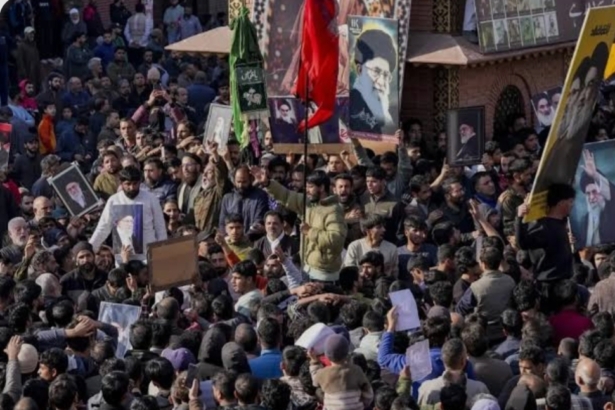

Large crowds took to the streets in Indian-administered Kashmir after Iran’s Supreme Leader, Ayatollah Ali Khamenei, was killed in a joint US-Israeli strike in Tehran early Saturday.
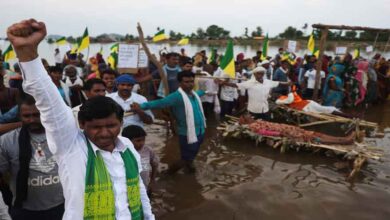
The protests erupted in Srinagar and several districts, including Pulwama, Baramulla, Panpora, and the Shia-majority district of Kargil. Many protesters gathered at Lal Chowk, the commercial center of Srinagar, to express solidarity with Iran. They assembled in front of the historic clock tower.
The demonstrations included both Shia and Sunni Muslims. Thousands offered prayers together at Lal Chowk. People carried large posters of Khamenei and black flags. Demonstrators chanted slogans against the United States and Israel. Young participants recited elegies for Khamenei in the Kashmiri language.
The protests dispersed peacefully. However, the Education Minister announced holidays for all schools and colleges on Monday and Tuesday. Exams and interviews scheduled for these days were postponed.
Kashmir’s Chief Minister urged police and officials to allow mourners to express their grief peacefully. He appealed to the public to avoid unrest during demonstrations. Former Chief Minister Mehbooba Mufti described the day as “one of the saddest and most shameful” in history. She criticized celebrations in some countries over Khamenei’s death and praised those who defend justice and the oppressed.
Mirwaiz Umar Farooq, leader of an alliance of over a dozen Shia and Sunni organizations, called for peaceful protests and a general strike. He said Muslims should rise above sectarian differences and show unity. Protesters were urged to maintain peace and respect.
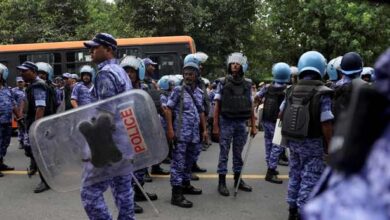
Authorities imposed “security restrictions” across all districts of Kashmir, effectively enforcing a curfew. Mobile internet services were suspended.
Deep Religious and Cultural Ties Between Kashmir and Iran
The protests reflect the long-standing religious, cultural, and spiritual ties between Kashmir and Iran. Khamenei is regarded as a spiritual authority by the Shia community in Kashmir. His guidance influences worship, commerce, marriage, and daily life.
Iranian Sufi scholars and saints arrived in Kashmir in the 14th century. Figures like Syed Sharaf-ud-Din Bulbul Shah and Mir Syed Ali Hamdani helped spread Islam. They were accompanied by over 700 Iranian Sayyids. They brought skills in handicrafts such as papier-mâché, shawl weaving, carpet making, stone carving, and glasswork. These crafts remain an important part of Kashmir’s economy.
Persian was the official language of Kashmir until the 19th century. Many Kashmiri poets gained recognition in Iran. Graves of Iranian poets who died in Kashmir are preserved in a cemetery called “Mazar-e-Shura” near Dal Gate, Srinagar.
Khamenei’s Visit to Kashmir
Ayatollah Khamenei visited Srinagar in 1980. He arrived under the guidance of representatives of Imam Khomeini. Thousands welcomed him at the airport. He delivered a 15-minute speech at the Jamia Masjid. The speech focused on sectarian unity and explained the goals of the Iranian revolution. It was later translated into Kashmiri.
During the visit, Khamenei prayed behind a Sunni Imam. This act promoted inter-sectarian harmony. His visit helped establish lasting emotional and spiritual ties between Iranian leadership and Kashmiris. Scholars note that it strengthened traditions of religious tolerance that continue today.
Some debates exist over whether Imam Khomeini’s ancestors were Kashmiri. Correspondence between Khomeini and Kashmiri Shia leaders in the 1960s and 1970s suggests a spiritual connection, though there is no definitive evidence.