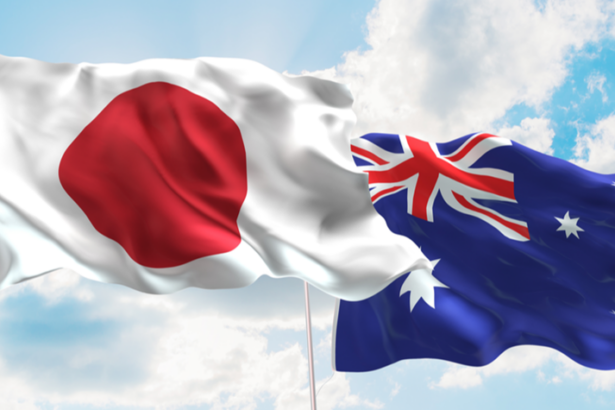

Australia and Japan have formally signed contracts to advance a landmark $7 billion warship agreement, marking a significant step in Tokyo’s evolving defense posture and Canberra’s maritime security strategy. The deal, finalized on Saturday in Melbourne, represents Japan’s most consequential military export since it lifted its decades-long ban on arms sales in 2014.
Australian Defence Minister Richard Marles and his Japanese counterpart Shinjiro Koizumi signed a memorandum that reaffirmed both governments’ commitment to delivering the warships on schedule. Marles emphasized that the agreement strengthens bilateral defense cooperation and ensures that both nations remain prepared to meet emerging regional challenges.
The deal, originally struck in August, anchors Japan’s shift away from its postwar pacifist stance. Tokyo now seeks to expand its security partnerships beyond its traditional alliance with the United States, particularly as China’s military presence grows across the Indo-Pacific. For Australia, the agreement provides advanced naval capabilities to safeguard critical trade routes and reinforce its northern maritime approaches.
Under the contract, Mitsubishi Heavy Industries will supply the Royal Australian Navy with three upgraded Mogami-class multi-role frigates. These vessels, built in Japan, will be delivered starting in 2029. Australia will then construct eight additional frigates domestically at the Henderson shipyard near Perth, ensuring local industry participation and long-term sustainment of the fleet.
The Mogami-class frigates carry versatile capabilities. They can hunt submarines, strike surface ships, and provide air defense, making them a crucial addition to Australia’s naval arsenal. Canberra plans to deploy the ships across the Indian and Pacific Oceans, where tensions continue to rise due to China’s expanding military footprint. By strengthening its fleet, Australia aims to secure maritime trade routes that remain vital to its economy and regional stability.
Japan’s Defence Ministry highlighted the importance of the agreement in a statement posted on X. Koizumi and Marles welcomed the conclusion of contracts for the frigates and pledged to deepen defense ties between the two nations. The ministry underscored that the deal reflects a shared vision for regional security and a commitment to counterbalance growing threats.
The signing ceremony in Melbourne marked the beginning of the project’s first phase. Contracts cover the initial three frigates to be built in Japan before transitioning to an onshore build in Australia. This phased approach allows Australia to benefit from Japan’s advanced shipbuilding expertise while gradually expanding its domestic capacity.
For Japan, the deal signals a new era in defense exports. Since ending its military export ban in 2014, Tokyo has cautiously explored opportunities to supply defense equipment abroad. The Australian contract stands as its most ambitious undertaking, demonstrating Japan’s willingness to play a larger role in regional security. Analysts view the agreement as a milestone in Japan’s broader strategy to diversify its defense partnerships and reduce reliance on the United States.
For Australia, the partnership with Japan complements its existing defense ties with the U.S. and other regional allies. Canberra continues to invest heavily in naval modernization, recognizing the strategic importance of maritime power in deterring threats and protecting national interests. The frigates will enhance Australia’s ability to operate across vast oceanic spaces, reinforcing its role as a key security partner in the Indo-Pacific.
The $7 billion deal also carries economic implications. By building eight frigates domestically, Australia will create jobs and strengthen its defense industry. The Henderson shipyard will serve as a hub for construction, maintenance, and future upgrades, ensuring that the program delivers long-term benefits beyond immediate security needs.
The agreement reflects a convergence of strategic priorities. Both nations seek to counterbalance China’s assertiveness, protect vital sea lanes, and maintain a stable regional order. By deepening defense cooperation, Australia and Japan signal their determination to uphold security in the Indo-Pacific and safeguard the interests of their allies.
As construction begins, the deal will stand as a symbol of the evolving security architecture in the region. Australia and Japan now move forward with a shared commitment to strengthen their naval capabilities and reinforce their partnership in the face of growing challenges.