
There are moments in human history when the silence that follows a tragedy speaks louder than the explosion that caused it.
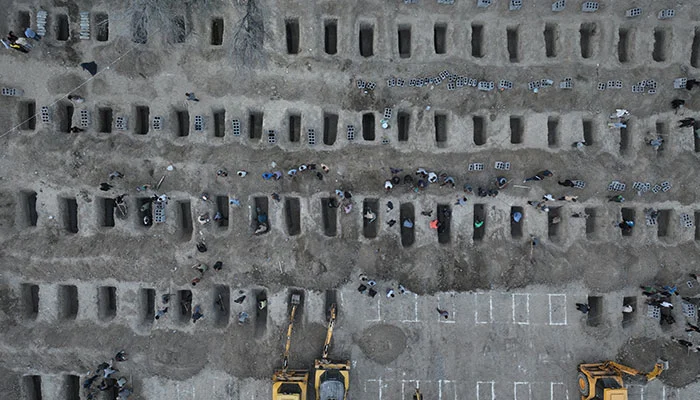
The bombing of a school that claimed the lives of 165 young girls has shaken the conscience of the world. They were children sitting in their classrooms, their books open, their futures quietly unfolding until violence entered a space meant for learning and hope.
A school is meant to be a sanctuary. It is where children learn not only mathematics and language but hope itself. It is where a young girl begins to imagine the possibilities of her life, the person she might become, the dreams she might pursue, the world she might help shape.
Yet on that ordinary school day, the rhythm of learning was shattered. Instead of the school bell signalling the end of lessons, there was devastation. Instead of children returning home with stories of their day, families were confronted with unimaginable loss.
Behind the stark number of 165 are not statistics but lives. Daughters, sisters, students and friends. Each one carried within her a universe of potential. Each one represented a future that will now never be realised.
As a legislator and policymaker, one is often required to think in terms of strategy, diplomacy and national interest. Yet moments like this strip away the language of policy and bring us face to face with the stark reality of human suffering.
As a mother of a seven-year-old who walks into his classroom each morning with the innocence of a child who believes the world is safe, this tragedy has deeply shaken me.
Like countless parents around the world, I watch my child enter school with the quiet faith that education is a safe and nurturing space. The thought that a classroom, the very symbol of innocence and learning, could become a site of such devastation is profoundly unsettling.
For the parents who sent their daughters to school that morning, education was an act of faith in the future. They believed that the classroom was a place of safety and promise.
By evening, that belief had been shattered in the most heartbreaking way imaginable. War has always carried tragedy in its wake. Yet perhaps the most painful truth about modern conflict is that those who suffer most are often those who have had no role in creating it.
Women and children continue to bear the heaviest burden of wars they did not start. Across regions and continents, conflicts are initiated by political decisions, strategic calculations and competing interests of power. But the consequences fall most harshly on ordinary people, families simply trying to live their lives with dignity and hope.
War may begin in the language of strategy, but it ends in the language of grief, in empty desks, silent classrooms and parents waiting for children who will never come home. Children sitting in classrooms are not participants in geopolitical rivalries. They are not actors in military confrontations.
They are the very embodiment of the future humanity claims to protect. And yet far too often they become its victims. A classroom filled with girls represents something profoundly powerful. It symbolises progress, empowerment and the transformative power of education. Every girl who sits behind a school desk represents a future teacher, doctor, scientist, artist or leader.
When such a classroom is destroyed, the loss is not only personal. It is civilisational. For grieving families, these young victims will forever be remembered as martyrs, children whose lives were taken in a place meant for learning, safety and hope. The tragedy forces us to confront a fundamental moral question. How do we reconcile the conduct of modern warfare with the principles of humanity we claim to uphold?
International humanitarian law was built upon the belief that even in times of war, there must remain limits, boundaries that protect civilians and preserve the sanctity of certain spaces. Schools, hospitals and homes are meant to be among those protected spaces.
When those boundaries erode, it is not only buildings that collapse. It is the moral architecture that sustains our shared humanity. The deaths of these young girls should compel the global community to reflect deeply on the human cost of conflict. Wars are often discussed in terms of strategy, alliances and political outcomes. Yet the true cost of war is measured not in military objectives but in human lives disrupted and futures extinguished.
For the families who have lost their daughters, there will be no strategic explanation that can fill the empty seat at the dinner table. There will be no geopolitical argument that can replace the laughter that once echoed through their homes.
In many homes that evening, schoolbags remained hanging by the door, waiting for daughters who would never return. The world has witnessed many such tragedies in recent decades. Each time we express outrage. Each time we vow that such suffering must not continue. Yet too often the world moves on before the lessons are truly learned.
If humanity is to retain any moral compass in an increasingly turbulent world, we must reaffirm a simple principle. The lives of children must never become collateral damage. Education must remain sacred even in times of conflict. A school should never become a coordinate on a battlefield.
The young girls whose lives were lost cannot speak for themselves. But their silence now speaks powerfully to the conscience of the world. It reminds us that the true measure of our humanity lies not in the wars we wage but in the lives we choose to protect.
Their empty classrooms should stand as a solemn reminder that the true cost of war is not measured in strategy or territory, but in the futures it erases. When the school bell falls silent because of violence, it is not only children we lose. It is a piece of our collective humanity.