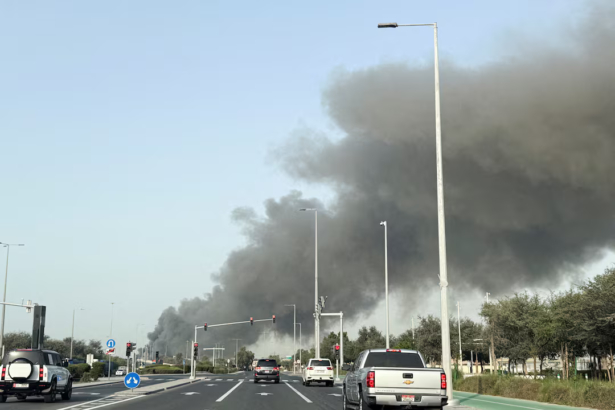

Iran launched fresh attacks on Gulf countries on Tuesday. The strikes targeted U.S. allies, including the United Arab Emirates, Qatar, Bahrain, and Kuwait. Iranian missiles hit oil and transport infrastructure. Drones targeted key energy facilities, causing temporary closures and fires.
The attacks came amid weeks of U.S. and Israeli bombardments on Iran. Despite prior warnings, President Donald Trump said he did not expect Iran to strike neighboring countries. U.S. intelligence sources had indicated such retaliation was possible. Diplomats in the Gulf and Middle East said Tehran’s attacks were widely anticipated if the U.S. or Israel struck Iranian targets.
The conflict has now entered its third week. At least 2,000 people have died. The Strait of Hormuz, a crucial global oil passage, remains mostly closed. The closure is driving energy prices higher and raising fears of global inflation. Several U.S. allies declined Trump’s request to send warships to reopen the waterway. Officials cited a lack of international mandates as the reason.
Iran also fired missiles at Israel overnight. This demonstrated Tehran still has long-range strike capabilities despite weeks of air attacks. Israel responded with airstrikes on Iranian infrastructure in Tehran and Hezbollah sites in Beirut. Reports indicated Iran’s security chief, Ali Larijani, may have been targeted, though no official confirmation has been released.
In Iraq, rockets and drones struck the U.S. embassy in Baghdad. Officials called it the heaviest assault on American personnel since the war began. No casualties were reported.
In the UAE, debris from intercepted missiles fell in Abu Dhabi, killing a Pakistani national. Fires broke out at gas and oil facilities in Fujairah and Abu Dhabi. Airspace was temporarily closed. The attacks disrupted exports and raised concerns about the stability of the region’s energy supply.
Trump said Iran’s strikes on its neighbors, including Gulf states, were unexpected. U.S. intelligence had warned him Iran could retaliate if Gulf countries supported the U.S. attacks. Analysts also predicted Tehran might attempt to close the Strait of Hormuz to global shipping.
Oil prices jumped more than 5% following the attacks. Investors worry that rising energy costs could worsen inflation and slow global growth. In Australia, the Reserve Bank raised interest rates again to curb rising prices.
Iranian authorities dismissed claims that missile stocks were running low. They said Iran’s offensive power, experience, and accuracy had increased. Iranian leaders also called for regional countries to play a larger role in maintaining security.