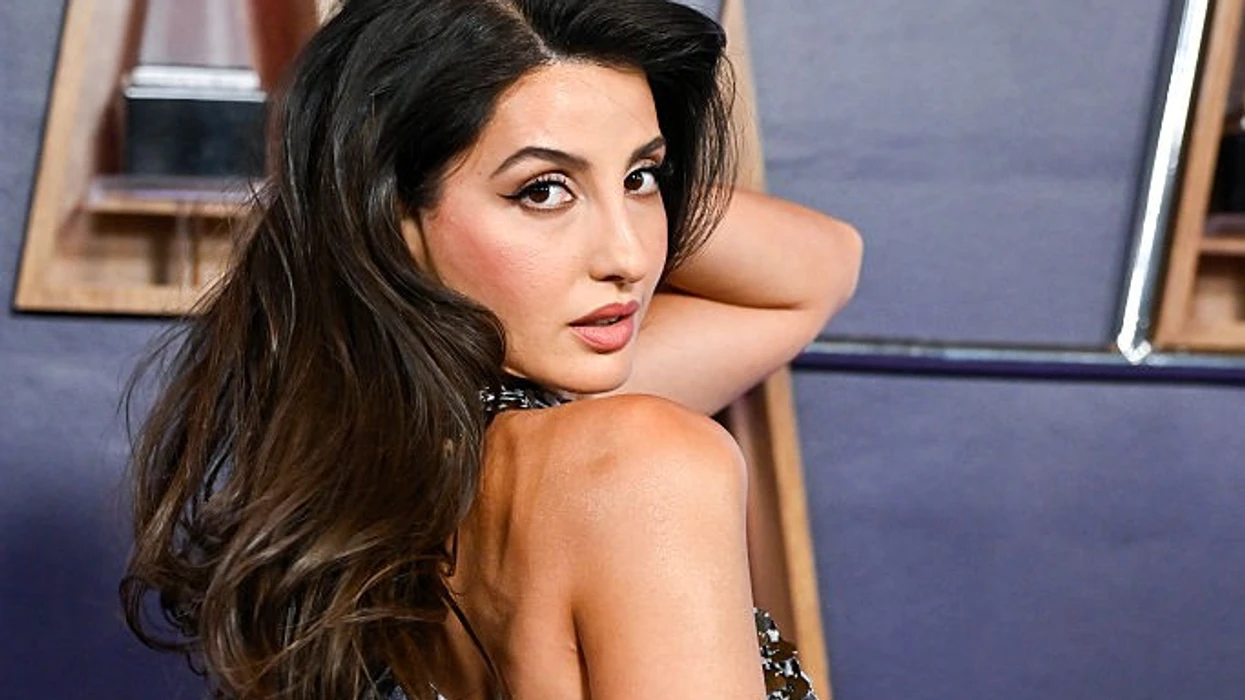

Bollywood dancer Nora Fatehi finds herself at the center of a storm in Uttar Pradesh after a fatwa was issued against her for the steamy song Sarke Chunar Teri Sarke from the upcoming Kannada film KD: The Devil.
Religious leaders have criticized the track’s lyrics and visuals as vulgar and un-Islamic, leading to national backlash and a government ban on the song.
A Muslim religious body in Aligarh, Uttar Pradesh, the Muslim Personal Darul Ifta, led by Chief Mufti Maulana Ebrahim Hussain, declared the song’s content objectionable.
The fatwa described the visuals as “explicit and vulgar,” labeling participation in such material as “haram and a gunah-e-kabira (grave sin).” The organization told ANI that the song violated religious principles. (Note: A fatwa is a non-binding legal opinion issued by a mufti on Islamic issues.)
Amid widespread complaints, the Union government banned the song, with Information & Broadcasting Minister Ashwini Vaishnaw announcing the move in the Lok Sabha in response to Samajwadi Party MP Anand Bhadouria.
Public outrage included demands for FIRs and the removal of the track from digital platforms, intensifying the controversy ahead of the film’s release.
Sarke Chunar Teri Sarke features Nora Fatehi alongside Bollywood icon Sanjay Dutt, composed by Arjun Janya with Kannada lyrics by director Prem, translated into Hindi by Raqueeb Alam, and sung by Mangli.
The film, KD: The Devil, also stars Dhruva Sarja and Shilpa Shetty Kundra, and is scheduled for release on April 30, 2026. The provocative visuals and lyrics triggered instant online backlash.
Nora addressed the controversy on Instagram, explaining that she had filmed the song three years ago and could not refuse working with Sanjay Dutt, calling him “an icon.” She added that it was a remake of Nayak Nahi Khalnayak Hoon Main.
“I didn’t understand Kannada, and the team assured me the Hindi translation would be fine,” she said. However, upon hearing the final Hindi lyrics at the launch, she realized it could provoke controversy.
With the fatwa, government ban, and social media uproar, the controversy has raised questions about censorship, creative freedom, and religious sensitivities in Indian cinema.