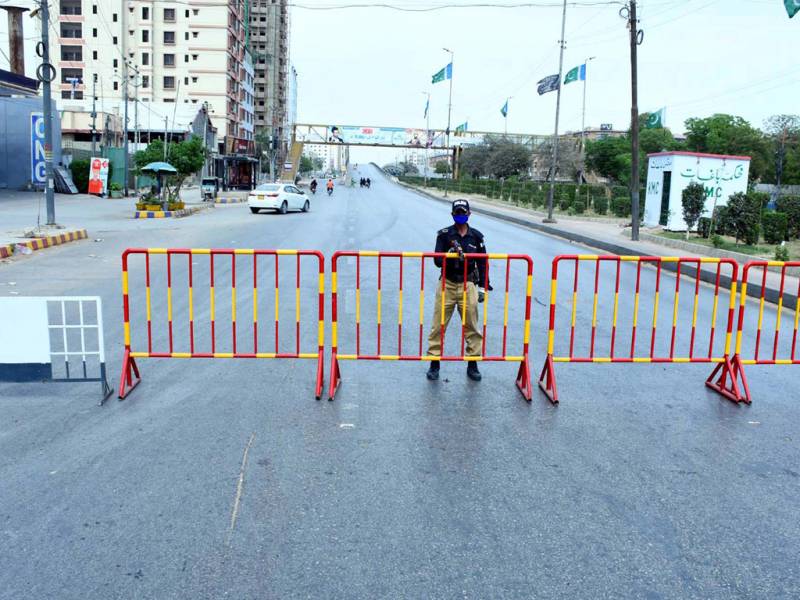

Sindh Local Government Minister Nasir Hussain Shah said on Tuesday that the provincial government is considering imposing a smart lockdown as a fuel conservation measure in response to rising global oil pressures linked to ongoing tensions in the Middle East.
Speaking to reporters in Sukkur, the minister stressed that the situation demands extraordinary measures. “The present circumstances are not normal. If the war drags on, everyone will face difficulties,” he said, warning of broader economic and logistical challenges.
Shah noted that the government has already reduced petrol consumption for official vehicles by 60 per cent as part of its initial response. He added that daily review meetings are being held to monitor the evolving situation, reflecting what he described as a proactive approach by the provincial administration.
Smart lockdowns, first implemented in Pakistan during the COVID-19 pandemic, involve targeted restrictions in specific areas rather than province-wide shutdowns. Under this system, movement is limited in designated neighbourhoods, gatherings are restricted, and only essential activities are permitted under strict monitoring.
In areas placed under such restrictions, no more than four individuals can gather at a time, while only one member per household is allowed to leave home with a valid reason. Public events, social gatherings, and celebrations are banned, and affected localities may be sealed to control movement.
Earlier this month, the Sindh government announced a series of austerity measures aimed at reducing fuel consumption and limiting public expenditure amid surging oil prices tied to the US-Israel-Iran tensions.
Under these measures:
Educational institutions will remain closed from March 16 to March 31, although examinations will continue as scheduled.
Government offices will observe work-from-home on Fridays.
Fuel consumption of official vehicles has been cut by 50 per cent for two months.
Sixty per cent of government vehicles will remain off the roads during this period.
Provincial ministers will forgo salaries and allowances for April, May, and June.
Official travel will be restricted to economy class.
Purchase of new vehicles and furniture by government departments has been banned.
The chief minister’s official aircraft will remain grounded.
Government ceremonies in hotels have been prohibited, with events restricted to official buildings.
Official iftar dinners and other government-hosted gatherings have been banned.
Officials say the measures are designed to ease pressure on fuel reserves while maintaining essential services as the global energy situation remains uncertain.