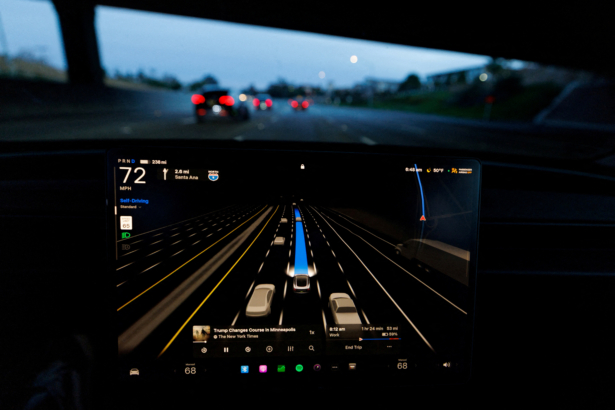

In a landmark move for the future of transportation, Dutch regulators have approved Tesla’s “Full Self-Driving (FSD) Supervised” software, making the Netherlands the first country in Europe to allow the technology on public roads. The decision marks a significant milestone not just for Tesla, but for the broader push toward autonomous driving across the continent.
The approval was granted by the Netherlands’ vehicle authority after more than 18 months of rigorous testing and safety evaluations. The system, which still requires human supervision, enables Tesla vehicles to steer, brake, and accelerate automatically on highways and city streets. Officials emphasized that, when used properly, the technology can contribute positively to road safety.
For Tesla CEO Elon Musk, this development is a crucial step in a long-term vision where artificial intelligence powers a new era of mobility. Much of Tesla’s massive market valuation is tied to Musk’s belief that self-driving technology—and eventually robotaxis—will become a dominant source of revenue in the coming years.
The Netherlands’ approval is expected to pave the way for broader adoption across the European Union. Dutch authorities have already submitted an application for EU-wide authorization, which will require approval from member states. If successful, Tesla’s FSD could soon be available across multiple European countries, transforming how millions of people commute.
Industry analysts say the move could also provide a much-needed boost to Tesla’s performance in Europe. The company has faced declining sales in the region due to an aging lineup of electric vehicles and controversies surrounding Musk’s political views. However, the introduction of advanced self-driving features could reignite consumer interest.
“European drivers are curious and excited about autonomous technology,” said a market analyst, noting that Tesla’s competitive edge lies in its software capabilities rather than just hardware. Unlike many rivals, Tesla relies primarily on cameras and artificial intelligence, rather than a combination of sensors like radar and lidar, to navigate roads.
Currently, around 100,000 Tesla vehicles—including Model 3 and Model Y cars—are on Dutch roads and could potentially receive the FSD feature through software updates. Tesla has confirmed it will begin rolling out the technology in the Netherlands soon, offering it as a subscription service similar to its model in the United States.
However, the company still faces scrutiny. In the US, Tesla’s self-driving systems have been the subject of lawsuits and federal investigations following reports of crashes and traffic violations. European regulators, known for stricter safety standards, have emphasized that the approved version of FSD differs from the one used in the US, though specific details remain undisclosed.
Tesla is not alone in the race toward autonomous driving. Automakers such as Mercedes, Ford, and BMW have already introduced limited “hands-free” driving systems, primarily restricted to highways and lower speeds. But Tesla’s approval in the Netherlands stands out because it allows use in a wider range of driving conditions, including urban environments.
The coming months will be critical as EU regulators review Tesla’s application. If approved, the technology could reshape Europe’s automotive landscape, pushing competitors to accelerate their own innovations.
For now, the Netherlands has taken a bold step into the future—where the line between driver and machine continues to blur, and the dream of fully autonomous travel edges closer to reality.