
Amnesty International has warned that Israel, Russia, and the United States are contributing significantly to the erosion of global human rights, describing the leadership of these states as “voracious predators” pursuing political and economic dominance.
In its annual report on the state of human rights worldwide, released on Tuesday, Amnesty International Secretary General Agnès Callamard stated that “a global environment where primitive ferocity could flourish has been long in the making.”
She further noted that in 2025, there had been a pronounced “sharp U-turn” away from the post-World War II international order, which was established in the aftermath of the Holocaust and developed gradually over the past eight decades, albeit in an incomplete form.
Addressing a press briefing in London on Monday, Callamard said that many governments have tended to appease such “predatory” actors rather than confront them, while some have attempted to emulate similar conduct.
She also identified Spain as an exception within Europe, commending its position on what she described as Israel’s actions in Gaza and US-Israeli strikes on Iran, and stating that it is “standing above the double standards that are undermining the international system.”
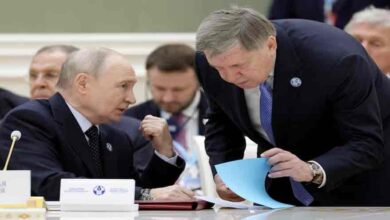
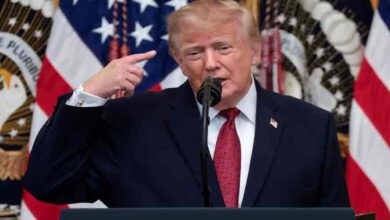
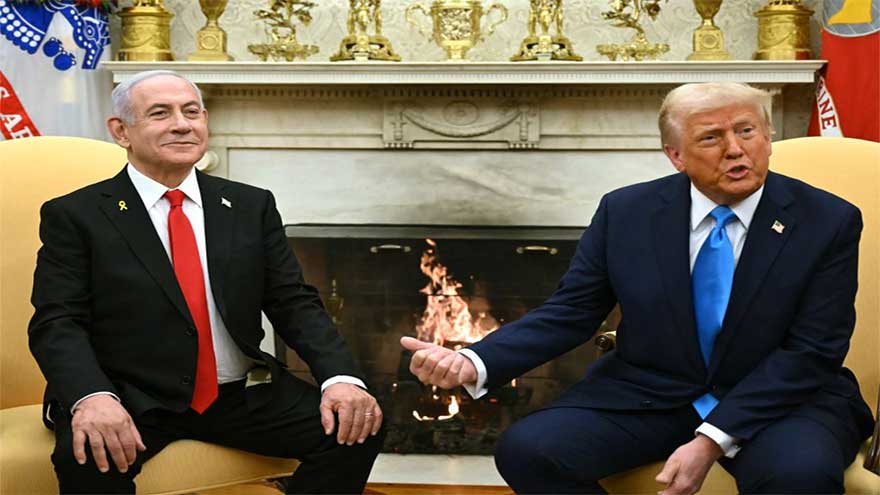
Callamard argued that the policies and actions of Israeli Prime Minister Benjamin Netanyahu, US President Donald Trump, and Russian President Vladimir Putin have had a “dramatic impact” on global affairs. She further warned that their conduct is emboldening similar behaviour by other states, contributing to a more aggressive and volatile international environment than in previous years.
Amnesty International’s report presents a comprehensive assessment of the global human rights situation, concluding that “authoritarian practices have intensified worldwide.” The report documents alleged violations across numerous countries, spanning more than 400 pages and covering regions from Afghanistan to Zimbabwe.
It highlights several ongoing conflicts, including Israel’s military operations in Gaza, Russia’s actions in Ukraine described as “crimes against humanity,” and US-Israeli strikes on Iran, asserting that international legal norms have been widely disregarded.
The report also raises concerns regarding repression in multiple states. In the United Kingdom, it cites restrictions on pro-Palestine activism, including legal proceedings against the group Palestine Action, which has been proscribed as a terrorist organisation by the UK government.
In Afghanistan, the Taliban authorities are accused of further entrenching gender-based discrimination through restrictions on women’s access to education and employment. In Nepal, authorities are criticised for failing to adequately investigate cases of gender-based violence against Dalit women.
Escalating Global Conflicts
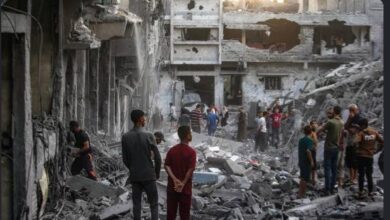
The report further notes that ongoing conflicts continue to result in significant civilian casualties. It states that more than 3,000 people have been killed in US-Israeli strikes on Iran, nearly 2,400 in Lebanon, over 72,500 in Gaza since October 2023, and more than 15,000 in Ukraine since the onset of Russia’s full-scale invasion over four years ago.
Callamard stated that conflicts in the Middle East reflect a growing “normalisation of lawlessness,” in which the killing of civilians has become increasingly tolerated, adding that insufficient action has been taken to hold Israel accountable for repeated violations of international standards.
Signs of Global Resistance
Despite its largely critical assessment, Amnesty International also highlighted developments it described as “resistance” and accountability efforts at the international level.
These include youth-led protest movements, the increasing number of states joining South Africa’s case against Israel at the International Court of Justice (ICJ), the International Criminal Court’s (ICC) charges of crimes against humanity against former Philippine President Rodrigo Duterte, the establishment of a Council of Europe special tribunal on the crime of aggression in Ukraine, and the ICC’s issuance of arrest warrants against Taliban leaders on charges of gender-based persecution.