
Israel intensified its military campaign in southern Lebanon on Wednesday, killing at least a dozen people as regional peace talks showed signs of collapse. The strikes came amid growing tension in the Iran war, with Tehran’s military leadership vowing to maintain full readiness against any confrontation.
Brigadier-General Mohammad Akrami Nia declared that Iran’s forces stood at “the highest level of readiness” and insisted that “there is no room for retreat.” His remarks underscored the fragile state of the ceasefire between Iran and the United States, which negotiators have struggled to sustain.
Former US President Donald Trump arrived in Beijing earlier in the day for a two-day visit with Chinese President Xi Jinping. Officials said discussions on the US-Israel war with Iran would dominate the agenda, highlighting China’s role as a potential mediator in the conflict.
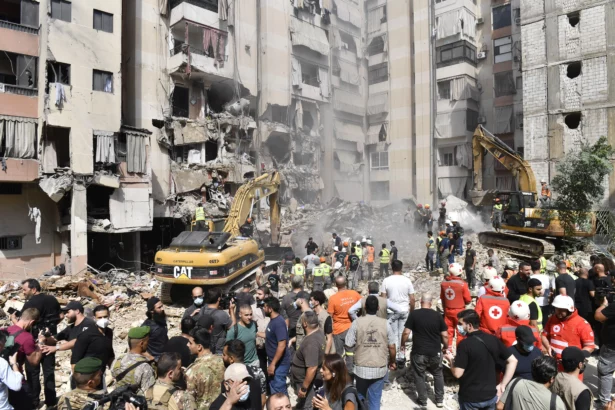
Israeli forces continued their ground invasion in southern Lebanon, accusing Hezbollah of plotting attacks against its troops. The Israeli army posted on Telegram that the Iran-backed group had prepared “terror plots” targeting soldiers and military positions. The statement followed a series of bombardments that destroyed villages and seized territory near the border.
Hezbollah claimed responsibility for rocket attacks on Israeli soldiers and equipment throughout the day. The group said its fighters targeted military convoys and installations, although Israeli officials reported no casualties. The exchange of fire added to the mounting instability along the frontier, where residents have fled in large numbers.
The Israeli military framed its operations as necessary to dismantle Hezbollah’s infrastructure. Officials said they struck weapons depots and fortified positions linked to the group. The campaign has escalated daily, with artillery and airstrikes pounding Lebanese towns and forcing civilians to evacuate.
Lebanese authorities condemned the destruction of villages and warned that the humanitarian situation was worsening. Aid groups reported growing displacement as families sought refuge in northern Lebanon. The strikes have disrupted relief efforts and raised fears of a broader conflict spilling across the region.
Iran’s leadership has tied its military posture directly to the fate of the ceasefire with Washington. Brigadier-General Akrami Nia’s comments reflected Tehran’s determination to resist pressure while signaling that any breakdown in talks could trigger wider hostilities. Iranian officials have repeatedly accused Israel of undermining negotiations through its actions in Lebanon.
Trump’s visit to Beijing added another layer of complexity. Analysts said his discussions with Xi Jinping could influence the trajectory of the war, particularly if China presses for restraint. Beijing has positioned itself as a key player in Middle East diplomacy, seeking to balance ties with both Washington and Tehran.
The conflict has already destabilized Lebanon, where Hezbollah maintains significant influence. The group’s rocket attacks and Israel’s retaliatory strikes have created a cycle of violence that threatens to derail any progress in peace talks. Residents in southern Lebanon described relentless bombardments and expressed fear that the fighting would spread deeper into the country.
Israel’s government has defended its actions as necessary for national security. Officials said Hezbollah’s presence along the border posed an immediate threat and justified the offensive. Critics argued that the destruction of villages and civilian casualties risked inflaming tensions and undermining diplomatic efforts.
The Iran war has drawn in multiple international actors, with the United States, China, and regional powers all watching closely. The ceasefire remains fragile, and the latest escalation in Lebanon highlights the difficulty of sustaining dialogue while fighting continues on the ground.
As both sides trade accusations and intensify operations, the prospect of a durable peace appears increasingly uncertain. The violence in Lebanon illustrates the broader stakes of the Iran war, where local battles carry global consequences.