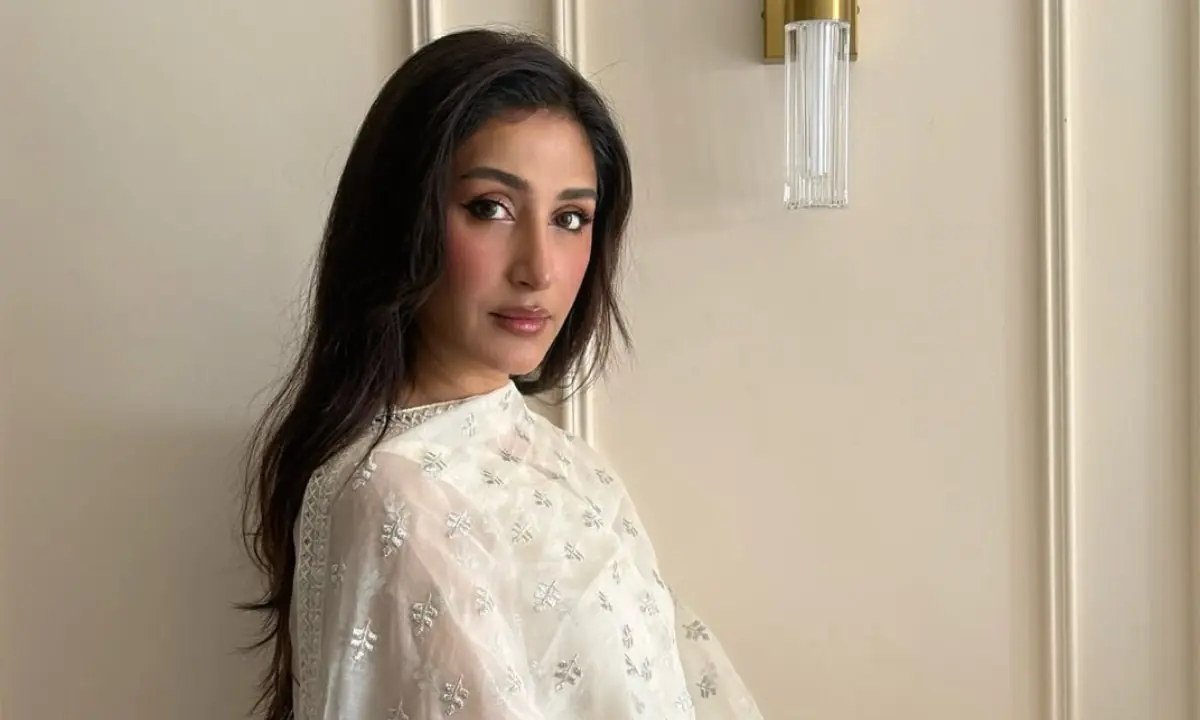

Popular Pakistani actress Hira Tareen has sounded the alarm over what she describes as a growing threat facing actors and content creators in Pakistan, the unchecked use of artificial intelligence and the hidden contract clauses that could hand over performers’ digital identities forever.
Taking to Instagram, Hira shared a detailed video in which she revealed a troubling experience she encountered earlier this year while reviewing a contract for a drama project.
According to the actress, what initially appeared to be a standard agreement contained clauses that would grant a production house and television channel ownership of her “digital likeness.”
Explaining the issue, Hira said that a digital likeness includes everything that makes an individual recognizable, including their face, voice, expressions and mannerisms.
“Something happened to me earlier this year, and I think every actor and content creator in Pakistan needs to hear this. I was reviewing a contract in March for a drama project. It looked like a standard agreement on the surface, but when I read it carefully, I found numerous clauses that were basically giving the production house and the channel ownership of my digital likeness.”
The actress revealed that the ownership rights outlined in the agreement were not limited to a single project but extended indefinitely.
“It wasn’t just for that project. It was for anything, forever.”
Concerned by what she discovered, Hira brought the matter to the attention of the Actors Collective Trust (ACT), hoping to spark discussion within the industry.
She explained that at first, many people did not fully grasp the implications of such clauses because the issue was relatively new in Pakistan. However, within weeks, other actors reportedly began receiving similar agreements.
“That showed me this wasn’t just one bad contract sent to me. It’s already becoming an industry-wide norm, and that’s even more concerning.”
Hira went on to explain how the gradual use of AI could eventually reduce opportunities for actors.
“First they use AI to make posters look better. Then they use your voice for dubbing. Then they call you for ten scenes instead of twenty because the model is training on your existing footage. One day, the model is ready and they don’t need to call you at all.”
Drawing comparisons with the international entertainment industry, Hira referenced the 2023 SAG-AFTRA strike in Hollywood, where actors and performers protested against AI-related concerns and demanded stronger contractual protections.
“Hollywood shut down the entire industry until protections were included in contracts. Every voice mattered and every actor counted.”
The actress noted that Pakistan currently lacks the same level of industry-wide unity and protections, with actors already struggling with delayed payments, poor working conditions and the absence of royalties from international broadcasts and digital platforms.
Acknowledging the financial realities many artists face, Hira admitted that some performers may hesitate to challenge problematic clauses out of fear of losing work opportunities.
“I understand that work is already limited and payments are often delayed. One clause in a lengthy agreement may not seem like the battle you want to fight. But this is about choosing between short-term work and long-term consequences.”
She concluded her message with a strong warning, urging actors and content creators to carefully review contracts before signing them.
“This is not just another clause. This is potentially your last contract. Before signing anything, look for words like ‘likeness,’ ‘perpetuity,’ ‘AI training model,’ or any clause related to artificial intelligence.”