
Pakistan on Thursday accused India of pursuing “hydro-hegemony” through at least 17 water projects that could alter the Indus River system, with Deputy Prime Minister and Foreign Minister Ishaq Dar saying the developments threaten the water rights of millions of people and challenge established principles of transboundary water governance.
Addressing the Brussels Conference on “Transboundary Water Resources: A Weaponised Global Common,” Dar said shared water resources should be managed through treaties, agreements and internationally accepted frameworks rather than becoming instruments of confrontation.

The conference brought together policymakers, climate experts and water resource specialists to discuss the management of transboundary water systems and their growing significance for international peace and security.
Dar said Pakistan has consistently upheld the principles of the United Nations Charter, relevant UN resolutions and international law. He recalled that Pakistan and India signed the Indus Waters Treaty in 1960, creating a framework for the utilisation of the six rivers of the Indus basin.
He described the treaty as an enduring agreement that has survived wars and political tensions over several decades and provides mechanisms for resolving disputes within its own framework.
Dar said Pakistan had previously raised concerns regarding certain Indian actions under the treaty and had pursued available international mechanisms while respecting decisions taken under the treaty process.
Turning to recent developments, Dar said Pakistan’s concerns were based not only on statements coming from India but also on projects being undertaken on rivers covered by the treaty.
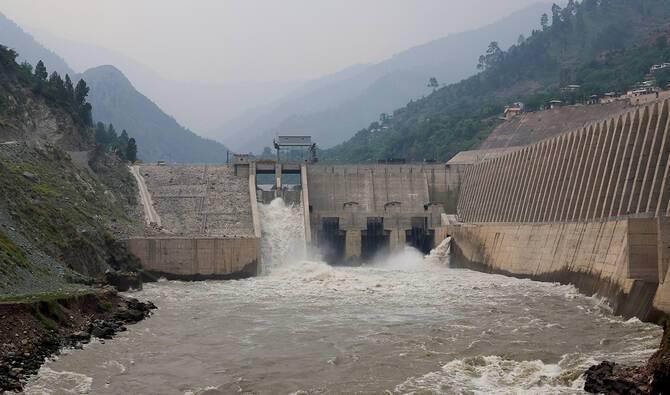
According to the foreign minister, these include reservoirs such as Sawalkot, Kirthai and Kwar, expansion of existing structures including Baglihar and Salal, and diversion projects on the Indus, Chenab and Ravi rivers.
“At least 17 such projects” would significantly alter the river system and provide India with the tools for what he called “hydro-hegemony,” Dar said.
He said river systems are not merely waterways but lifelines that sustain populations, economies and civilisations. Referring to the Indus basin, Dar said the river system supported one of the world’s oldest continuous civilisations and remains central to the lives of millions of people.
“The stated policy of our eastern neighbour to intentionally deprive 240 million people of their rightful access to water represents a catastrophe in the making, of unparalleled magnitude,” he said.
Dar said water should not be treated as an instrument of coercion but as a shared resource and common responsibility linked to human dignity and sustainable development.
He told participants that the issue should not be viewed solely through a South Asian lens, saying respect for treaties forms the foundation of the international order. He cited examples from Europe where transboundary water agreements have facilitated cooperation and regional stability.
The deputy prime minister said Pakistan remains committed to resolving issues through dialogue, diplomacy and mechanisms available under international law.
He also linked water security challenges to climate change, saying Pakistan is confronting the issue while already facing the effects of climate vulnerability despite contributing less than one percent of global greenhouse gas emissions.
Dar expressed hope that discussions at the conference would reinforce the importance of cooperation in managing transboundary water resources and provide lessons from other river systems worldwide.
“Shared waters should unite nations rather than divide them, and cooperation, not coercion, must remain the guiding principle of transboundary water governance,” he said.