
ISLAMABAD: Pakistan has formally urged the United Nations Security Council to take notice of what it calls India’s violations of the Indus Waters Treaty, warning that New Delhi’s recent actions could jeopardise Pakistan’s water security and heighten regional tensions.
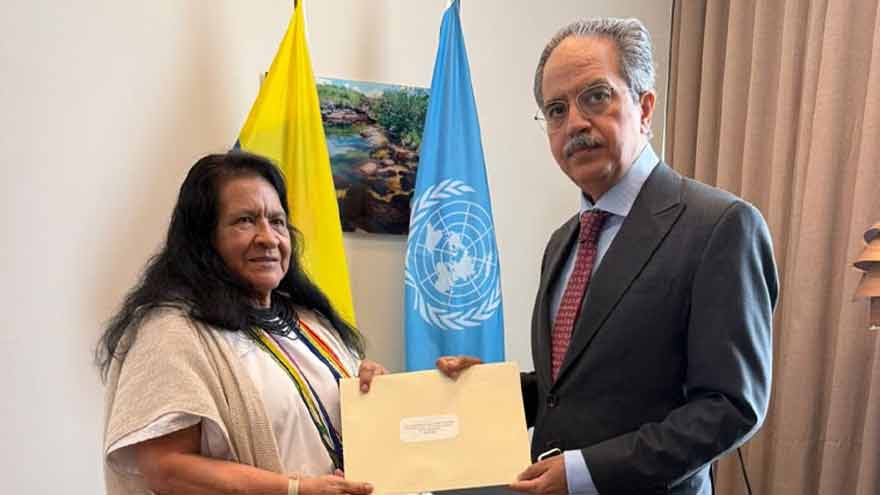
A letter from Deputy Prime Minister and Foreign Minister Ishaq Dar was delivered to the President of the UN Security Council by Pakistan’s Permanent Representative to the United Nations, Asim Iftikhar Ahmad. The communication outlines Pakistan’s concerns over alleged treaty breaches and calls for urgent international attention.
In the letter, Dar warned that India’s actions pose serious risks to Pakistan’s water security, regional stability and broader international peace. He specifically highlighted two infrastructure projects linked to the Chenab River system, alleging that they are designed to alter natural water flows in violation of treaty obligations.
According to Ambassador Asim Iftikhar, Pakistan has raised concerns that these projects reflect an attempt by India to unlawfully modify the flow and usage of western rivers allocated largely to Pakistan under the treaty, effectively turning water into a strategic pressure tool. Islamabad warned such moves could have severe consequences for food security, economic stability and regional peace.
Pakistan also asked the Security Council to hold India accountable and intervene in what it described as a worsening situation. The ambassador briefed the Council on the broader South Asian security landscape, including continued disputes over Jammu and Kashmir and India’s alleged non-compliance with relevant UN resolutions.
Dar had previously written to the Security Council in April, marking one year since India’s unilateral suspension of treaty obligations and warning of its humanitarian and security implications. He recently claimed that at least 17 Indian projects on the Indus basin could significantly expand New Delhi’s control over regional water flows.
Brokered by the World Bank in 1960, the Indus Waters Treaty governs water sharing between the two countries. Under the agreement, the eastern rivers — Ravi, Beas and Sutlej — were allocated to India, while the western rivers — Indus, Jhelum and Chenab — were largely reserved for Pakistan.
The treaty has long been regarded as one of the most durable frameworks of cooperation between the two nuclear-armed neighbours, surviving multiple wars and diplomatic crises. However, tensions escalated after India announced the suspension of certain treaty obligations in 2025.
Pakistan has also cited recent rulings by the Permanent Court of Arbitration, which held that India cannot unilaterally suspend the treaty and reaffirmed limits on New Delhi’s ability to control water flows on western rivers. These rulings were linked to disputes over the Ratle and Kishanganga hydropower projects in Indian-administered Kashmir.
Adding to Pakistan’s concerns, Indian media reports indicate that work on the proposed Link-3 project in Himachal Pradesh is expected to begin on August 1. The project aims to divert surplus water from the Chenab to the Beas basin at an estimated cost of 26.2 billion Indian rupees.
Pakistan’s Foreign Office spokesperson Tahir Andrabi described the project as a serious violation of both the Indus Waters Treaty and international law, alleging that India plans to divert 1.9 million acre-feet of water annually from the Chenab to the Beas.
He also raised concerns over a planned silt flushing operation at the Salal Dam in Reasi district of Indian-administered Kashmir, warning that it could grant India unacceptable control over water flows beyond the limits allowed under existing agreements.