
In every democracy, the legitimacy of government rests not merely on elections but on the public’s confidence that those entrusted with power will exercise it in the national interest rather than for personal or political gain. When influential officeholders appear to benefit themselves, their relatives, or their close associates through public office, the resulting perception of favoritism weakens institutional credibility and deepens citizens’ distrust. Pakistan has repeatedly struggled with such perceptions, and recent controversies have once again brought the issue of nepotism and self-serving governance into sharp public focus.
Prof. Dr. Nausherwan Khan Burki is a Pakistan-born pulmonologist based in the United States, where he has long been associated with the University of Connecticut. His officially notified designation is Pakistan is Chairman of the Policy Board of the Medical Teaching Institutions (MTIs), Khyber Pakhtunkhwa, a position responsible for overseeing the province’s autonomous teaching hospitals and shaping health-sector policy. He has also served as the principal architect and adviser of the PTI government’s health reforms in KP..He was appointed by the Khyber Pakhtunkhwa government to lead the provincial health policy framework and later became Chairman of the MTI Policy Board, with his appointment renewed in late 2024.
Dr. Burki is the first cousin of former Prime Minister Imran Khan. He has been drawing 3 million rupees per month yet the health conditions of KPK people couldn’t get changed. Till date KP doesn’t even has a lab for DNA tests and samples from the province are sent to Lahore.
One of the most debated developments has been the appointment of Aisha Humera Chaudhry, the sister of Federal Minister for Planning and Development Ahsan Iqbal. A retired BS-22 federal bureaucrat, she opted for early retirement before her scheduled superannuation and was subsequently appointed as a Member of the Federal Public Service Commission (FPSC) for a three-year term. Although the appointment may have been made through the constitutional process, its timing has inevitably generated questions about whether political proximity influenced the decision. In democratic societies, the appearance of impartiality is often as important as impartiality itself. Even legally valid appointments can undermine public confidence if they create a perception that influential families enjoy advantages unavailable to ordinary citizens.
Equally controversial has been the significant increase in the remuneration of Pakistan’s parliamentary leadership. Official notifications raised the monthly basic salary of the Speaker of the National Assembly and the Chairman of the Senate from approximately Rs. 205,000 to Rs. 1.3 million, while an additional allowance of Rs. 650,000 increased their total monthly compensation to about Rs. 1.95 million. The beneficiaries include Speaker Sardar Ayaz Sadiq and Senate Chairman Yousaf Raza Gilani. The increases also came with substantial official privileges already attached to their offices, including residences, vehicles, staff, travel, and other facilities. At a time when inflation continues to burden millions of Pakistanis, such increases have understandably provoked public criticism.
Another appointment that has attracted public attention concerns the son of Sindh Minister Nasir Hussain Shah. His son, Barrister Zulfikar Ali Shah, was appointed as Advocate General Sindh, a constitutional office responsible for representing the provincial government in legal matters. Although qualifications and legal competence are relevant considerations, appointments involving close relatives of serving ministers naturally invite scrutiny regarding merit, transparency, and conflict of interest.
These episodes illustrate a broader governance challenge. Whether every appointment or salary revision technically complies with the law is an important legal question, but democratic accountability demands a higher ethical standard. Public officials are expected to avoid not only actual conflicts of interest but also circumstances that reasonably create the perception of favoritism. Public office is fundamentally a public trust, not a vehicle for rewarding family members, political allies, or institutional insiders.
The consequences extend far beyond individual cases. Every perceived act of preferential treatment discourages talented and qualified citizens who lack political connections. Young civil servants, lawyers, and professionals increasingly question whether competence alone is sufficient to advance within public institutions. Such perceptions gradually erode meritocracy, weaken institutional morale, and diminish confidence in constitutional bodies that are expected to function independently.
Meanwhile, ordinary citizens continue to confront bureaucratic obstacles in obtaining basic public services. Simple administrative matters frequently require lengthy procedures, repeated visits to government offices, and unnecessary delays. The contrast between the ease with which influential individuals appear to obtain prestigious appointments or financial benefits and the daily struggles of ordinary Pakistanis fuels a growing sense of inequality before the state.
Criticism of these developments, however, should remain grounded in constitutional principles rather than personal accusations. Allegations of corruption require evidence and due legal process. Nevertheless, democratic societies have every right to question policies and appointments that appear inconsistent with the principles of transparency, accountability, and equal opportunity. Public scrutiny is not an attack on democracy; it is one of democracy’s essential safeguards.
Pakistan’s democratic institutions cannot earn lasting public confidence unless they embrace a culture of restraint, transparency, and merit-based decision-making. Independent appointment procedures, clear conflict-of-interest rules, stronger parliamentary oversight, and greater disclosure of public officeholders’ financial decisions would significantly strengthen institutional credibility. Leadership is ultimately measured not by the privileges it secures but by the sacrifices it makes in the public interest.
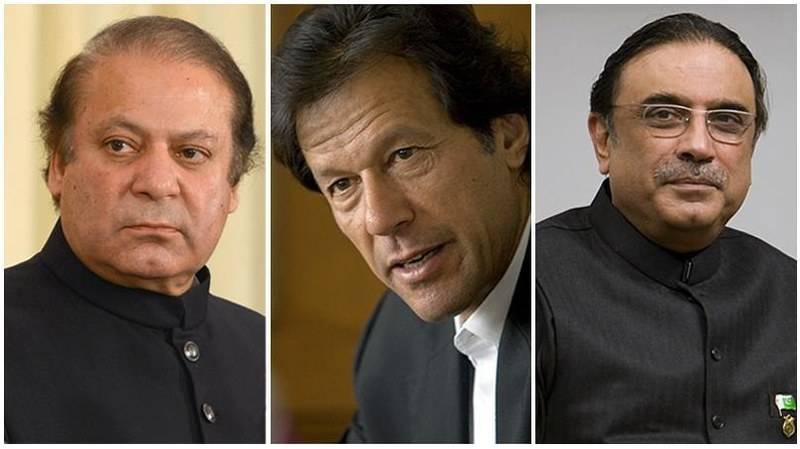
Regarding nepotism PMLN, PPP, PTI and others are seen on the same page . The true test of political leadership lies in placing national welfare above personal convenience. Pakistani politicians whole heatedly believe that charity begins at home. When public representatives prioritize self-enrichment or create the perception that family connections carry greater weight than merit, they weaken the moral authority of the very institutions they are sworn to protect. Pakistan’s future depends not only on constitutional legality but also on ethical governance. Citizens deserve a system where opportunities are determined by competence rather than connections, where public money is treated with restraint, and where elected leaders demonstrate that service not privilege is the defining purpose of public office.