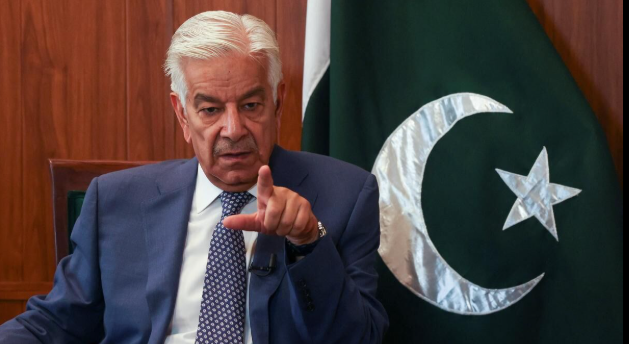

ISLAMABAD: A statement by a prominent Chinese policy expert on the Indus Waters Treaty has gained significant attention in Pakistan after Defense Minister Khawaja Asif publicly endorsed the remarks, describing them as supportive of Pakistan’s position on water rights and regional stability.
The development comes amid renewed debate over the future of the Indus Waters Treaty and growing discussions about water security in South Asia.
Sharing the comments on his social media account, Khawaja Asif welcomed the views expressed by Victor Gao, a well-known Chinese analyst and president of the Center for China and Globalization (CCG).
Speaking at a seminar focused on the Indus Waters Treaty, Gao emphasized that no one in the region should doubt China’s commitment to defending Pakistan’s fundamental interests, particularly its sovereignty and territorial integrity. His remarks quickly attracted attention among policymakers and observers in both Pakistan and China.
The Chinese scholar also stressed that the Pakistani people’s right to the uninterrupted flow of water in the Indus River system should be recognized and respected. According to Gao, access to water is not only an economic issue but also a matter closely linked to regional peace, stability, and human security.
His comments echoed broader concerns about the management of transboundary water resources in South Asia, where rivers serve as lifelines for millions of people across several countries.
Gao recently proposed expanding the scope of the Indus Waters Treaty by including China in the framework. He argued that bringing Beijing into the arrangement could transform the agreement into a trilateral mechanism capable of addressing future water challenges more effectively.
The proposal has sparked discussion among regional analysts, with supporters viewing it as a potential avenue for broader cooperation while others see it as a significant shift in the structure of one of the world’s most enduring water-sharing agreements.
During his address, Gao also recalled comments made by Indian Prime Minister Narendra Modi regarding water resources last year. He revealed that he had openly opposed any suggestion of restricting water flows to Pakistan, urging India not to pursue such a path.
According to Gao, attempts to halt water supplies to millions of people would be inconsistent with international norms and could have serious humanitarian consequences.
By publicly sharing and endorsing these remarks, Pakistan’s defense minister has amplified a message that aligns closely with Islamabad’s long-standing stance on the Indus Waters Treaty. The exchange also underscores the growing strategic understanding between Pakistan and China on issues affecting regional security, cooperation, and resource management.