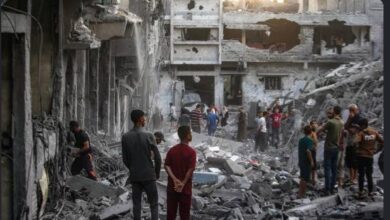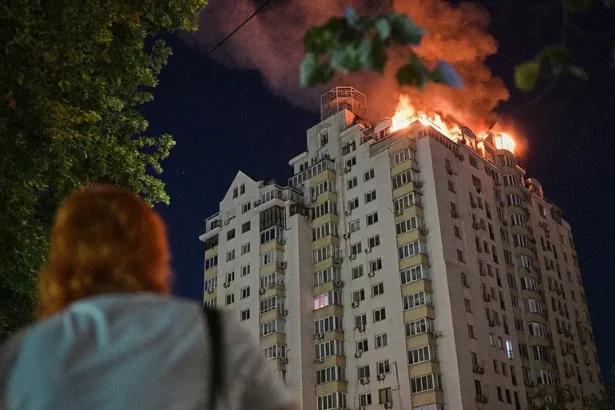

The death toll from Russia’s latest large scale attack on Kyiv has climbed to 30 after rescue teams recovered more bodies from the rubble of damaged buildings. Ukrainian officials said at least 91 people were also injured in one of the heaviest assaults on the capital since the war began. As emergency workers continued search operations, both Ukraine and Russia signalled that further military action was likely in the coming days.
President Volodymyr Zelensky visited one of the apartment buildings badly damaged during the overnight attack and vowed that Ukraine would respond. He said Russian forces would be held accountable for the destruction and promised that Ukrainian forces would carry out retaliation. The strikes, which lasted from late Wednesday into early Thursday, caused widespread damage to homes, public buildings, and infrastructure across the capital.
According to Ukraine’s air force, Russia launched 496 drones and 74 missiles during the assault, including ballistic missiles that are more difficult to intercept. Ukrainian air defence systems managed to destroy most of the incoming weapons, shooting down hundreds of drones and dozens of missiles. Despite those efforts, several projectiles reached their targets, causing deadly explosions in residential neighbourhoods.
Kyiv Mayor Vitali Klitschko described the attack as the largest carried out against the capital since the start of the conflict. Thick smoke covered parts of the city while emergency crews searched through collapsed buildings for survivors. The Ukrainian Red Cross also reported that one of its main warehouses had been destroyed, resulting in the loss of humanitarian supplies worth around two million dollars. Officials added that debris also damaged a building used by foreign diplomats, although no diplomatic staff were injured.
The latest attack forced thousands of people to spend the night inside underground metro stations. City authorities said around 52000 residents sought shelter, including more than 4500 children, making it one of the largest movements into bomb shelters in recent years. Families slept on air mattresses, camping chairs, and blankets as explosions echoed across the city throughout the night.
Many residents described the emotional toll of living through another major bombardment. One woman whose apartment building was heavily damaged said she had lost her home and was left uncertain about her future with her child. Others said the constant air raid sirens and explosions had made it increasingly difficult to sleep or feel safe even inside shelters.
The attack also prompted renewed international reaction. United Nations Secretary General Antonio Guterres condemned the strikes and repeated his call for an immediate ceasefire, saying attacks on civilians and civilian infrastructure violate international humanitarian law. European Union foreign policy chief Kaja Kallas announced plans to propose additional sanctions against Russia following the latest assault.
President Zelensky also appealed to the United States for greater military support, particularly additional Patriot air defence systems and licences that would allow Ukraine to produce missiles for the system domestically. He said stronger air defences were essential to protect civilians from continued missile attacks.
Meanwhile, the Kremlin indicated that military pressure on Ukraine would continue. Russian officials maintained their hardline position on the conflict, while Ukraine has also intensified long range drone attacks targeting military and energy facilities inside Russia. With both sides promising further action, hopes for a quick end to the war remain uncertain as the conflict continues to claim lives on both sides.