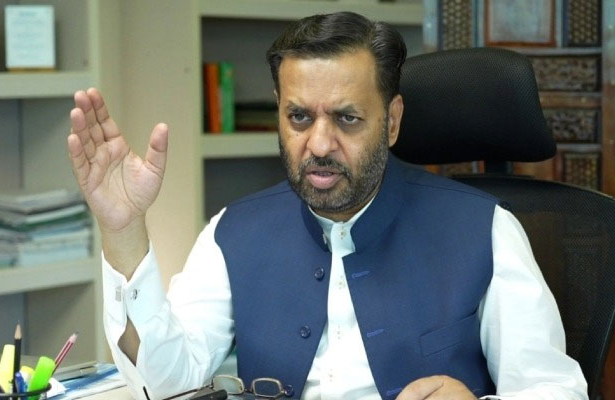

ISLAMABAD: Federal Health Minister Mustafa Kamal has expressed concern over the rising number of HIV infections in Pakistan, saying that drug use and unsafe sexual behaviour among some young people during late-night parties are contributing factors behind the spread of the virus.
The remarks were made during a joint meeting of the Senate Standing Committees on Human Rights and Health, chaired by Senators Samina Zehri and Aamir Waleeduddin. The committee reviewed The National Population Coordination and Reproductive Health Bill, 2026, which aims to strengthen Pakistan’s population management and reproductive health policies.
Addressing the meeting, Mustafa Kamal said there is growing concern over activities taking place at certain night parties, where drug use can lead to risky behaviour that increases the transmission of HIV. He stressed the need for greater public awareness, preventive measures, and responsible behaviour to curb the spread of the disease.
The health minister also highlighted the government’s focus on population control, stating that Prime Minister Shehbaz Sharif has personally taken a keen interest in the issue and has chaired several high-level meetings to review progress. He said a committee comprising Federal Minister Ahsan Iqbal, the Finance Minister, and other senior officials is regularly working on strategies to address Pakistan’s rapid population growth.
Mustafa Kamal argued that the current National Finance Commission (NFC) Award formula, under which 82 percent of the resource distribution is linked to population size, unintentionally encourages provinces to maintain higher population growth. He noted that in several neighbouring countries, population carries a much lower weight in fiscal distribution formulas—around 17 percent—whereas provinces in Pakistan that successfully slow population growth may ultimately receive a smaller share of federal resources.
The minister further informed the committee that the federal government has abolished taxes on contraceptives in the current fiscal year’s budget. He said the decision, taken through the joint efforts of the prime minister and the finance minister, is intended to improve affordability and access to family planning products.
According to Mustafa Kamal, easier access to contraceptives and the removal of taxes are expected to help reduce annual population growth by approximately 150,000 births.
He added that Pakistan currently records around 6.7 million births every year, underscoring the urgent need for effective family planning policies, improved reproductive healthcare services, and sustained public awareness campaigns to manage population growth and improve overall public health.