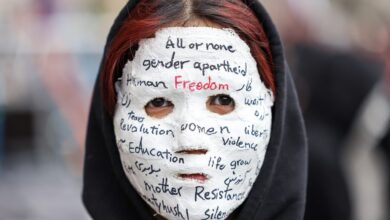

A new youth-led protest movement in India, known as the Cockroach Janata Party has become the focus of global attention. In recent days students associated with the movement attempted to march towards Parliament, but police used baton charges and force to stop them. The movement’s founder, Abhijeet Dabke, is currently studying in the United States while several of its other leaders are enrolled at leading universities in India and the United Kingdom. The movement is primarily driven by young students. The movement began after the Chief Justice of India reportedly referred to young people as “cockroaches.” Students adopted the term as a symbol of resistance and established the Cockroach Janata Party. According to its leaders, the recent examination paper leak scandal has exposed deep weaknesses and corruption within India’s education system. They argue that corruption in examinations and the erosion of merit are allowing unqualified individuals to enter key institutions, ultimately damaging the country’s future. Protesters are therefore demanding the resignation of the Education Minister, whom they hold responsible for the crisis. Thousands of students continue to demonstrate across different cities while pressing for a wider set of demands.
Opposition leader Rahul Gandhi has expressed solidarity with the protesting students. Meanwhile, allegations of police mistreatment of both protesters and opposition leaders have sparked a nationwide debate. Several Indian actors, artists, and public figures have also condemned the use of force against students, adding to the growing political and public pressure on Prime Minister Narendra Modi’s government. India often presents itself as the world’s largest democracy and a champion of democratic values. While its large youth population is one of its greatest strengths, it can also become a significant challenge. Because of its distinctive identity and objectives, this movement has attracted the attention of young people not only across India but throughout Asia and beyond. Its growing popularity on social media has encouraged increasing numbers of young Indians to join. If the protests spread further and gain broader public support, they could become a serious political challenge for the government.
In response to the latest developments, Prime Minister Narendra Modi released a late-night video message appealing to young people for patience. He stated that investigations into the paper leak scandal were already underway and assured the public that those responsible would be held accountable. However, student leaders insisted that their sit-in would continue until the Education Minister resigned. Some observers believe that the Prime Minister’s body language during the address reflected political pressure and unease. A government that has previously responded firmly to numerous protests now appears to be facing unprecedented pressure from a youth-led movement.
Over the past few decades, Asian politics has undergone significant change, with young people emerging as an increasingly influential political force. Even before the current protests in India, youth movements in Bangladesh, Sri Lanka, and Nepal had already played decisive roles in shaping political developments. In March 2022, Sri Lanka was engulfed by mass protests triggered by a severe economic crisis. Young people stood at the forefront of the demonstrations and led protests that continued for weeks. The government imposed a state of emergency, enforced curfews, and attempted to restrict access to social media, but these measures failed to weaken the protesters’ determination. Eventually, demonstrators surrounded the Presidential Palace, forcing the President to resign. Similarly, Bangladesh witnessed a student-led protest movement that fundamentally reshaped the country’s political landscape. As demonstrations intensified, then Prime Minister Sheikh Hasina left office and departed the country. Security forces attempted to suppress the protests, resulting in the deaths of numerous young demonstrators. Despite this, the movement expanded across the country. Student activism ultimately dominated national politics, the government collapsed, and Nobel Peace Prize laureate Dr. Muhammad Yunusassumed leadership of the interim administration. The intensity of public anger was evident in the actions of some protesters, who set fire to a statue of Bangladesh’s founding leader Sheikh Mujibur Rahman, burned his residence, and removed his image from banknotes. Many young protesters viewed these acts as a response to what they considered years of political repression and believed that every sacrifice was necessary to achieve their objectives.
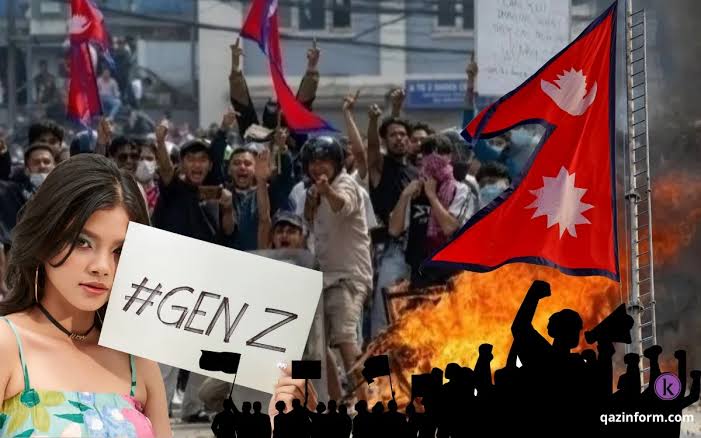
Nepal also witnessed strong youth mobilization against corruption, weak governance, and restrictions on social media. As a generation raised in the digital era, young activists relied heavily on social media to organize, coordinate, and build public support. Issues were first highlighted online, public consensus was gradually developed, and protest calls were then issued. The same strategy transformed local demonstrations into a nationwide movement. The protests became so significant that the country’s political leadership resigned, with Prime Minister K. P. Sharma Oli and his cabinet stepping down. The new interim administration subsequently accepted several of the protesters’ demands.
Young people have likewise organized movements in countries such as Indonesia and the Philippines to demand political, social, and economic reforms. Together, these examples demonstrate that the youth of Asia are no longer passive observers but have become powerful and influential agents of political change.
Pakistani media is currently giving extensive coverage to the student protests in India. Reports highlight the Indian government’s use of force against students and the growing political pressure facing the Modi administration. This naturally raises an important question: if young people in Pakistan were to launch a similar peaceful movement for their rights, would our own government respond with the same level of restraint? Would protesters avoid police violence, criminal charges, house raids, blocked identity cards, or accusations of disloyalty? The reality is that as a society, we have yet to build a strong culture of tolerance for dissent. Too often, we are more accustomed to silencing critical voices than listening to them. Pakistani youth face not only unemployment and economic uncertainty but also an environment shaped by fear. Even those who have jobs frequently hesitate to raise legitimate concerns, fearing that doing so could cost them their employment, personal freedom, or future opportunities.
For this reason, before commenting on developments elsewhere, we should first examine our own circumstances. We must ask ourselves whether we have created a safe environment in which youth can peacefully express their opinions, demand justice, and advocate for their rights.At the same time, the Pakistani Foreign Office spokesperson’s statement that “this is India’s internal matter and we do not wish to comment on it” reflects a cautious and diplomatically appropriate position.
History shows that when the concerns of youth remain ignored for long periods, frustration can eventually develop into collective political action. Therefore, it is no longer enough to describe youth merely as the nation’s future. They must be treated as genuine stakeholders in today’s policymaking, national dialogue, and development process. Governments must promote trust, include young people in decision-making, provide them with a clear long-term vision, strengthen their independence, and formulate a comprehensive youth policy capable of addressing future national and international challenges.
Incidents such as examination paper leaks are unfortunately not unique to India, similar controversies have become almost routine in Pakistan as well. Such events may appear ordinary in isolation, but after prolonged public frustration even a seemingly minor incident can become the catalyst for widespread public mobilization. If policymakers address the concerns of young people with seriousness and sincerity, Pakistan’s youth can become the country’s strongest pillar of stability and development. Otherwise, in an age defined by social media and instant digital connectivity, it would be unwise to dismiss the possibility that youth protest movements emerging elsewhere in the region could eventually inspire similar movements within Pakistan.