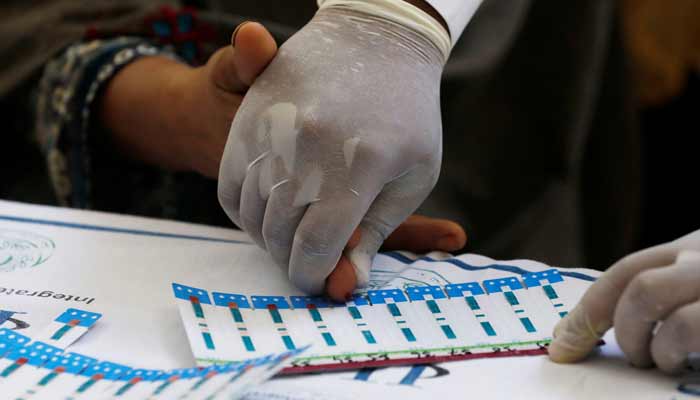

Leading public health experts and infectious diseases specialists have urged the government of Pakistan to conduct its first nationwide HIV prevalence survey, as they warned that HIV has spread beyond high-risk groups and that the country lacks accurate data on the true scale of the epidemic, The News reported.
Eminent public health expert and Vice Chancellor of the Health Services Academy, Prof Shahzad Ali Khan, described the situation as a major public health emergency, saying 729 children diagnosed with HIV in just six months in Sindh alone this year amounted to a paediatric HIV epidemic requiring immediate epidemiological investigation.
He said poor infection prevention and control practices, including the reuse of syringes, intravenous drip sets and cannulas, along with inadequately screened blood transfusions, appeared to be the major drivers of infection among children.
Prof Shahzad Ali Khan warned that HIV was increasingly spreading through a bridging population into the general community and called for nationwide epidemiological investigations, mass HIV screening, self-testing, public awareness campaigns and contact tracing similar to the Covid19 response. He added that banning reusable or 10cc syringes alone would not solve the problem without identifying the actual sources of transmission.
He further said Pakistan should also review the history of recent HIV and Aids outbreaks across the country to understand how the virus had spread over time. According to him, a population-based HIV prevalence survey in high-risk areas could be carried out relatively easily because most transmission hotspots were already known. He said the survey should utilise available secondary data to back-trace the origins of outbreaks and map the subsequent spread of infection, making it more cost-effective and faster than conducting a nationwide population-based survey at the outset.
Renowned physician and public health expert Prof Javed Akram said HIV had been spreading silently in Pakistan for nearly three decades and that the increasing number of reported cases reflected expanded screening and testing rather than a sudden rise in infections.
“We are now detecting more HIV cases because testing has increased. The virus has been spreading quietly for decades, but we still do not know its actual prevalence in the population,” he said.
Prof Akram urged the federal and provincial governments to launch a nationwide HIV prevalence survey despite limited resources, saying Pakistan could no longer rely solely on routine surveillance or targeted screening of key populations. He stressed that identifying infected individuals and linking them to antiretroviral treatment would not only save lives but also reduce further transmission.
The call comes as Pakistan continues to witness a steady rise in HIV cases. Official figures show that 14,182 new HIV cases were registered in 2025, while more than 8,000 additional infections have already been reported during the first half of 2026, with hundreds of new cases being detected every month.
Experts are particularly concerned about the increasing number of HIV infections among children, especially in Sindh and Punjab, where hundreds of children have recently been diagnosed, raising fears that transmission is no longer confined to traditional key populations.
Renowned infectious diseases specialist Dr Faisal Mahmood of the Aga Khan University also called for stronger regulation of private and informal healthcare facilities, saying sustainable improvements in injection safety required better regulation, education of general practitioners and making safe injection practices financially feasible rather than relying on temporary bans.
He said HIV testing among children should be expanded in a targeted manner, recommending routine screening of children admitted to hospitals where appropriate instead of relying mainly on periodic camps or pre-operative testing, while acknowledging that limited resources required careful prioritisation.
The experts agreed that Pakistan’s HIV response should move beyond outbreak management towards identifying hidden infections, strengthening surveillance, improving infection prevention and control, ensuring safe blood transfusion practices and expanding access to testing and treatment before the virus spreads further into the general population.