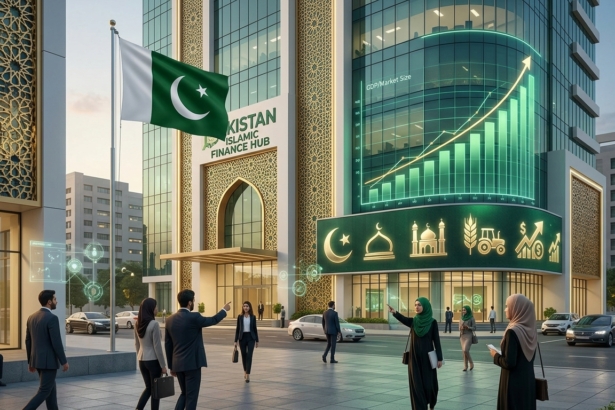

Pakistan has significant room to expand its presence in the global Islamic economy by introducing innovative Shariah-compliant financial products, strengthening regulatory frameworks and developing specialized professional expertise, Secretary General of the Islamic Chamber of Commerce and Development (ICCD) Yousef Hassan Khalawi has said.
Speaking at the Securities and Exchange Commission of Pakistan (SECP) Talk Series on Islamic finance, Khalawi highlighted Pakistan’s structural advantages and said the country was well placed to capture a larger share of the rapidly evolving global Islamic economy.
He noted that Pakistan has a large Muslim population, a substantial overseas Pakistani community and an expanding Islamic finance sector. The country also has a growing base of professionals working in banking, capital markets and other financial services, providing a foundation for further development of the industry.
However, Khalawi stressed that Pakistan would need to move beyond conventional Islamic finance offerings if it wanted to compete more effectively in international markets. He encouraged financial institutions and regulators to focus on developing innovative products capable of addressing emerging domestic and global demand, particularly through financial technology.
Fintech seen as key driver
According to Khalawi, fintech could play an important role in making Islamic financial services more accessible, efficient and affordable. Digital platforms can potentially reduce transaction costs while allowing Shariah-compliant products to reach customers who remain underserved by traditional financial institutions.
He also emphasized that Islamic finance should not be viewed solely as a mechanism for structuring financial transactions. Instead, he said, the sector should play a wider role in supporting economic growth, social welfare and productive investment.
One area with considerable potential is Waqf-based investment. Khalawi suggested that professionally managed and transparent listed Waqf structures could enable individuals to make relatively small contributions that could collectively generate financing for projects in key social sectors.
Such models, he said, could help channel funds towards education, healthcare and infrastructure while creating a more organized framework for mobilizing charitable and community-based capital.
Agriculture offers untapped potential
Agriculture was also identified as an important sector where Islamic finance could make a greater contribution. Khalawi called for the development of specialized Shariah-compliant financing instruments tailored to the needs of farmers, agribusinesses and other participants across the agricultural value chain.
Greater technical expertise would also be required to design products that address the specific risks and cash-flow patterns associated with agriculture. Expanding access to appropriate financing could help unlock investment and support productivity in the sector.
Interest-free lending and financial inclusion
The discussion also examined Qard Hassan, an interest-free lending mechanism that can provide financing to individuals without imposing conventional interest charges.
Khalawi said technology could help make Qard Hassan arrangements easier to administer and more accessible to potential borrowers. Digital platforms could reduce administrative expenses, improve transparency and facilitate the distribution of small-scale interest-free loans.
He further highlighted the importance of establishing common Shariah standards to promote consistency across the Islamic finance industry. Differences in interpretation and product structures can create challenges for institutions seeking to operate across markets, making greater standardization important for the sector’s international growth.
Professional training was another key area highlighted during the discussion. Khalawi stressed that the continued expansion of Islamic finance would require professionals with expertise in both financial markets and Shariah principles.
For Pakistan, strengthening regulatory capacity, expanding specialized training and encouraging innovation could help create an ecosystem capable of supporting new Islamic financial products.
The SECP discussion underscored the broader opportunity for Pakistan to position Islamic finance as a tool not only for financial-sector development but also for investment, entrepreneurship, social welfare and sustainable economic growth.