

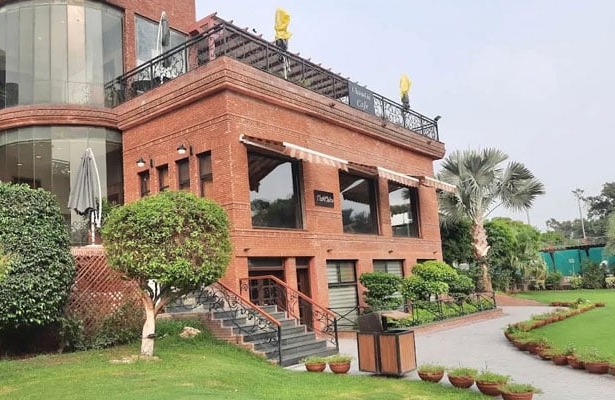

LAHORE: The Lahore Gymkhana Club has long been a second home for Punjab’s elite and a frequent source of controversy. Now, its lease of more than 100 acres of valuable government land has become the subject of a debate in the Punjab Assembly, raising questions about public property, special privileges and the colonial traditions that continue in Pakistan.
The club has reportedly been paying an annual rent of just Rs5,000 for the land. The amount came under renewed scrutiny after the Punjab Assembly’s Special Committee No 6 examined how the club had received successive concessions over several decades without a proper assessment of the land’s value.
The issue is not new. In 2020, reports about the Islamabad Club’s lease brought attention to similar arrangements involving elite institutions. The Islamabad Club, spread over 352 acres, was reported to have been leased for Rs3 per acre per month. The reports also drew attention to the Lahore Gymkhana Club, where the annual rent for more than 100 acres of prime state land was only Rs5,000.
At the time, Kamran Lashari, a leading figure associated with the club, defended the importance of preserving open spaces when questioned about the low rent. He argued that the lease was a minor issue compared with the value of maintaining such spaces.
The matter has now reached the Punjab Assembly, where lawmakers are asking whether the rent reflects the actual value of the land and whether the arrangements were made according to the law.
The Punjab Assembly’s Special Committee No 6, led by MPA Samiullah Khan, questioned the club over the long-standing lease and the concessions it had received.
During the proceedings, a representative of the Board of Revenue told the committee that former Punjab chief minister Sardar Muhammad Arif Nakai had verbally directed officials to fix the annual rent at Rs5,000 when the lease was extended in 1996.
The explanation raised questions among lawmakers about the legal basis for fixing the rent through a verbal direction. Committee members called for the complete record to establish how the lease had been approved, how the rent had been assessed and what rules had been followed.
The difference between the rent and the estimated value of the property has become a central concern. The committee was told that estimates of the land’s value ranged from Rs76 billion to Rs218 billion.
These figures have led lawmakers to question how such a valuable piece of government land could remain under an arrangement that brings in only Rs5,000 a year. They want the authorities to explain the basis of the valuation and determine what a fair rent should be.
Club Chairman Salman Siddique also expressed surprise at the nominal annual rent, particularly given the size of the property and the club’s improved financial position.
The committee also examined whether the club had obtained the required approvals for its buildings. Siddique said the institution met its corporate and tax obligations under the Companies Act 2017. However, he acknowledged difficulties in finding records related to official building approvals.
The questions before the committee therefore concern not only the rent but also the legal record of the lease, the value of the land and the approvals for buildings constructed on it.
MPA Ahmed Iqbal Chaudhry, who is also a member of Special Committee No 6, has called for a fair rent to be fixed and collected for the land.
“The current annual rent of Rs5,000 is a joke,” he said, arguing that the government must ensure that public property is not provided on terms that fail to reflect its value.
Iqbal represents a constituency in Narowal. He also raised the issue of access to the club, saying that ordinary citizens have little chance of becoming members.
“To the best of my knowledge, not a single person among the 480,000 residents of my constituency is a member of this club, and ordinary citizens cannot even imagine becoming members,” he said.
His remarks have brought another question into the debate: if the land belongs to the state, what benefits do the public receive from allowing a private membership-based institution to use it on highly favourable terms?
The issue is not necessarily whether every citizen should become a member of the club. Rather, it concerns the conditions under which public land is leased and whether the arrangement provides a fair return to the government.
A club may offer recreation and sports facilities to its members, but the use of valuable public land also raises questions about its wider contribution to society.
Gymkhana describes itself as a non-profit organisation. However, questions have been raised about the income generated by its restaurants, guest rooms and bakery, and how that money is spent.
The club’s non-profit status does not, by itself, answer whether the public receives sufficient benefit from the land it occupies. The use of income, the cost of facilities and the terms of the lease are separate matters that require examination.
Questions have also been raised about the pricing of goods and services. If club members can buy bread at lower prices than people outside the club, what public purpose does that difference serve? The issue is whether the club’s financial arrangements and activities can be justified as part of a wider public benefit.
Dr Farid A. Malik, a second-generation member of the Gymkhana Club, believes the controversy should be viewed in a wider historical context. In his view, the lease is part of a larger debate about institutions and privileges inherited from British rule.
Many clubs in Pakistan were established during the colonial period. They provided places where British officials could meet and socialise, while selected local people could become familiar with British customs and ways of life. These institutions helped create a social system that continued after independence.
The Gymkhana Club was once based at Montgomery Hall in Lahore’s Bagh-e-Jinnah, which was then known as Lawrence Gardens. The government later took over Montgomery Hall and established a library there. The club subsequently moved to its present location.
For Malik, the current dispute raises questions about why some colonial-era arrangements have continued for so long without a wider review. He argues that the government should examine how these institutions use land, how their leases are set and whether their present arrangements meet the needs of an independent country.
He also points to Lahore’s Government Officers’ Residences, commonly known as GORs. These areas occupy large stretches of land and require significant spending on maintenance.
The GORs were originally designed as residential areas for senior British officials, whose homes were separate from their offices. Malik says that some government offices now operate from houses within these residential areas. In his view, this reflects an outdated system that can keep senior officials apart from ordinary citizens.
He has also questioned the membership arrangements of clubs, arguing that government officials pay considerably lower fees than private members. He says the Punjab Club and Rawalpindi Club have also faced disputes over leases and membership, showing that the questions surrounding Gymkhana are not unique.
Malik has referred to Hong Kong as an example of how a former colonial institution can be given a different purpose. He recalled that the former governor’s residence there had been converted into a museum after British rule ended.
He believes Pakistan should examine whether some buildings inherited from colonial rule could be used for museums, public spaces or other purposes that serve a wider section of society.
He has also questioned the continuation of colonial traditions in military institutions and educational establishments. He cited military units that display memorabilia from British-era wars and recalled asking a former Aitchison College principal about traditions such as wearing turbans.
According to Malik, the principal explained that these traditions existed before Pakistan and were not necessarily rooted in Pakistani culture. Malik’s point is that institutions should consider whether inherited practices remain relevant rather than continuing them simply because they are old.