

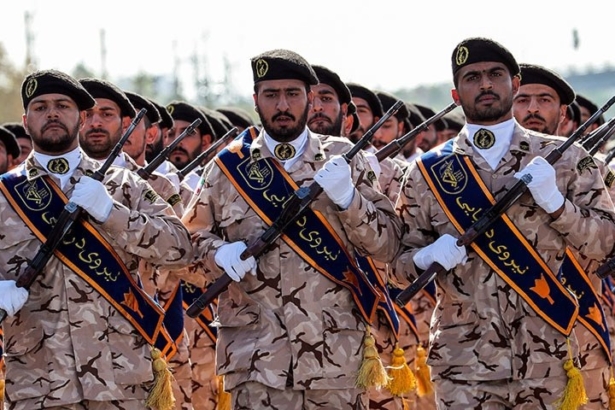

TEHRAN: Iran has claimed that its armed forces are now stronger, more experienced and better prepared than they were at the beginning of the war with the United States and Israel, as diplomatic efforts continue to prevent another escalation in the Middle East.
The statement came on Saturday as tensions remained high over the strategically important Strait of Hormuz, while Washington announced a $20 million reward for information related to Iran’s nuclear programme.
Iranian army spokesman Mohammad Akraminia said the country’s military had gained significant experience through direct confrontation with US and Israeli forces and was now operating with greater confidence and readiness.
According to Iran’s state news agency IRNA, Akraminia said the armed forces were on higher alert and had strengthened their capabilities since the conflict began.
“Today, the Islamic Republic’s armed forces… having gained experience from direct confrontation with the United States and the Israeli regime, are on higher alert and are stronger than they were at the beginning of the war,” he said.
He added that Iran’s military personnel had developed greater motivation, commitment and self-confidence.
Akraminia also warned that any response ordered by Iran’s Supreme Leader would be immediate and effective, with no geographical limitations.
Iran maintains pressure over Strait of Hormuz
The Strait of Hormuz has remained a major point of confrontation during the conflict, with Tehran seeking to restrict maritime traffic through the vital waterway.
The route normally carries approximately one-fifth of the world’s oil consumption, making any disruption a serious concern for international energy markets and global trade.
Akraminia said Iran continued to maintain control over the strategic passage and that it would remain closed until Washington addressed Tehran’s demands.
The situation has increased international concerns about energy supplies and the possibility of renewed military confrontation in the region.
US announces $20 million reward
Meanwhile, the United States has announced a reward of up to $20 million, along with possible relocation, for information concerning Iran’s nuclear programme.
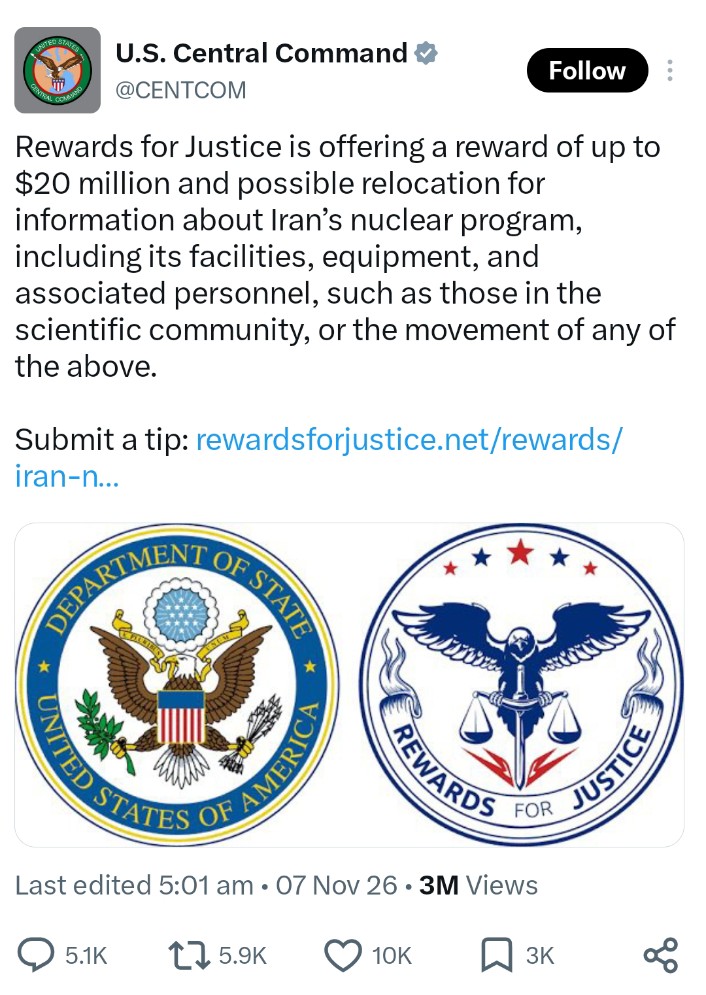
The State Department said Iran’s failure to comply with safeguards obligations under the International Atomic Energy Agency (IAEA) had resulted in the agency losing its continuity of knowledge regarding the country’s production and inventory of important nuclear-related components, including centrifuges.
However, Washington did not clarify what specific information would qualify for the reward.
US President Donald Trump has repeatedly claimed that American military operations severely damaged Iran’s nuclear infrastructure.
Speaking in West Palm Beach, Florida, on Friday night, Trump defended the US military campaign, arguing that the strikes had prevented Iran from developing nuclear weapons.
He also claimed that Tehran was now eager to reach an agreement to end the conflict.
Diplomatic efforts continue despite fresh tensions
Despite the military rhetoric, diplomatic efforts are continuing to prevent the conflict from restarting after months of deadlock.
Trump spoke with Qatari Emir Sheikh Tamim bin Hamad Al Thani on Friday to discuss efforts aimed at ending the war.
Iranian President Masoud Pezeshkian also indicated earlier this week that his government remained committed to resolving the crisis through dialogue.
However, fresh reports of incidents around Qeshm Island in the Strait of Hormuz highlighted the fragile security situation.
Iran’s Tasnim news agency reported that two missiles had struck the island early Saturday, while state television reported hearing two explosions. There was no official confirmation of damage.
Separately, the Iranian army said its air defence systems had intercepted and destroyed a US drone flying over the island, according to state media.
With military warnings continuing on both sides and diplomatic channels still active, the future of the conflict remains uncertain. Iran’s latest declaration of military strength and Washington’s renewed pressure over its nuclear programme suggest that tensions remain far from resolved.