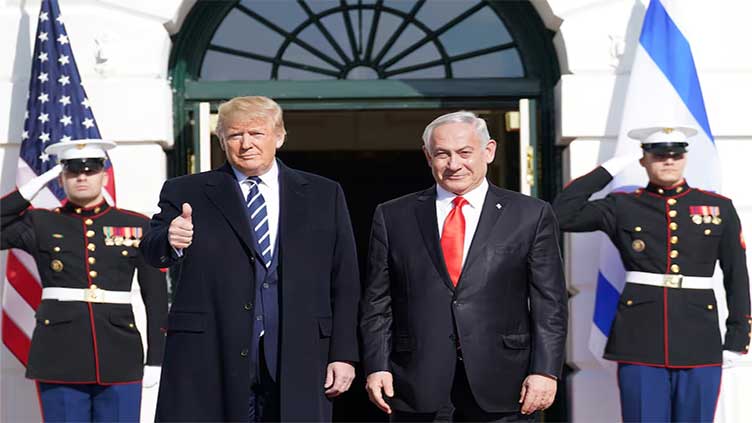

WASHINGTON: When Benjamin Netanyahu meets US President Donald Trump on Tuesday, the Israeli prime minister is expected to try to turn the page on sometimes tense relations with the Biden White House as the two leaders address the future of the Gaza ceasefire and ways to counter Iran.
But Netanyahu, the first foreign leader to be hosted by Trump since his Jan. 20 inauguration, could also come under pressure from the staunchly pro-Israel president whose policy goals for the Middle East may not always coincide with Netanyahu’s interests.
They will meet just as indirect negotiations are due to resume this week between Israel and Hamas on the second stage of the ceasefire deal and hostage release. The two leaders are expected to hold a joint press conference.
Previewing the meeting, Trump told reporters on Sunday that discussions with Israel and other countries on the Middle East were “progressing.” But he offered no details.
The region is at a critical juncture, with the Gaza truce fragile, a parallel uneasy Israel-Hezbollah ceasefire agreement in Lebanon nearing possible expiration in coming weeks and concerns about Iran’s nuclear ambitions persisting despite its weakened state.
In his first term, Trump handed Netanyahu a series of successes, including relocation of the US embassy to Jerusalem from Tel Aviv and the signing of the Abraham Accords, normalizing relations between Israel and several Arab states.
He remains a strong supporter of US ally Israel, taking credit for helping broker the Gaza ceasefire deal between Israel and Hamas militants in the Palestinian enclave even before he returned to office, while insisting he wants to end the wars in the Middle East.
Trump has said he hopes to renew an effort toward historic normalization of relations between Israel and Arab power Saudi Arabia.
That has created uncertainty over how much leeway Trump will give Netanyahu. The prime minister faces demands from far-right members of his coalition threatening to topple his government unless he restarts the fighting in Gaza to fulfill his pledge to destroy Iran-backed Hamas. An ever-raging war would complicate if not block Trump’s attempt to bring the Saudis to the negotiating table.
Even so, Netanyahu is all but certain to have a better reception this time than he received from former President Joe Biden.
Though Biden maintained military support for Israel after Hamas’ Oct. 7, 2023, attack that prompted the Israeli assault on Gaza, relations were strained at times over the high Palestinian civilian death toll and Netanyahu’s defiance of some U.S. demands.
‘NO ASSURANCES’
Trump’s Middle East envoy, Steve Witkoff, played a key role in helping the Biden administration secure the long-sought Gaza deal before the Jan. 20 transfer of power in the US and is expected to be heavily involved in the next round. The first phase has led to Hamas’ release of 18 hostages and Israel’s release of hundreds of jailed Palestinians.
On Monday, Trump acknowledged to reporters that there were no assurances that the ceasefire would hold, though Witkoff added: “We’re certainly hopeful.”
Trump and Netanyahu have both said they want to include Saudi Arabia in new regional arrangements building on the Abraham Accords, an effort that could help create a bulwark against Iran.
But Netanyahu’s steadfast opposition to any move towards a Palestinian state, a stance supported by a growing number of Israelis in the wake of the Gaza war, stands as a potential obstacle to a deal with Saudi Arabia, which has previously insisted on agreement at least on a pathway to an independent Palestine.
Since taking office, Trump has stirred controversy by suggesting that Gazans should be moved to neighbouring countries such as Egypt and Jordan, echoing the wishes of Israel’s far right and contradicting Biden’s commitment against the mass displacement of Palestinians.
The Egyptian and Jordanian governments and other Arab states have rejected the idea.
For Netanyahu, whose international isolation over the Gaza war was underlined by an arrest warrant from the International Criminal Court (ICC) on allegations of war crimes, the visit offers a chance to burnish his diplomatic credentials in Washington, which has come out strongly against the ICC.
Pro-Palestinian activists as well as those calling for the release of the remaining hostages held by Hamas plan separate protests to coincide with Netanyahu’s visit to Washington.