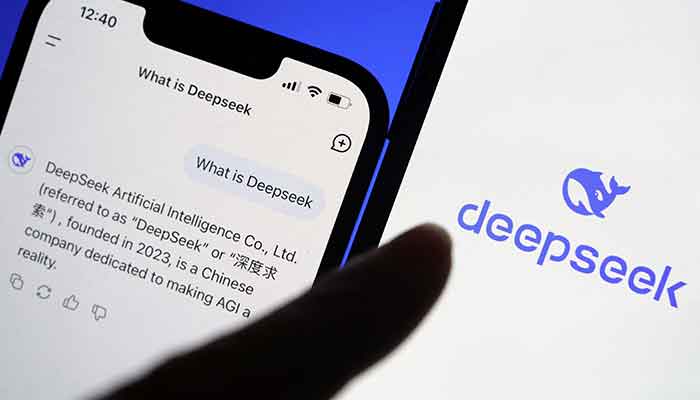

SEOUL: South Korean ministries and police said Thursday they were blocking DeepSeek’s access to work computers, after the Chinese AI startup did not respond to a data watchdog request about how it manages user information.
DeepSeek launched its R1 chatbot last month, claiming it matches the capacity of artificial intelligence pace-setters in the United States for a fraction of the investment, upending the global industry.
South Korea, along with countries such as France and Italy, have asked questions about DeepSeek’s data practices, submitting a written request for information about how the company handles user information.
But after DeepSeek failed to respond to an enquiry from South Korea’s data watchdog, a slew of ministries confirmed Thursday they were taking steps to limit access to prevent potential leaks of sensitive information through generative AI services.
“Blocking measures for DeepSeek have been implemented specifically for military work-related PCs with Internet,” a defence ministry official told AFP.
The ministry, which oversees active-duty soldiers deployed against the nuclear-armed North, has also “reiterated the security precautions regarding the use of generative AI for each unit and soldier, taking into account security and technical concerns,” it added.
South Korea’s police told AFP they had blocked access to DeepSeek, while the trade ministry said that access had been temporarily restricted on all its PCs.
The trade ministry said it took the move as DeepSeek “has not responded to The Personal Information Protection Commission’s inquiry.”
The country’s finance ministry also told AFP it had “implemented measures to prohibit the leakage of personal and confidential information to DeepSeek for all employees.”
Bans ‘not excessive’
Last week, Italy launched an investigation into DeepSeek’s R1 model and blocked it from processing Italian users’ data.
Australia has also banned DeepSeek from all government devices on the advice of security agencies.
Kim Jong-hwa, a professor at Cheju Halla University’s artificial intelligence department, told AFP that amid growing rivalry between the United States and China he suspected “political factors” could be influencing the reaction to DeepSeek — but said bans were still justified.
“From a technical standpoint, AI models like ChatGPT also face numerous security-related issues that have not yet been fully addressed,” he said.
“Given that China operates under a communist regime, I question whether they consider security issues as much as OpenAI does when developing innovative technologies,” he said.