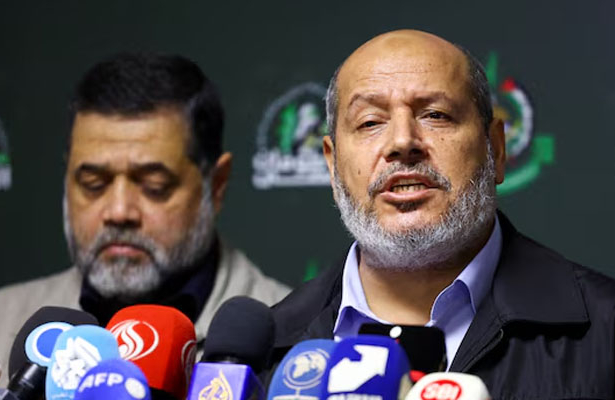

A new escalation in the long-running Gaza conflict has drawn global attention after Hamas confirmed that the son of senior Hamas leader Khalil al-Hayya was killed in an Israeli airstrike on Gaza City.
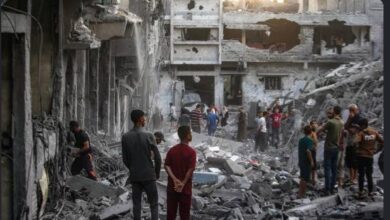
According to Hamas official Basem Naim, Khalil al-Hayya’s son, identified as Azam al-Hayya, was among those killed in a targeted Israeli aerial attack late Tuesday. The strike reportedly hit a residential area in Gaza City, where several families were sheltering amid ongoing hostilities.
The announcement has added further intensity to an already volatile situation in the region, where civilian casualties continue to rise as military operations expand.
A Family Repeatedly Affected by War
This is not the first time the family of Khalil al-Hayya has suffered personal loss during the conflict. Arab media reports recall that during earlier rounds of violence, particularly the 2008 and 2014 Gaza wars, two of his sons were also killed in Israeli attacks.
More recently, another son was reportedly killed during a strike targeting Hamas leadership in Doha last year, underscoring the repeated personal toll on senior figures within the group.
Wider Context of Escalation
The latest strike comes amid intensified Israeli military operations in Gaza following months of escalating cross-border violence. Israel has not yet issued a detailed statement regarding the specific incident involving Azam al-Hayya.
Gaza City has been at the center of heavy bombardment, with residential zones, infrastructure, and shelters repeatedly affected by airstrikes and ground operations.
Humanitarian agencies continue to warn about worsening conditions for civilians, including shortages of food, water, electricity, and medical supplies.
Growing International Concern
The killing of family members of senior political figures often draws heightened international attention, raising concerns about further escalation and the potential impact on ongoing diplomatic efforts.
Observers note that such incidents tend to deepen political divisions and make ceasefire negotiations even more difficult, as both sides remain entrenched in their positions.
At the same time, humanitarian organizations are urging restraint and renewed efforts to protect civilians, emphasizing that the conflict is increasingly affecting non-combatants on both sides.
Uncertain Path Ahead
As the conflict continues, the situation on the ground remains highly unpredictable. With each new waves of strikes, the human cost of the war grows, intensifying calls for international intervention and long-term peace efforts.
For now, the death of Azam al-Hayya has once again highlighted the deeply personal and far-reaching consequences of the Gaza conflict—where political struggle and family tragedy continue to intersect in devastating ways.